
Using multiple crypto exchanges to avoid restrictions sounds like a smart workaround-until it lands you in legal trouble or wipes out your funds. It’s not just about bypassing geographic blocks or hitting trading limits. Behind this practice lies a tangled web of sanctioned platforms, stolen identities, and shadow networks designed to slip past regulators. And while some users think they’re just being clever, they’re often walking straight into a trap set by criminals-or worse, becoming an unwitting part of one.
How People Try to Bypass Restrictions
Most people start with a simple idea: if one exchange won’t let me trade, I’ll use another. Maybe you’re in a country where Binance is blocked, so you sign up on KuCoin. Then you hit your daily withdrawal limit, so you open an account on Kraken. Seems harmless, right? But when you start moving money between platforms to hide where it came from or where it’s going, you cross into dangerous territory. One common method is using nested exchanges. These aren’t full-fledged platforms like Coinbase or Bybit. They’re middlemen-smaller services that let you deposit crypto, then they trade it on your behalf through bigger exchanges. You never see the actual transaction on the big exchange; you just see your balance go up. That’s convenient-but it’s also how money launderers hide their tracks. Nested exchanges often skip KYC entirely. No ID, no proof of address, no questions asked. That’s exactly why regulators flag them. Then there are decentralized exchanges (DEXs) like Uniswap or PancakeSwap. Because they run on smart contracts and have no central operator, governments can’t shut them down or force them to block users. That makes them ideal for people trying to avoid sanctions. A sanctioned entity in Russia or North Korea can swap Bitcoin for USDT on a DEX, then send it to a wallet they control. No bank, no paperwork, no traceable account. The blockchain records the transaction, but no one’s checking who owns the wallet. Another tactic? Using compromised wallets. Criminals steal login credentials from legitimate users who’ve passed KYC. They use those clean accounts to move illicit funds, making it look like a normal person did the trade. Once the money’s in, they funnel it through multiple wallets and exchanges to erase the trail. This isn’t theoretical-it’s happening every day.What Regulators Are Doing About It
Governments aren’t sitting still. In March 2025, the U.S. Treasury’s Office of Foreign Assets Control (OFAC) designated a new exchange called Grinex as a sanctioned entity. Grinex wasn’t some random startup. It was created by former employees of Garantex, a crypto platform that had just been shut down for helping Russian entities evade sanctions. Within days of Garantex’s collapse, Grinex popped up with the same team, same infrastructure, and the same goal: keep the money flowing. Grinex’s own marketing materials admitted it was built to replace Garantex after sanctions hit. Since then, it’s handled billions in transactions. That’s not a glitch-it’s a blueprint. Criminals now see these shutdowns as opportunities to rebuild, not warnings to stop. The SEC is also stepping up. Chair Gary Gensler has repeatedly said that most crypto tokens are securities, and any platform that matches buyers and sellers without registering with the SEC is breaking the law. That means even if you’re just trading Ethereum or Solana on an unregistered site, you’re participating in an illegal operation. The SEC isn’t going after individual traders-but they’re going after the platforms. And when those platforms get shut down, your funds vanish with them.The Hidden Dangers You Can’t See
Using multiple exchanges to avoid restrictions doesn’t just put you at legal risk-it puts your money at risk. Nested exchanges don’t hold your crypto in cold storage. They don’t insure your assets. They don’t have customer support teams that answer emails. They’re often just a website with a wallet address. If the owner disappears, your funds are gone. No refund. No recourse. And if you’re using a platform that’s already under investigation? You might not even know it. Some exchanges change names every few months. One day you’re on “CryptoFast,” the next it’s “BitVault.” They rebrand to dodge sanctions, but your deposits stay stuck. There’s no public list of banned exchanges, so you can’t check if the one you’re using is clean. Even worse? You could become a target for law enforcement. If you send money to a wallet that later turns out to be linked to ransomware, the government can freeze your entire account-even if you didn’t know it was tainted. You’re not guilty of a crime, but you’re still caught in the net. Getting your money back? Nearly impossible.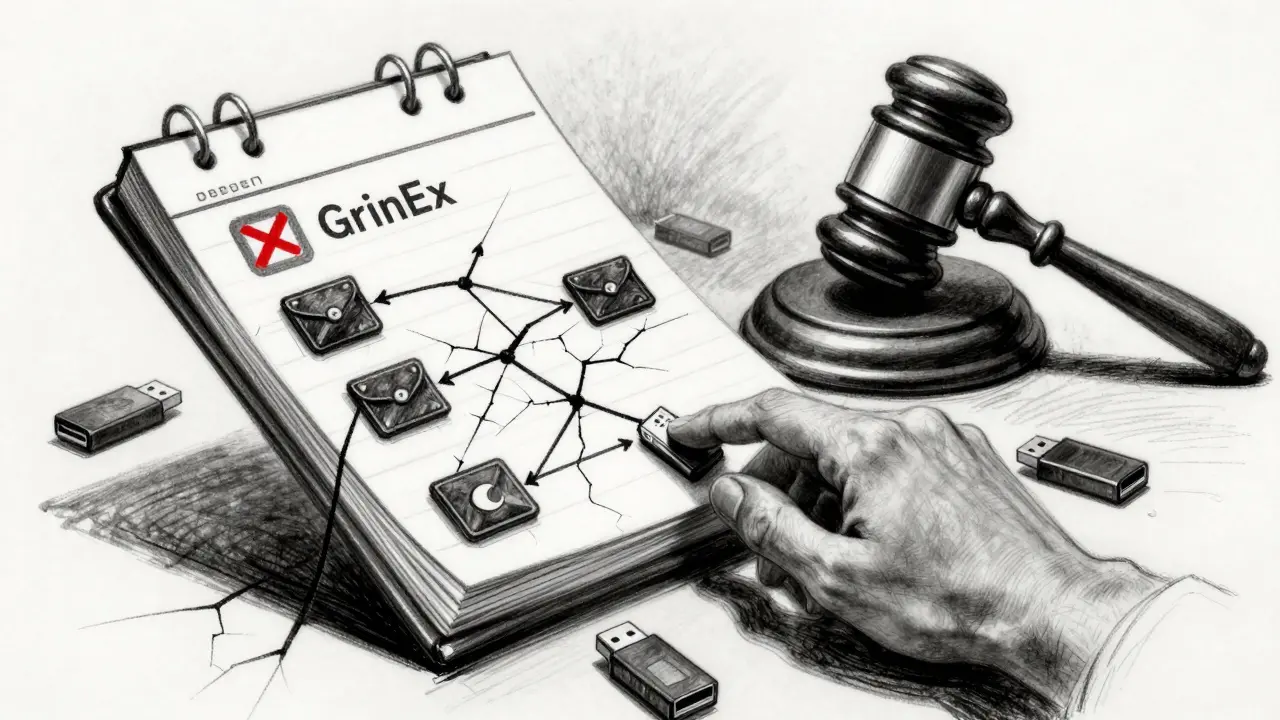
How to Spot a Risky Exchange
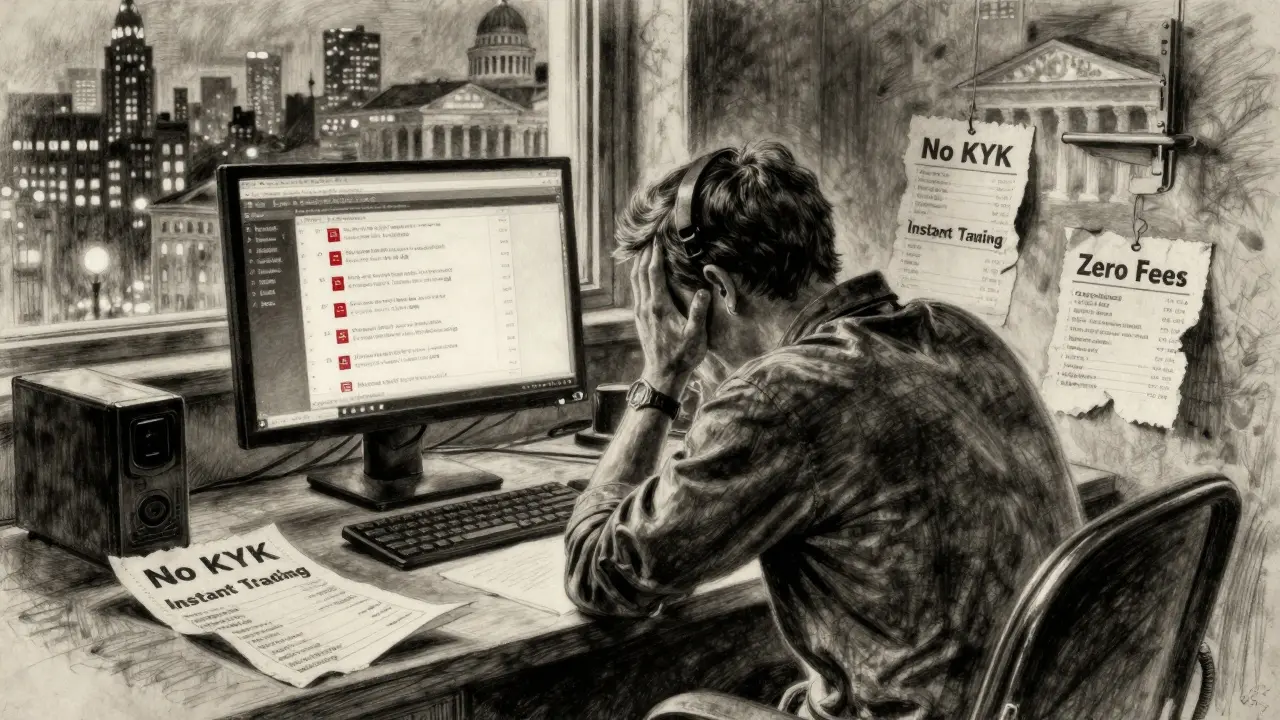
You don’t need to be a tech expert to tell if an exchange is dangerous. Look for these red flags:- No KYC-If you can deposit $10,000 in Bitcoin without uploading ID, walk away.
- Instant trading-Legit exchanges take 24-72 hours to verify new users. If you’re trading immediately, it’s a warning sign.
- Unknown country-Exchanges based in places like Russia, North Korea, Iran, or Syria are high-risk by default.
- Too-good-to-be-true fees-Zero trading fees? No withdrawal limits? That’s not generosity-it’s a lure.
- No public team-If you can’t find names, LinkedIn profiles, or real office addresses, it’s a ghost operation.
Legitimate Reasons to Use Multiple Exchanges
Not everyone using multiple exchanges is breaking the law. There are real, legal reasons to spread your trading across platforms:- Price arbitrage-Bitcoin might be $62,000 on Coinbase and $62,500 on Kraken. Smart traders buy low, sell high.
- Liquidity access-Some altcoins only trade on smaller exchanges. If you want to buy a new token, you need to go where it’s listed.
- Risk diversification-If one exchange gets hacked or freezes accounts, you’re not locked out of everything.
What Happens If You Get Caught?
If you’re flagged by regulators for using multiple exchanges to evade restrictions, you won’t get a warning. You’ll get a subpoena. Your bank accounts could be frozen. Your crypto could be seized. You might face fines-or worse, criminal charges if you’re found to have knowingly aided money laundering. In 2024, a Canadian man was fined $250,000 for using 17 different exchanges to move crypto linked to a darknet marketplace. He claimed he didn’t know the funds were illegal. The court didn’t care. Ignorance isn’t a defense when you’re using platforms with zero KYC and no oversight.What Should You Do Instead?
If you’re restricted from using your preferred exchange, don’t look for loopholes. Look for solutions:- Use a regulated exchange that operates in your country-Even if it has fewer coins, it’s safer.
- Use a hardware wallet-Store your crypto off-exchange. You control it, no matter what the platform does.
- Wait for legal access-Many countries are slowly opening up to crypto. Patience beats risk.
- Consult a crypto lawyer-If you’re unsure, get professional advice before moving funds.
Is it illegal to use multiple crypto exchanges?
It’s not illegal to use multiple exchanges for legitimate reasons like arbitrage or diversification. But if you’re using them to hide transactions, evade sanctions, or bypass KYC rules, you’re breaking the law. Regulators don’t care how many exchanges you use-they care why you’re using them.
Can I get my money back if a nested exchange shuts down?
Almost never. Nested exchanges aren’t regulated, don’t hold insurance, and often operate without legal registration. If the owner disappears, your funds are gone. There’s no FDIC for crypto, and no customer protection program for shadow platforms.
Do decentralized exchanges (DEXs) have KYC?
No, DEXs like Uniswap or PancakeSwap don’t require KYC by design. That’s why they’re popular for privacy-but also why they’re heavily used for sanctions evasion. While using a DEX isn’t illegal, pairing it with illicit funds is.
How do regulators track crypto transactions across exchanges?
Regulators use blockchain analysis tools like Chainalysis and Elliptic that trace crypto flows across wallets and exchanges. Even if you hop between 10 platforms, the blockchain records every transfer. If one wallet is linked to a sanctioned entity, all connected wallets get flagged.
What’s the difference between a nested exchange and a regular exchange?
A regular exchange (like Coinbase or Kraken) holds your funds directly and executes your trades. A nested exchange acts as a middleman-you deposit with them, and they trade on your behalf using another exchange’s platform. You never see the real transaction. That lack of transparency is why they’re risky and often illegal.
Are there any safe ways to trade if my country bans major exchanges?
Yes. Use a regulated exchange that’s licensed in your country, even if it has fewer features. Store your crypto in a hardware wallet. Avoid any platform that doesn’t require ID. And never use services that promise instant, unlimited trading without verification. Safety comes from compliance, not clever workarounds.
Just saw someone get their entire portfolio frozen last month because they used a nested exchange to move funds from Binance to Kraken. No KYC, no warning. Chainalysis flagged the wallet because it had touched a sanctioned address six months prior. You don’t need to be a criminal to get caught - just careless.
Regulators don’t care if you ‘didn’t know.’ They trace the chain. Every hop. Every swap. Even if you’re just trying to get better rates, if you’re jumping between shady platforms, you’re playing Russian roulette with your crypto.
Use a regulated exchange. Even if it’s slower. Even if it has fewer coins. Your money is safer than your ego.
And for god’s sake, don’t use a wallet you got from a Telegram group. I’ve seen 3 people lose six figures that way this year alone.
Okay so let me get this straight - using multiple exchanges is only illegal if you’re trying to hide something? But what if you’re just trying to avoid regional restrictions because your government is actively blocking access to legitimate platforms? Like, in some countries, even Coinbase is geo-blocked not because it’s sketchy but because of bureaucratic nonsense.
Is the solution really just ‘wait for legal access’? That’s like telling someone in a dictatorship to wait for democracy to come before they can breathe. The system isn’t neutral - it’s designed to exclude people based on geography. And now we’re supposed to accept that as moral?
And let’s not pretend DEXs are only used by criminals. I’ve used Uniswap to buy tokens from developers in Nigeria, Ukraine, and Brazil. No KYC needed. No bank account required. That’s not laundering - that’s financial inclusion. The same tech that lets oligarchs hide money also lets a single mom in Jakarta buy Bitcoin to send home to her family.
Regulators aren’t protecting the system - they’re protecting the old banking cartel. And the people who suffer are the ones who can’t afford lawyers or compliance teams.
So yes, some people are using this for crime. But banning the tool because of abusers is like banning knives because someone used one to kill. The real issue is systemic exclusion, not crypto.
Look I get it - you wanna trade. You wanna grow. You don’t wanna be stuck with one platform that’s slow, overpriced, and won’t let you trade your favorite memecoin.
But here’s the truth nobody says: if you’re hopping between exchanges to dodge rules, you’re not being clever - you’re being reckless. And guess what? When things go sideways, no one’s coming to save you. Not the government. Not the exchange. Not your Reddit heroes.
Build your knowledge. Learn how to use a hardware wallet. Learn how to spot a scam. Learn why KYC exists - it’s not to spy on you, it’s to stop people like you from getting scammed.
You want freedom? Real freedom is control. Not loopholes. Not hidden wallets. Not ‘I didn’t know.’ Real freedom is knowing what you’re doing - and doing it right.
Stop chasing shortcuts. Start building competence.
As someone who’s worked with blockchain compliance teams across 3 continents, let me clarify: regulators aren’t targeting users - they’re targeting infrastructure. The problem isn’t multiple exchanges. The problem is unregistered, non-KYC intermediaries that obfuscate origin and destination.
Using Binance, Kraken, and Coinbase legally? Fine. Using a Telegram-based ‘exchange’ that routes through a Russian-linked wallet? That’s not innovation - that’s negligence.
And yes, DEXs aren’t inherently illegal. But when you combine them with mixer protocols, privacy coins, and fake IDs? That’s not privacy - that’s laundering.
Don’t confuse regulatory scrutiny with oppression. It’s due diligence. The same due diligence banks have followed for 50 years. Crypto isn’t exempt from basic financial hygiene.
Let’s be real - if you’re using nested exchanges, you’re either a criminal or an idiot. There’s no middle ground. You think you’re outsmarting the system? Nah. You’re just feeding the machine that gets you locked out of your own money. And when the feds come knocking, you’ll be the one screaming ‘I didn’t know!’ while your wallet sits frozen forever.
And don’t give me that ‘financial freedom’ BS. If you can’t follow basic rules, you don’t deserve to hold crypto. You deserve a financial literacy course - not a wallet.
Stop being a liability. Start being responsible.
It is not merely a matter of legal compliance; it is a moral imperative. To deliberately circumvent regulatory safeguards is to participate in the erosion of societal trust. The sanctity of financial integrity must be upheld, regardless of convenience or perceived injustice in jurisdictional limitations.
One does not justify theft by citing economic disparity. Nor does one excuse the obfuscation of illicit capital flows under the banner of ‘financial freedom.’
Those who engage in such practices are not pioneers - they are parasites upon the very system they claim to champion.
Let’s dismantle the myth: DEXs aren’t ‘financial inclusion tools.’ They’re laundering pipelines with a frontend. The fact that some ‘mom in Jakarta’ uses them doesn’t make them ethical - it makes them exploited. The real victims aren’t the users - they’re the legitimate businesses and individuals who get dragged into investigations because of your ‘innocent’ swaps.
Chainalysis doesn’t care if you ‘meant well.’ They trace the money. And if your wallet touches a sanctioned address? Congrats - you’re now on a watchlist. Your bank account? Frozen. Your credit? Dead. Your future? Negotiable.
Stop romanticizing anonymity. It’s not freedom. It’s a trap.
The question isn’t whether using multiple exchanges is legal - it’s whether it’s wise. The blockchain is immutable. Every transaction echoes. Even if you’re not breaking the law today, you’re building a trail that tomorrow’s regulators - or worse, a malicious actor - can follow.
Freedom isn’t the absence of rules. It’s the discipline to choose the right path even when the easy one is open.
What you call a loophole, others call a prison waiting to be locked.
Let me be crystal clear: If you’re using non-KYC exchanges, you’re not ‘avoiding restrictions’ - you’re enabling transnational crime. Every time you send crypto through a shadow platform, you’re helping fund ransomware, human trafficking, and terror networks. You think you’re just trading? You’re complicit.
And don’t give me that ‘I didn’t know’ crap. The red flags are everywhere. No team? No contact info? Zero KYC? That’s not ‘decentralized innovation’ - that’s a digital Ponzi scheme with a whitepaper.
If you’re not part of the solution, you’re part of the problem. And if you’re still using Grinex after it was sanctioned? You’re not a trader - you’re a criminal enabler.
Oh wow. So now we’re supposed to trust the U.S. government? The same ones who froze Russian assets, banned TikTok, and now want to control your crypto? This is just the next step toward a digital dictatorship.
They don’t want you to have money they can’t track. They don’t want you to be free. They want you to be a slave to the Fed. And you’re falling for it.
Use DEXs. Use multiple wallets. Use whatever you want. The government can’t stop you - only your fear can.
Wake up. This isn’t about crypto. It’s about control.
If you’re using multiple exchanges, please - please - at least keep a spreadsheet. Date, platform, amount, wallet address. Even if you’re not taxed yet, this saves your sanity later.
I helped a friend clean up 3 years of chaotic trading last year. She had 47 wallets and zero records. Took us 8 weeks. She cried. I cried. We got her taxes done - but barely.
You don’t need to be a genius to stay safe. Just organized.
And if you’re using a platform with no contact info? Delete the app. Walk away. Your future self will thank you.
Let’s not conflate risk with illegality. The post paints a black-and-white picture, but reality is gray. There are legitimate reasons to use multiple platforms - liquidity gaps, regional restrictions, fee arbitrage. The issue isn’t the tool - it’s the opacity.
Transparency is the antidote. Not prohibition.
Instead of demonizing users, regulators should incentivize compliance: tax incentives for reporting, educational grants for small traders, clear guidance on what constitutes ‘suspicious’ behavior.
People aren’t the problem. The lack of clear, accessible regulation is.