
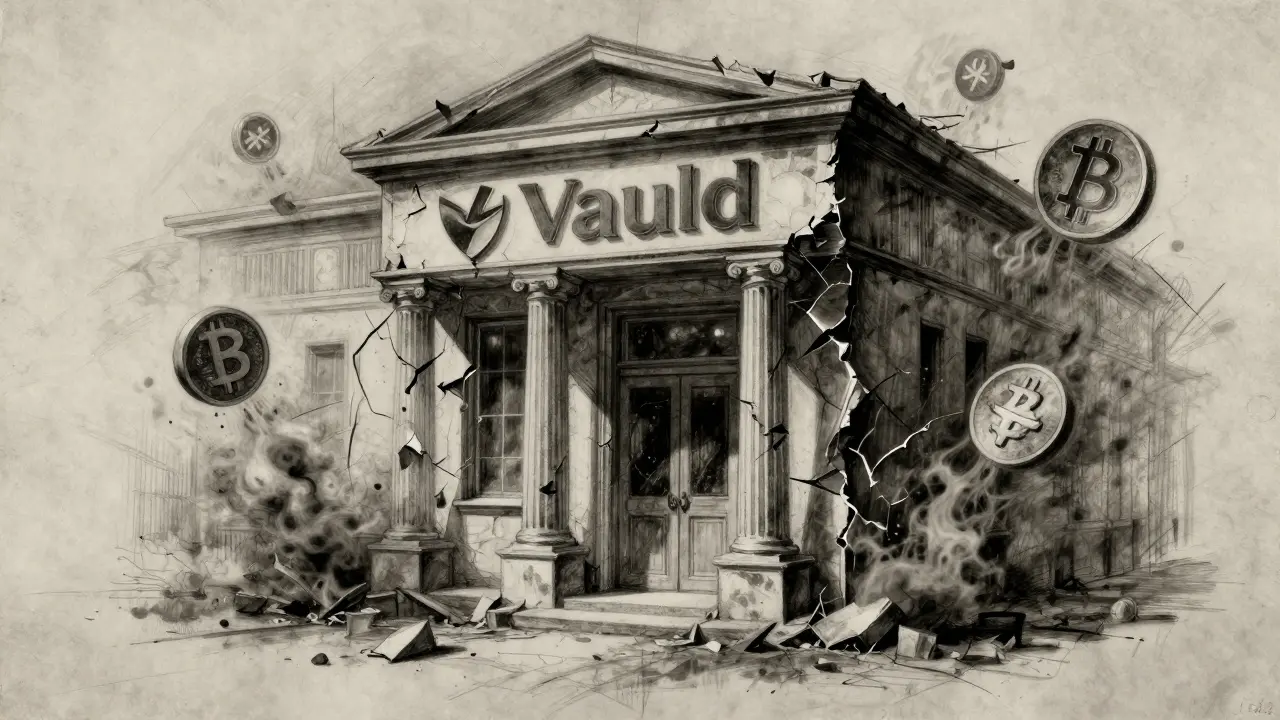
Back in 2022, Vauld looked like the perfect crypto bank. Promising up to 12% annual interest on your Bitcoin, instant swaps between 275+ coins, and a simple interface that felt like a mobile banking app - it pulled in tens of thousands of users, especially from India and the U.S. But by June 27, 2022, everything stopped. No withdrawals. No deposits. No trading. Just silence. And now, in December 2025, Vauld is gone. Not just inactive - defunct. This isn’t a review of a platform you can still use. It’s a postmortem of one of the biggest crypto lending failures in history.
How Vauld Sold Itself as a ‘Crypto Bank’
Vauld didn’t just let you trade crypto. It promised you could earn interest, borrow against your holdings, and swap coins instantly - all in one place. The pitch was simple: deposit your Bitcoin or Ethereum, and get paid weekly. No monthly waits. No hidden fees. The platform claimed to use BitGo for custody, which gave users a false sense of security. BitGo is a legit institutional custodian, but that didn’t mean Vauld was safe. It just meant they had a fancy partner logo on their website.
The real hook? Interest rates. At 12% for stablecoins like USDC, Vauld was offering nearly 10x what a savings account pays. For many, especially in countries with weak banking systems or high inflation, this wasn’t just attractive - it felt like free money. Users locked up their coins in fixed-term deposits: 1, 3, or 6 months. Vauld claimed you could withdraw early without penalty, though you’d get less interest. That sounded generous. Until you realized they were borrowing your coins to lend to other failing platforms.
The Business Model That Couldn’t Last
Vauld didn’t make money from trading fees. It made money by lending out user deposits. That’s not unusual - Celsius, BlockFi, and Nexo did the same. But Vauld’s strategy was reckless. Instead of lending to stable, well-capitalized institutions, they poured money into high-risk borrowers like Three Arrows Capital and Celsius Network. When TerraUSD collapsed in May 2022, triggering a cascade of defaults, those borrowers couldn’t repay. Vauld’s loan book, which was supposed to be backed by 150% collateral, suddenly had assets worth 50% or less of what was owed.
Here’s the brutal truth: Vauld didn’t have enough cash on hand to cover withdrawals. When users started pulling out funds in June 2022, the platform had already lent out nearly every dollar. They tried to sell off crypto holdings to raise liquidity, but the market was crashing. In less than a month, they liquidated over $200 million in assets - and still couldn’t keep up. By June 27, they shut down withdrawals, claiming ‘extreme market conditions.’ It wasn’t a temporary pause. It was the end.
What Users Lost - And How They Found Out
Before the collapse, Vauld had over $190 million in user funds trapped in bad loans. Most users didn’t know where their money was going. They just saw their interest hit their wallet every Friday. One Reddit user, u/CryptoSaver99, said: ‘Got my USDC interest every Friday like clockwork.’ That’s exactly what Vauld wanted them to believe - that this was safe, reliable, and sustainable.
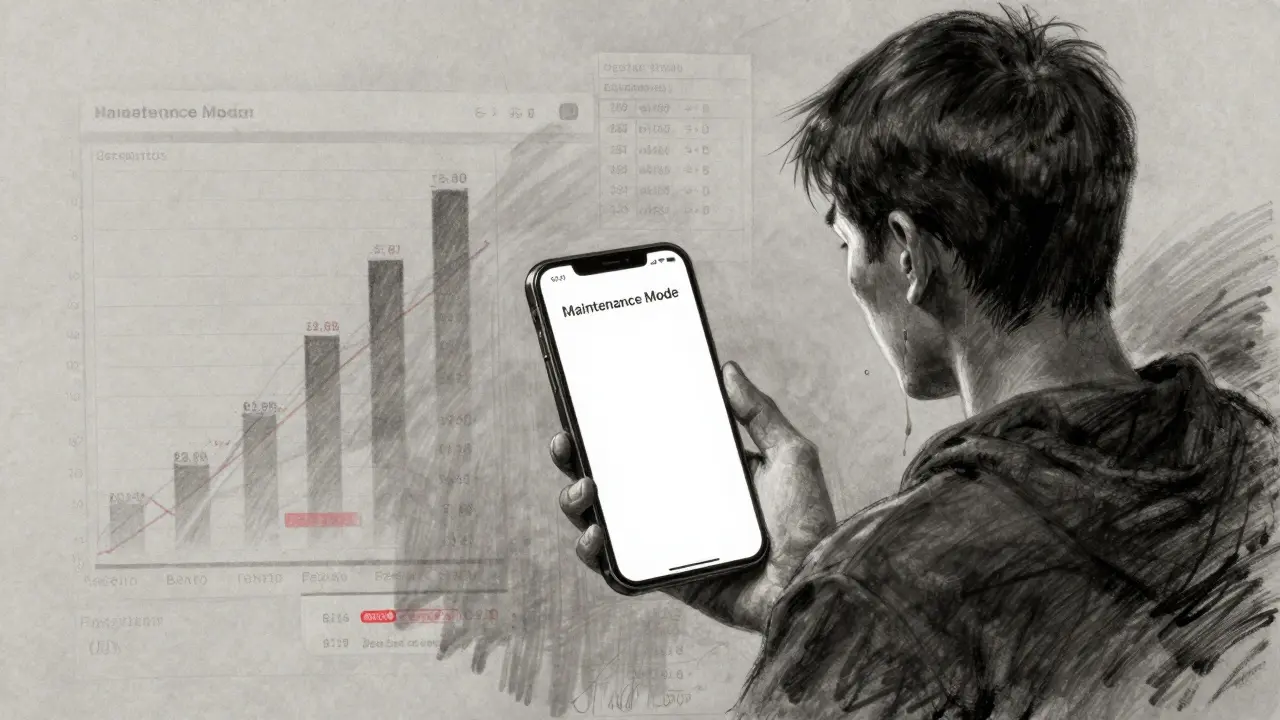
Then, the silence. First, customer support took 72+ hours to respond. Then, emails went unanswered. By mid-July 2022, Vauld’s website showed a maintenance page. No updates. No timeline. No explanation. Over 1,200 complaints were filed with India’s cybercrime portal alone. Trustpilot ratings dropped to 1.1 out of 5. Users who had locked up 2.3 BTC in 3-month fixed deposits found themselves with zero access. No refunds. No partial payouts. Just a website that looked like it was abandoned.
Why Vauld Failed When Others Survived (For a While)
Compare Vauld to Nexo or BlockFi. Both also collapsed in 2022, but they had clearer disclosures, more diversified lending partners, and slightly better risk controls. Vauld didn’t. They didn’t publish their loan portfolio. They didn’t disclose their counterparty exposure. They didn’t even have a clear plan for a market crash. When Terra/Luna fell, Vauld didn’t have enough liquid reserves to cover the fallout. Other platforms had insurance funds or reserve ratios. Vauld had promises.
They also over-expanded. From 40 employees in 2020 to 200 by early 2022. They hired aggressively, ran ads everywhere, and made big claims about being ‘the most secure crypto bank.’ But security isn’t about logos or slogans. It’s about how you manage risk. And Vauld didn’t. They chased growth, not safety.
What You Can Learn From Vauld’s Collapse
If you’re still using a platform that promises high interest on crypto deposits, ask yourself these questions:
- Do they tell you exactly who they’re lending your coins to?
- Is there a public audit of their reserves?
- Do they have a clear plan for a market crash?
- Are they regulated, or are they operating in a legal gray zone?
Vauld answered none of these. They were a classic Ponzi-style operation: paying old users with new deposits, until the flow of new money dried up. The interest wasn’t earned from smart investments. It was borrowed from the next wave of users.
Also, don’t assume custody = safety. BitGo secured the assets, but Vauld controlled the keys. That’s like trusting a bank to store your cash, but letting the bank manager lend it out to strangers without your permission.

Is There Any Hope of Getting Your Money Back?
As of late 2025, the answer is no - not really. Blockchain analytics firm Elliptic estimated recovery rates at under 30%. That means if you had $10,000 in Vauld, you might get back $2,000 - if you’re lucky. Legal proceedings are still dragging on in India and the U.S., but the chances of full recovery are slim. Vauld’s founders have vanished from public view. No interviews. No statements. No apologies.
This isn’t a cautionary tale about crypto being risky. It’s a warning about trusting platforms that promise too much. If it sounds too good to be true - especially when it’s tied to interest rates higher than any traditional bank - it probably is.
What Replaced Vauld? Better Alternatives Today
Today, users who want to earn interest on crypto have better, safer options:
- Coinbase Earn: Offers small, verified rewards on stablecoins - no lending risk.
- Kraken: Provides interest on select coins with full reserve transparency and audits.
- BlockFi (restructured): Now operates under stricter regulatory oversight with lower rates and clearer disclosures.
- Self-custody + DeFi: Use wallets like MetaMask and lend directly on Aave or Compound - you control the keys, you bear the risk, but you know exactly where your money is.
The lesson? Don’t outsource your security. If you’re not holding your own private keys, you’re not really owning your crypto. You’re just renting it to someone else.
Final Verdict: Vauld Was a Trap Wrapped in a Banking App
Vauld wasn’t a failure because of bad luck. It was a failure because of bad design - a business model built on leverage, opacity, and overpromising. It looked safe. It felt safe. But it wasn’t. And when the market turned, it collapsed faster than most expected.
If you’re thinking of using a crypto lending platform today, skip the flashy ads and the 12% promises. Look for transparency. Look for audits. Look for platforms that let you withdraw anytime without drama. And most of all - never invest more than you’re willing to lose. Because in crypto, even the most reputable names can vanish overnight. Vauld proved that.
Is Vauld still operating in 2025?
No, Vauld ceased all operations on June 27, 2022. The platform no longer accepts deposits, withdrawals, or trades. Its website displays only a maintenance message, and customer support has been inactive since mid-2022. There is no indication it will return.
Can I get my money back from Vauld?
Recovery is unlikely. Blockchain analytics firm Elliptic estimated that users might recover less than 30% of their funds, if anything at all. Legal actions are ongoing in India and the U.S., but the process is slow, and Vauld’s assets are tied up in defaulted loans to failed companies like Celsius and Three Arrows Capital. Most users have received no communication or payout.
Why did Vauld offer such high interest rates?
Vauld paid high interest by lending user deposits to other crypto firms - often at high risk. They didn’t earn it through trading fees or legitimate investments. Instead, they borrowed from one user to pay another, similar to a Ponzi scheme. When borrowers defaulted during the 2022 crypto crash, Vauld had no cash left to pay users.
Was Vauld hacked?
No, Vauld wasn’t hacked. The platform shut down because it was insolvent. It had lent out more money than it had in reserves. When borrowers failed to repay during the market crash, Vauld couldn’t cover withdrawal requests. This was a liquidity crisis, not a security breach.
Should I use crypto lending platforms at all?
You can, but only with extreme caution. Avoid platforms that don’t disclose their lending partners, don’t publish audits, or promise returns above 5-7%. Stick to regulated exchanges like Coinbase or Kraken that offer low-risk, transparent earning options. Or better yet - hold your own crypto in a private wallet. You control the keys, you control the risk.
What’s the safest way to earn interest on crypto today?
The safest options are: 1) Use Coinbase Earn or Kraken Interest for verified, low-risk yields on stablecoins; 2) Use decentralized protocols like Aave or Compound with your own wallet - you’re not trusting a middleman; 3) Avoid any platform that doesn’t clearly explain where your funds are going. If they won’t tell you, don’t give them your money.
Man, I still remember when my cousin dumped her entire savings into Vauld because she saw ‘12% weekly’ on a TikTok ad. She cried for weeks when it vanished. Not because she lost money - but because she trusted it. That’s the real tragedy here. Not the crypto crash. The blind trust.
People need to stop treating crypto platforms like banks. They’re not regulated. They’re not insured. And they’re not your friend. If it sounds like a payday loan with blockchain glitter, walk away.
I’ve been in crypto since 2017. I’ve seen this movie. It always ends with someone’s grandma’s retirement fund in a black hole.
Stop chasing yields. Start chasing safety. Your future self will thank you.
12% interest? 😏 Coincidence that it collapsed right after the Fed raised rates? Nah. This was a government-backed asset freeze. They wanted to kill crypto lending so they could push CBDCs. Vauld was just the sacrifice. The real scam? They let you think you had control. You never did. Your coins were always their play money. 🤫
I just want to say - if you’re reading this and you lost money to Vauld or any of these platforms - I’m so sorry. It’s not your fault. You weren’t greedy. You were just looking for a better way to make your money work. That’s human. Not stupid.
It’s the system that failed you. Not you.
Don’t let this make you hate crypto. Let it make you smarter. There are good players out there. They just don’t scream the loudest.
It’s amusing how the masses conflate ‘interest-bearing’ with ‘banking.’ Vauld was never a bank. It was a leveraged hedge fund masquerading as a fintech app. The real failure? Not Vauld’s insolvency - but the public’s inability to read a whitepaper or understand counterparty risk. One must wonder if literacy rates have declined since the invention of the smartphone.
Anyone who put money into Vauld deserved to lose it. 12%? On stablecoins? That’s not investing - that’s begging for a Ponzi. If you don’t know the difference between a custodial service and a lending pool, you shouldn’t be touching crypto. Period.
And don’t come crying to me when your ‘crypto bank’ vanishes. You were warned. Every. Single. Day.
My mom still asks me if Vauld’s coming back. I just hug her and say, ‘No, honey. But we’re gonna learn how to keep your money safe next time.’
That’s all we can do. Keep going. Keep learning. Don’t let fear stop you - just make smarter choices.
The term ‘crypto bank’ is a semantic fallacy. Vauld operated as a non-bank financial intermediary with inadequate collateralization ratios and opaque counterparty exposure. The collapse was not anomalous - it was inevitable. The only surprise was the duration of the delusion.
Let’s get real. This wasn’t just about bad business. It was about human psychology. We crave certainty. We want someone else to manage our money. We want to feel smart for finding the ‘hidden opportunity.’ Vauld didn’t trick people - it mirrored what we wanted to believe.
That’s why it worked. And that’s why it fell.
The real question isn’t ‘How did Vauld fail?’ It’s ‘Why did we let it?’
We’re not victims of fraud. We’re participants in a collective delusion. And until we admit that - we’ll keep repeating this cycle.
Self-custody isn’t just safer. It’s more honest. You own the risk. You own the reward. No middleman. No lies. Just you and your keys.
That’s not hard. It’s just uncomfortable. And discomfort is the price of freedom.
India had 40% of Vauld’s users. RBI didn’t warn anyone. They were too busy banning crypto. Now everyone’s crying. Should’ve regulated, not banned. Now we’re stuck with zero recourse. Typical.
Wait wait wait - so you’re telling me the same people who said ‘Bitcoin is digital gold’ are now mad because a platform promised interest? 🤦♂️
Y’all wanted free money. You got free money. Now you’re mad because the magician pulled the card? 😂
I had $15k in Vauld. I still check the website every day. Like, maybe if I refresh it enough, the money will come back. I know it’s dumb. But I can’t stop. It’s like watching a car crash on loop. I just… need to see if it’s still happening.
yo so i just found out my bro put his whole tax refund into vauld lmao he thought it was like a high yield savings acct 😭
now he’s on a 3am reddit spiral about ‘crypto is rigged’ and i just wanna hug him and tell him its gonna be ok
we all got scammed. but we can still learn. dont give up on crypto. just dont trust the hype.
It is imperative to note that the institutionalization of decentralized finance without regulatory oversight constitutes a structural vulnerability inherent in the architecture of modern crypto-economic systems. Vauld did not fail because of malice, but because of an epistemological failure on the part of its user base to comprehend the ontological distinction between custodial and non-custodial financial instruments. The collapse was not merely financial - it was a failure of epistemic responsibility.
They didn’t just lend your coins. They used them to buy their own stock. That’s why the founders vanished. They cashed out before the crash. The whole thing was a pump-and-dump with a UI. I’ve got the blockchain evidence. If you want the wallet addresses, DM me. I’m not joking.
Did you know that BitGo’s custody contract didn’t cover lending? That’s right. They were just storing the keys. Vauld had the private keys. So technically, BitGo wasn’t even liable. And yet they let Vauld slap their logo everywhere like it was a seal of approval. That’s not negligence - that’s complicity. The whole crypto industry is built on lies wrapped in logos.
My wife still has her Vauld app open on her phone. Every night she opens it. Just looks at the balance. Then closes it. She hasn’t said a word about it since June 2022. I think she’s waiting for it to come back. I think she believes if she keeps looking, it’ll fix itself.
I don’t know what to say anymore.
My uncle lost ₹12 lakh. He’s 68. Still thinks crypto is a scam. I told him: ‘It’s not crypto that’s the scam. It’s the people selling it.’ He nodded. That’s the only wisdom that matters now.
Okay so here’s the thing - I used to think Vauld was legit because their website looked so clean and professional. Like, the animations, the colors, the fonts - it felt like Apple. And I thought, if it looks this good, it must be safe. But guess what? So does a phishing site. So does a fake bank app. So does a Nigerian prince’s email. The design doesn’t mean anything. It’s all theater. And we fell for it. Every single one of us. We traded security for aesthetics. And now we’re paying the price. I’m not mad at Vauld. I’m mad at myself. I should’ve asked more questions. I should’ve read the TOS. I should’ve known better. But I didn’t. And now I’m learning. Slowly. Painfully. But I’m learning.
bro i just got my first crypto interest payment from kraken yesterday - 4.2% on usdc 😭
it’s not 12% but it’s real. and i can withdraw anytime. and they send emails when things change. and they have audits. and i sleep at night.
you don’t need to be a genius. you just need to be careful.
ps: i used to use vauld too. i’m not proud of it. but i’m here now. and i’m better.
There is a profound moral dimension to this collapse that transcends financial loss. The erosion of trust in financial intermediaries - particularly those that deliberately obfuscate risk under the guise of innovation - represents a societal fracture. One cannot help but reflect on the ethical responsibility of those who market high-yield instruments to populations with limited financial literacy. The absence of regulatory intervention is not neutrality - it is complicity. The victims of Vauld were not merely investors. They were citizens who placed faith in a system that failed to protect them. That failure demands accountability, not just recovery.
hey everyone - i know this is heavy. i lost my emergency fund in vauld. but i’m still in crypto. not because i’m dumb - because i believe in it.
just not like this.
i use coinbase earn now. i keep 95% in my ledger. i read the docs. i ask questions.
we can still win. we just gotta do it right.
you’re not alone. we’re all learning together.
Maybe the real lesson isn’t about crypto. Maybe it’s about how we assign trust. We trust logos. We trust apps that feel smooth. We trust people who talk fast and smile a lot. But real safety? It’s quiet. It’s boring. It’s audits. It’s transparency. It’s waiting. It’s saying no to the shiny thing.
Vauld didn’t steal from us. We gave it to them. Because we didn’t know how to say no.
Of course Vauld collapsed - they were using TerraUSD as collateral. LMAO. The whole thing was a house of cards made of glitter and lies. And the best part? The founders are probably sipping margaritas in Bali right now laughing at us. 🍹😎
And now we have Kraken, Coinbase Earn, Aave… all the same promises. But this time, they’re showing their books. That’s the difference. Not the returns. The transparency.
It’s not about being rich. It’s about being awake.