

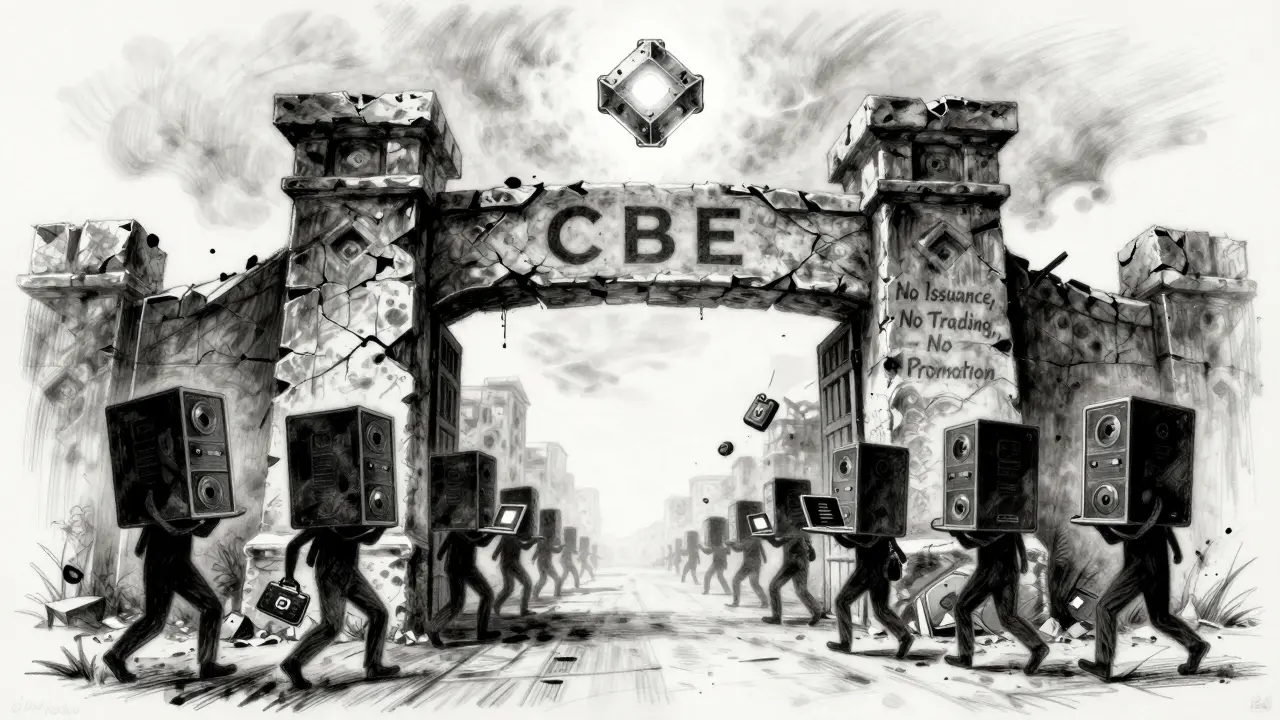
On September 16, 2020, Egypt didn’t just update its banking laws - it shut the door on cryptocurrency for its 104 million people. Law No. 194 of 2020, officially called the Central Bank and Banking Sector Law, didn’t mention Bitcoin or Ethereum in passing. It didn’t need to. Article 204 made it crystal clear: no issuance, no trading, no promotion of any cryptocurrency without approval from the Central Bank of Egypt (CBE). And no approvals have ever been given.
What Law 194 Actually Bans
This isn’t a gray-area regulation. It’s a total blackout. The law doesn’t just stop exchanges like Binance or Coinbase from operating in Egypt. It bans everything related to crypto: mining rigs, crypto ATMs, Telegram groups explaining how to buy Bitcoin, YouTube videos about DeFi, even blockchain startups trying to build non-crypto applications. If it touches cryptocurrency in any way, it’s illegal unless the CBE says otherwise - and it hasn’t.
The law’s language is broad and absolute. It targets:
- Issuing new tokens (ICOs, token sales)
- Operating crypto exchanges or trading platforms
- Advertising or promoting crypto services
- Mining cryptocurrency using local electricity or hardware
- Providing wallet services or custody solutions
- Any financial institution processing crypto-related payments
Even if you’re just trying to explain how crypto works in a blog post, you could be violating the law. The CBE has made it clear: if you’re not licensed, you’re breaking the law - and there are no licenses for crypto.
Who Enforces It and How
The Central Bank of Egypt isn’t just a regulator here - it’s the gatekeeper, judge, and jury. It operates independently, answers directly to the President, and holds exclusive power to grant exceptions. But it hasn’t granted any. Not one.
Enforcement is quiet but effective. Banks were ordered in 2022 (via Circular 4/2022) to block all transactions going to known crypto platforms. That meant thousands of Egyptian users suddenly couldn’t send money to Binance, Kraken, or even local P2P traders. Chainalysis data shows peer-to-peer trading volume dropped 92% within a year. Mobile wallets and apps that relied on bank transfers became useless.
What about criminal penalties? Article 205 gives the CBE the power to refer violations to courts. No one has been publicly prosecuted - but that doesn’t mean no one has been punished. Reports from the Egyptian Initiative for Personal Rights show at least 47 cases where people faced dual charges: one under Law 194 and another under the 2018 Anti-Money Laundering Law. That’s double the legal risk.
Why Egypt Chose a Total Ban
Egypt’s central bank says crypto is too risky. They point to price swings, fraud, and capital flight. Internal CBE reports from 2020 estimated that Egyptians were moving around $200 million in crypto each year - money leaving the country, bypassing currency controls, and avoiding taxes.
That’s a big deal for Egypt. The Egyptian pound has been under pressure. Inflation hit 30% in 2023. The government was trying to stabilize the currency and manage foreign reserves. Crypto, with its borderless nature, looked like a threat to monetary control.
Professor Ahmed Kandil from Cairo University put it bluntly: "It’s about sovereignty. If people can move money out of Egypt without oversight, the central bank loses its grip."
But there’s another side. Faisal Arefin from the MENA Fintech Association argues the ban is self-sabotage. Egypt had a $3 billion fintech market opportunity. Startups building blockchain for land registry, supply chain tracking, or digital IDs were being lumped in with speculative coin traders. The government didn’t separate the tech from the tokens.
What Happened to People and Businesses
The human cost is real. On Reddit’s r/CryptoEgypt, 87% of over 1,200 users reported their exchange accounts frozen or blocked. Binance and Coinbase were named in 63% of those cases. Some people lost access to thousands of dollars. The "Egypt Crypto Victims" Facebook group has over 12,500 members and documents 427 cases of frozen assets totaling $8.7 million.
Businesses didn’t survive. A 2022 survey by the Egyptian Fintech Startup Association found that 78% of blockchain companies had relocated - mostly to Dubai or Singapore. That’s $150 million in lost investment and talent. Engineers, developers, and entrepreneurs left. The ones who stayed? They work in secret. Using VPNs, crypto wallets, and P2P apps like Paxful or LocalBitcoins, an estimated 3.2 million Egyptians still trade crypto. Chainalysis estimates $1.1 billion in annual activity continues underground.
The Paradox: Blockchain Without Crypto
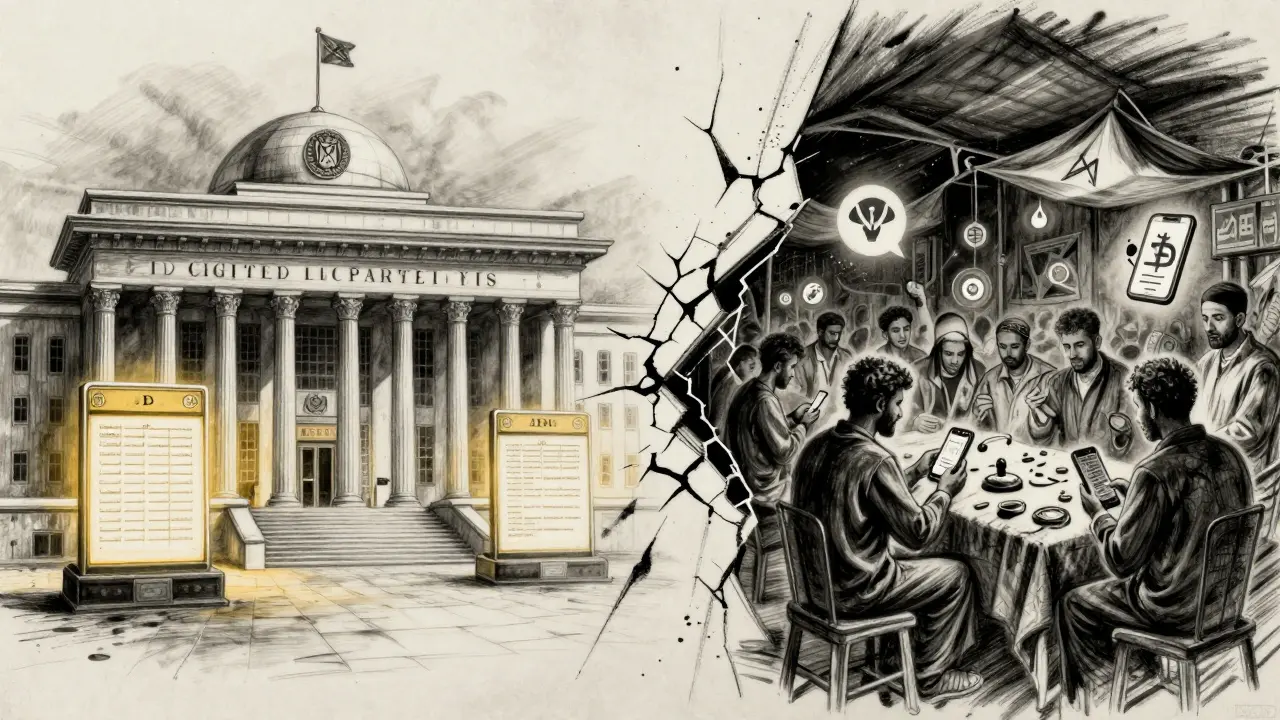
Here’s the contradiction no one talks about. While crypto is banned, the Egyptian government launched its own national blockchain strategy in November 2022. The Ministry of Communications is testing blockchain for land titles, health records, and public tenders. They want the tech - but not the money.
Dr. Hanaa El Shenawy called it "Egypt’s Digital Policy Schizophrenia." You can build a blockchain system to track wheat shipments, but you can’t use Bitcoin to pay for it. You can use distributed ledgers to reduce corruption - but if someone tries to send crypto to a freelancer, they risk legal trouble.
This disconnect makes enforcement messy. A developer building a blockchain-based voting system is fine. But if that same developer also owns Ethereum? They’re a target.
How Egypt Compares to the Region
Most of the Middle East is moving toward regulation. The UAE created the Virtual Assets Regulatory Authority (VARA) in 2022. Saudi Arabia, Bahrain, and Qatar all have licensing systems. Even Jordan and Lebanon are drafting frameworks.
Egypt is one of only three countries in the region with a full ban - alongside Algeria and Iraq. The World Bank’s 2023 Digital Currency Report calls Egypt’s approach "the most restrictive in the region."
Meanwhile, fintech investment in Egypt collapsed. From $485 million in 2019, it dropped to $178 million by 2022 - a 63% fall. Whether that’s because of the ban, the economic crisis, or both, is debated. But the timing lines up too closely to ignore.
What’s Next? The IMF and the Future
Egypt is negotiating an $8 billion IMF bailout. The IMF’s July 2023 report didn’t mince words: "Regulatory barriers to fintech innovation must be addressed."
That’s pressure. The IMF doesn’t care about sovereignty if it means the economy can’t grow. The central bank is stuck between two forces: maintaining control over the currency and keeping the economy alive.
Some experts think Egypt will soften by 2026. Fitch Ratings predicts a "controlled sandbox" - allowing banks to test crypto services under strict supervision. Others, like the World Bank, believe the ban will hold through 2025 because of ongoing currency instability.
One thing is certain: the ban isn’t working the way the CBE hoped. People still use crypto. Businesses still leave. Innovation still flees. The law didn’t stop crypto - it just pushed it underground.
For now, if you’re in Egypt and you hold Bitcoin, you’re not breaking the law by owning it. But if you trade it, promote it, or try to cash out through a bank - you’re walking a tightrope with no safety net.
Is it illegal to own Bitcoin in Egypt?
Yes, owning Bitcoin or any cryptocurrency is not explicitly illegal under Law 194 of 2020. The law bans issuance, trading, and promotion - not possession. However, if you try to buy, sell, or transfer crypto through Egyptian banks or financial institutions, you’ll likely be blocked. You can hold it in a personal wallet, but using it for transactions carries legal risk.
Can I mine cryptocurrency in Egypt?
No. Mining is considered "issuance" under Article 204. Running mining hardware - even on your home computer - is prohibited. The law doesn’t distinguish between small-scale and industrial mining. All forms are banned. Authorities have raided homes and businesses for mining equipment, especially after the 2022 bank transaction bans.
Why hasn’t the CBE granted any crypto licenses?
The CBE has not granted any licenses because it views cryptocurrency as inherently risky and incompatible with Egypt’s monetary control. There’s no official statement explaining why, but internal reports suggest fears of capital flight, fraud, and undermining the Egyptian pound. Analysts believe the central bank lacks the technical infrastructure to monitor decentralized networks effectively, making licensing too risky.
Are there any legal ways to use crypto in Egypt?
No legal channels exist. Even using crypto for payments, remittances, or investments through local platforms is banned. Some businesses use offshore services, but this is done at personal risk. The only legal gray area is blockchain technology used for non-crypto purposes - like land registry or supply chain tracking - as long as no cryptocurrency is involved.
What happens if I get caught trading crypto?
You won’t necessarily go to jail, but you could face serious consequences. Banks may freeze your accounts. Authorities could seize devices used for trading. In some cases, you may be referred to court under both Law 194 and the Anti-Money Laundering Law. There are no published fines, but legal fees, asset freezes, and travel restrictions have been reported.
Can I use a VPN to access crypto exchanges?
Yes, many Egyptians do. Using a VPN to access Binance or Coinbase isn’t illegal by itself - but the act of trading crypto still violates Law 194. The government can’t block every VPN, but they can block bank transfers to those platforms. So while you can technically trade, you can’t easily cash out or deposit funds legally. It’s a workaround, not a solution.
Is there any chance the law will change?
Possibly. The IMF is pushing Egypt to modernize its fintech rules. Parliament discussed amendments in early 2023, but no formal proposals were introduced. Experts believe pressure from tech talent leaving the country, combined with economic instability, may force a shift by 2026. But until then, the ban remains absolute.
Final Thoughts
Egypt’s crypto ban isn’t just a rule - it’s a statement. It says: we control the money, and we won’t let technology take that away. But in trying to protect the system, the government may be hurting the future. Innovation doesn’t disappear because of a law. It just moves elsewhere.
For now, Egyptians who believe in crypto are stuck in a legal gray zone. They can hold it. They can trade it - in secret. But they can’t use it without risk. And that’s the real cost of Law 194: not the money lost, but the opportunity.


