
Crypto Penalty Calculator: Risk Assessment in China (2025)
Under China's 2025 Ban:
Owning cryptocurrency is now a criminal offense with severe consequences. Authorities seize all assets and impose fixed fines up to 500,000 RMB ($70,000 USD) regardless of holdings value.
Important: This calculator estimates potential losses based on official penalties. Actual enforcement may vary based on circumstances.
Seizure of all assets: 0 RMB
Fixed fine: 500,000 RMB
Total potential loss: 500,000 RMB
⚠️ Article Warning: As stated in the article, "Don't mine. Don't buy. Don't hold." Even if you think you're safe, the system is designed to catch you.
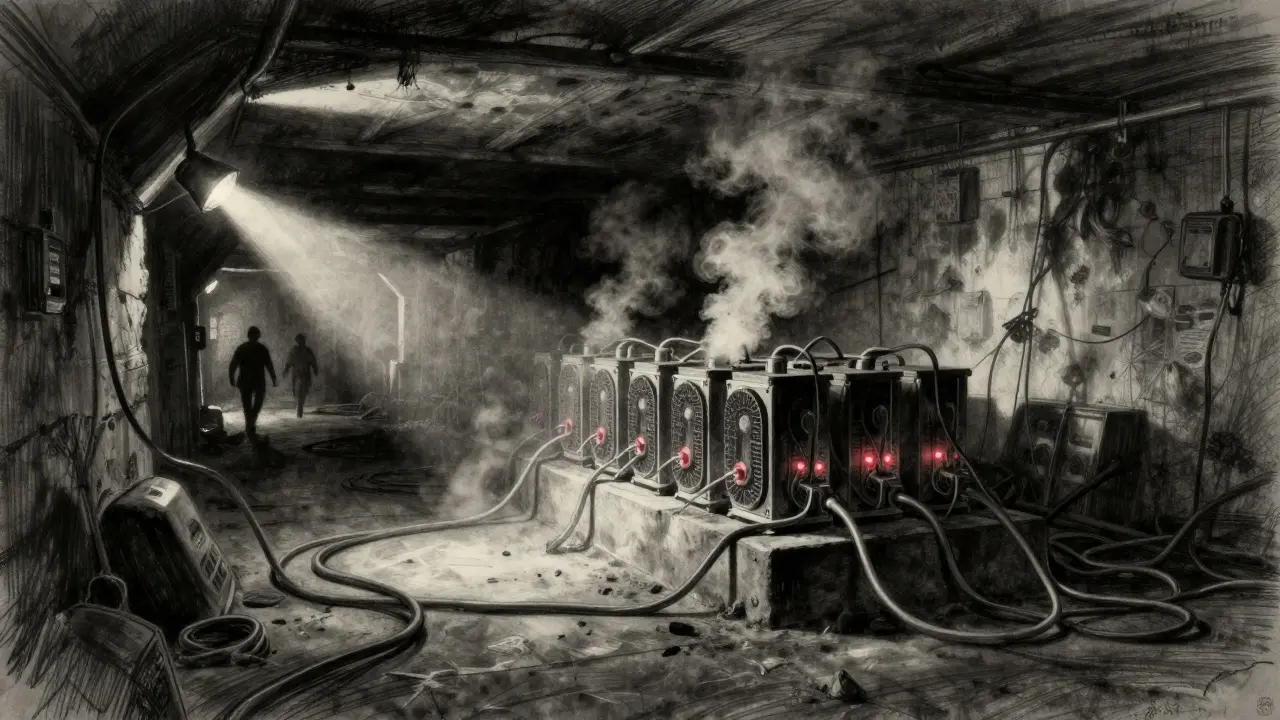
As of 2025, mining cryptocurrency in China is not just restricted-it’s a criminal offense. If you’re caught running even a single mining rig in your garage, you could face fines, asset seizures, or arrest. This isn’t a rumor. It’s the law. And it’s been enforced with increasing precision since the government’s comprehensive ban on all cryptocurrency activities took effect on May 31, 2025.
How China Went from Crypto Hub to Zero Tolerance
Just a decade ago, China was the undisputed epicenter of cryptocurrency mining. Over 70% of Bitcoin’s global hash rate came from Chinese farms, mostly in Sichuan and Inner Mongolia, where cheap hydropower and coal-generated electricity made mining profitable. Companies like Bitmain and MicroBT built their empires there. But the government didn’t see it as economic progress-it saw a threat. The crackdown started quietly in 2013, when banks were told not to process Bitcoin transactions. Then in 2017, the government shut down all domestic cryptocurrency exchanges, calling ICOs illegal fundraising. By 2019, mining farms were being raided and shut down in waves. But it wasn’t until 2021 that the real hammer fell: the People’s Bank of China declared all cryptocurrency transactions illegal and banned mining nationwide. Thousands of operations fled overseas overnight. The 2025 ban was the final step. It didn’t just ban mining or trading-it made owning crypto a crime. No exceptions. No loopholes. Not even holding Bitcoin in a personal wallet is legally protected anymore. Authorities now treat crypto ownership like possessing contraband.Why Did China Do This?
China’s reasons aren’t arbitrary. They’re strategic and deeply tied to national priorities. First, energy use. Bitcoin mining is power-hungry. In 2021, Chinese mining operations consumed more electricity than entire countries like Argentina and the Netherlands. That clashed directly with China’s pledge to reach carbon neutrality by 2060. The government couldn’t justify burning coal to generate digital coins when factories and homes needed reliable power. Second, financial control. Cryptocurrencies operate outside the state’s banking system. That means people can move money without oversight. That’s dangerous for a government that wants to track every yuan flowing through its economy. Underground crypto use was linked to capital flight, tax evasion, and money laundering-especially during economic slowdowns. Third, the digital yuan. China spent over a decade developing its own central bank digital currency, the e-CNY. Unlike Bitcoin or Ethereum, the digital yuan is fully controlled by the state. Every transaction is traceable. Every user is identifiable. The government doesn’t want competition. It wants total dominance over digital money-and crypto is the only real threat to that.How the Ban Is Enforced
The ban isn’t just on paper. It’s enforced with surveillance technology and coordinated agencies. The People’s Bank of China monitors bank accounts for any crypto-related transfers. If your account shows payments to a mining pool or exchange, you’re flagged. The State Administration of Foreign Exchange tracks cross-border crypto transactions-sending Bitcoin overseas is now a red flag for capital flight investigations. Electricity companies now use AI to detect abnormal power usage. A home using 20,000 kWh per month? That’s not normal. That’s a mining farm. Utilities report these spikes directly to local police. In 2024, over 300 underground mining operations were discovered this way. The Cyberspace Administration scans peer-to-peer networks and cloud servers for crypto mining software. Even if you’re mining on a rented server in another country but using a Chinese IP, you’re at risk. The Ministry of Industry audits hardware manufacturers to ensure they’re not selling mining rigs to unlicensed buyers. In 2025 alone, authorities seized over 12,000 mining rigs, froze $480 million in crypto assets, and arrested 1,100 individuals. Some were small-time miners. Others were executives who tried to hide operations under fake data centers.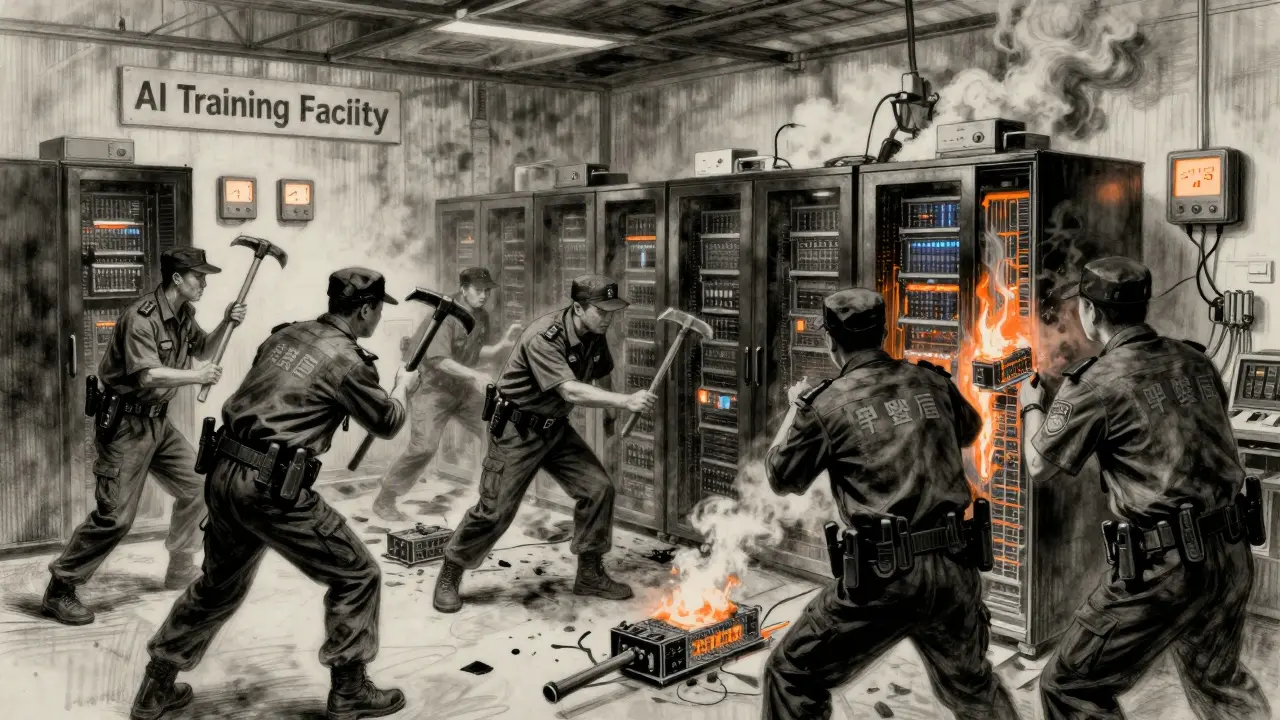
What Happens If You Get Caught?
The penalties are harsh-and they’re getting harsher. For individuals: First offense usually means fines up to 500,000 RMB (about $70,000 USD) and confiscation of all mining equipment. Repeat offenders face criminal charges under Article 225 of China’s Criminal Law, which covers illegal business operations. That can mean jail time-up to five years. For businesses: Any company found hosting or facilitating mining faces permanent shutdown, asset seizure, and blacklisting from all government contracts. Executives can be barred from running any business in China for life. Even civil lawsuits are blocked. In 2022, the Supreme People’s Court ruled that crypto-related contracts have no legal standing. If you lent someone Bitcoin and they didn’t pay you back, you can’t sue. The court won’t recognize the debt.Is Any Mining Still Happening in China?
Yes-but it’s dangerous, fragmented, and shrinking. Some small-scale operations still exist. They’re hidden in rural warehouses, inside abandoned factories, or disguised as data centers for AI training. But they’re vulnerable. Power companies are now required to report any facility with unusual consumption patterns. Police conduct surprise raids during holidays and late-night hours. Studies estimate that China still accounts for 5-8% of global Bitcoin hash rate, down from over 70% in 2020. That’s not because miners are clever-it’s because the risks are worth it for some. But each month, more operations get shut down. The government’s detection tools are getting smarter. AI now predicts mining activity based on regional power demand trends. Even if you’re not mining, owning crypto is risky. If police find Bitcoin in your wallet during a routine investigation, they can seize it. No warrant needed. No trial required. The law treats crypto as property without legal protection.