

You’ve probably heard the phrase "WAGMI"-We’re All Gonna Make It. It’s the optimistic mantra of the crypto community. But when you see an exchange named Wagmi (Kava) is a decentralized cryptocurrency exchange operating on the Kava blockchain ecosystem, that optimism needs to be tempered with extreme caution. I’ve spent hours digging into the data for this platform, and what I found isn’t just underwhelming; it’s alarming for anyone looking to trade serious capital.
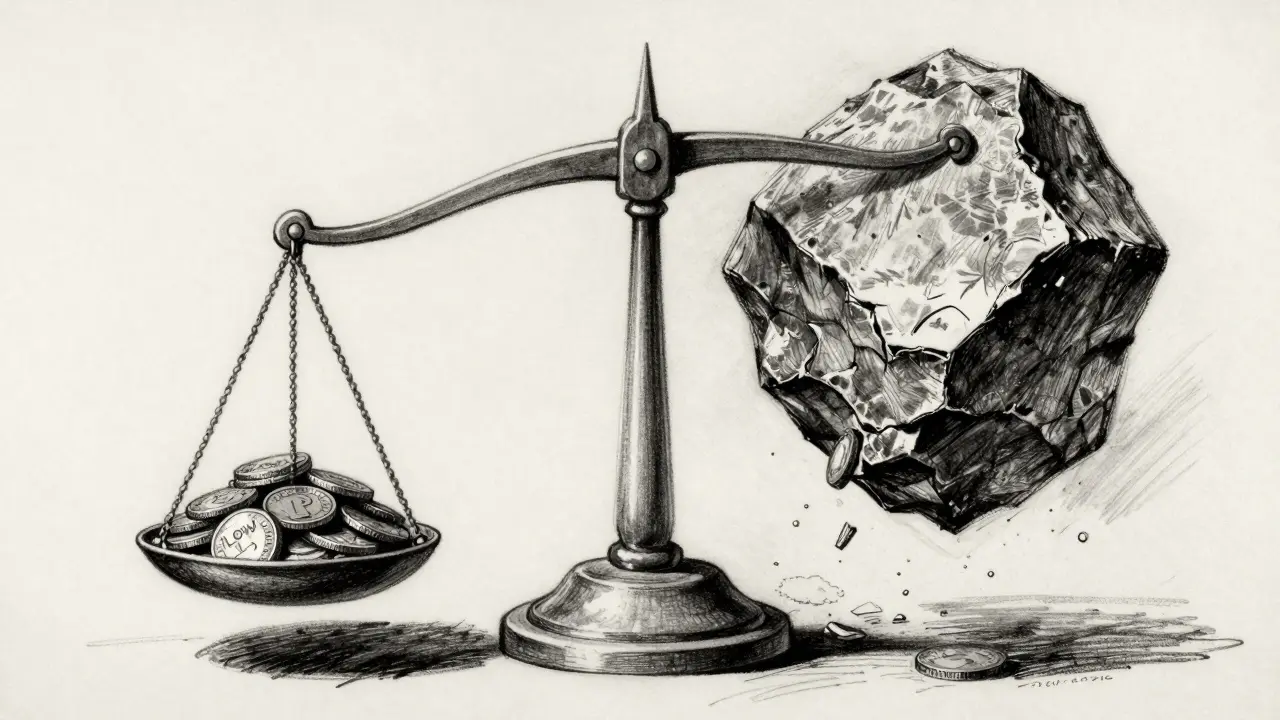
If you are considering using Wagmi (Kava) to swap tokens, you need to know one thing right now: the liquidity is virtually non-existent. In a market where giants like Uniswap handle billions in daily volume, Wagmi (Kava) recorded a mere $356 in 24-hour trading volume as of late 2025. That is not a typo. That is less than most people spend on groceries in a week. Trading here doesn't mean you're entering a competitive market; it means you might be the only person in the room, trying to sell something nobody wants to buy.
The Reality of Liquidity: Why Your Trade Might Fail
Liquidity is the lifeblood of any exchange. It determines how easily you can buy or sell assets without causing massive price swings. When liquidity is low, slippage becomes your enemy. Slippage is the difference between the expected price of a trade and the price at which the trade is executed. On major platforms, slippage is often fractions of a percent. On Wagmi (Kava), with only five supported cryptocurrencies and ten trading pairs, attempting a trade of even moderate size could result in catastrophic losses.
Let’s look at the numbers. According to analytics from JustScreener, the platform sees roughly 4,907 visits per week. Compare that to established decentralized exchanges (DEXs) that attract millions of visitors weekly. The disparity is stark. This lack of user activity directly correlates to the thin order books. If you try to swap a significant amount of Kava (KAVA) or USDT on this platform, you won't find enough counterparties to fill your order at a fair price. You will likely get filled at a price far worse than the market rate, or the transaction will fail entirely.
| Feature | Wagmi (Kava) | Uniswap (Industry Leader) | PancakeSwap |
|---|---|---|---|
| 24h Volume | $356 | $1.2 Billion+ | $850 Million+ |
| Trading Pairs | 10 | 12,450+ | 8,700+ |
| Supported Coins | 5 | Thousands | Thousands |
| Weekly Visits | ~4,900 | Millions | Millions |
| Market Position | Niche/Experimental | Dominant | Top Tier |
The table above illustrates why Wagmi (Kava) cannot compete with industry standards. It is not merely smaller; it is in a different league entirely. For context, mid-cap exchanges typically require at least $10 million in daily volume to ensure minimal slippage for scaled trades. Wagmi falls short by a factor of nearly 30,000. This makes it unsuitable for anything other than tiny, experimental swaps of niche assets where you don't care about the exact entry price.
Kava Ecosystem Integration: A Silver Lining?
Why does this exchange exist? The answer lies in its connection to the Kava Blockchain is an interoperable blockchain built on Cosmos SDK with Ethereum Virtual Machine compatibility. Kava itself is a robust platform. Founded in 2018 and launched in 2019, it has grown significantly. By June 2025, Kava’s Total Value Locked (TVL) reached €280 million, placing it among the top 20 DeFi ecosystems globally. The recent "Kava 16" launch saw a sharp uptick in unique addresses and daily active users.
However, there is a critical disconnect. While the Kava ecosystem is thriving, Wagmi (Kava) as an exchange is not benefiting from this growth in any measurable way. The surge in Kava’s TVL is driven by lending protocols, staking, and other DeFi applications, not by trading volume on Wagmi. This suggests that Wagmi is either a legacy component that hasn't been updated to capture new traffic, or it was never intended to be a primary trading venue. Users interested in the Kava ecosystem are better served by using larger aggregators that route through Kava’s liquidity pools rather than trading directly on Wagmi’s isolated interface.
Security Concerns and Audit Status
In the world of decentralized finance, security is paramount. Since Wagmi is non-custodial, you hold your own keys, which reduces the risk of exchange hacks. However, smart contract risk remains. A bug in the code can still drain your funds. Here is the worrying part: there is no publicly available documentation regarding smart contract audits for Wagmi (Kava). Major exchanges publish audit reports from firms like CertiK or OpenZeppelin to build trust. Wagmi offers none.
This absence of transparency is a red flag. Without verified audits, you have no guarantee that the contracts handling your swaps are secure. Given the platform's low activity, it is also possible that development has stalled. Stale code is vulnerable code. If the team behind Wagmi is not actively maintaining the platform, you are exposing yourself to unknown risks for zero benefit. There is no insurance fund, no customer support ticketing system, and no comprehensive knowledge base beyond a basic fee structure page.
User Experience and Community Support
Trying to use Wagmi (Kava) feels like stepping back in time. The interface is functional but bare-bones. You connect via an Ethereum-compatible wallet like MetaMask, given Kava’s EVM compatibility. But once connected, you hit walls. With only five coins supported, you can’t trade many popular altcoins. If you want to swap a newer token, you’re out of luck.
Support is equally lacking. The platform lists a Discord server and a Telegram group, but engagement is minimal. Public analytics show fewer than 100 active members in their Telegram channel. If you encounter an issue-a failed transaction, a stuck swap-you are on your own. There is no helpdesk, no live chat, and no forum discussions on major platforms like Reddit or Trustpilot. The silence from the community speaks volumes. Users who have tried it likely moved on to more reliable platforms and didn’t bother to complain because there was no one left to tell.

Who Should Actually Use Wagmi (Kava)?
I’m not saying this platform is malicious. It might serve a very specific, narrow purpose. Who is it for? Perhaps developers testing smart contract interactions on the Kava network with negligible amounts of money. Maybe researchers analyzing transaction fees in low-volume environments. For these users, the low stakes make the poor liquidity irrelevant.
But for traders? Investors? Anyone looking to move real value? Absolutely not. The risks outweigh any potential benefits. You will face high slippage, limited options, and zero support. The opportunity cost is huge. Every minute you spend navigating Wagmi’s sparse interface is a minute you aren’t earning yields on a stable platform or trading with better prices elsewhere.
Better Alternatives for Kava Traders
If you are invested in the Kava ecosystem, you have much better options. Instead of using Wagmi, consider using cross-chain bridges or aggregators that access Kava’s liquidity through more robust interfaces. Platforms like Jupiter or 1inch often integrate multiple chains, including Kava, allowing you to get the best price across various pools. These aggregators scan dozens of sources to find the deepest liquidity, ensuring you get the best rate.
Alternatively, stick to the major DEXs that dominate the market. Uniswap and PancakeSwap offer deep liquidity, extensive coin support, and proven security records. Even if they don’t natively support every Kava asset, you can bridge your assets to Ethereum or BNB Chain and trade there with confidence. The slight bridging fee is worth it compared to the hidden costs of slippage and risk on Wagmi.
Is Wagmi (Kava) safe to use?
While it is non-custodial, meaning you control your keys, the lack of public smart contract audits raises significant security concerns. Additionally, the extremely low liquidity poses financial risk through high slippage. It is not recommended for substantial trading.
Why is the trading volume so low on Wagmi?
Wagmi (Kava) supports only five cryptocurrencies and ten trading pairs, making it unattractive for most traders. Most users prefer larger DEXs with deeper liquidity and more asset choices. The platform appears to be a niche or legacy tool within the broader Kava ecosystem.
What is the relationship between Wagmi and the Kava Blockchain?
Wagmi operates on the Kava blockchain, leveraging its EVM compatibility. However, while the Kava ecosystem has grown significantly with a TVL of €280 million, Wagmi itself has not captured this growth, indicating it is not a primary focus of the ecosystem's development.
Are there better alternatives for trading Kava assets?
Yes. For better liquidity and security, use major DEXs like Uniswap or PancakeSwap, or use aggregators like 1inch that can route trades through Kava’s liquidity pools. These platforms offer higher volume, more pairs, and proven security audits.
Does Wagmi (Kava) have customer support?
Support is extremely limited. The platform relies on a Discord and Telegram channel with minimal activity. There is no dedicated helpdesk, ticketing system, or comprehensive knowledge base, leaving users to resolve issues independently.