

Thruster v2 Yield Calculator
Compare Thruster v2's 8.2% APY against traditional DEXes with 3-4% APY. See how the 1.0% fee compares to your earnings potential.
Thruster v2 isn’t just another crypto exchange. It’s a niche tool built for one thing: making money inside the Blast Layer 2 ecosystem.
If you’re trading tokens on Blast, Thruster v2 might be the most powerful tool you’ve never heard of. But if you’re looking for a general-purpose DEX like Uniswap or PancakeSwap, you’ll be disappointed. Thruster v2 doesn’t care about you unless you’re deep in the Blast world. And that’s exactly why some traders love it - and others walk away confused.
Launched in early 2024, Thruster v2 runs natively on Blast, a Layer 2 blockchain built to boost Ethereum’s yield potential. It’s not trying to compete with giants. It’s trying to dominate a tiny corner of DeFi where most people don’t even look. And for those who do, it delivers something rare: automatic yield on every swap.
How Thruster v2 Works (No Fluff)
Thruster v2 is an Automated Market Maker (AMM), like Uniswap. But instead of spreading liquidity across a wide price range, it lets you lock your funds between specific prices - a feature called concentrated liquidity. This means you use less capital to earn more fees. Simple. Smart.
Here’s the kicker: every time you swap tokens on Thruster v2, you earn fees. Not just from the trade. But also from yield generated by your liquidity. You don’t need to stake separately. You don’t need to claim rewards. It all compounds automatically. That’s not common. Most DEXes make you jump through hoops just to earn 3-4% APY. Thruster v2 delivers 8.2% APY on stablecoin pairs like USDB/ETH, according to CoinLocally’s July 2024 analysis.
Transactions are fast. Around 2.4 seconds on average. Gas fees? Just $0.0037 per trade. That’s cheaper than most mobile data plans. You’ll need a wallet like MetaMask connected to Blast. Minimum swap? 0.0001 ETH equivalent. Easy enough for anyone who’s done one DeFi trade before.
The 1.0% Fee: Too High? Or Justified?
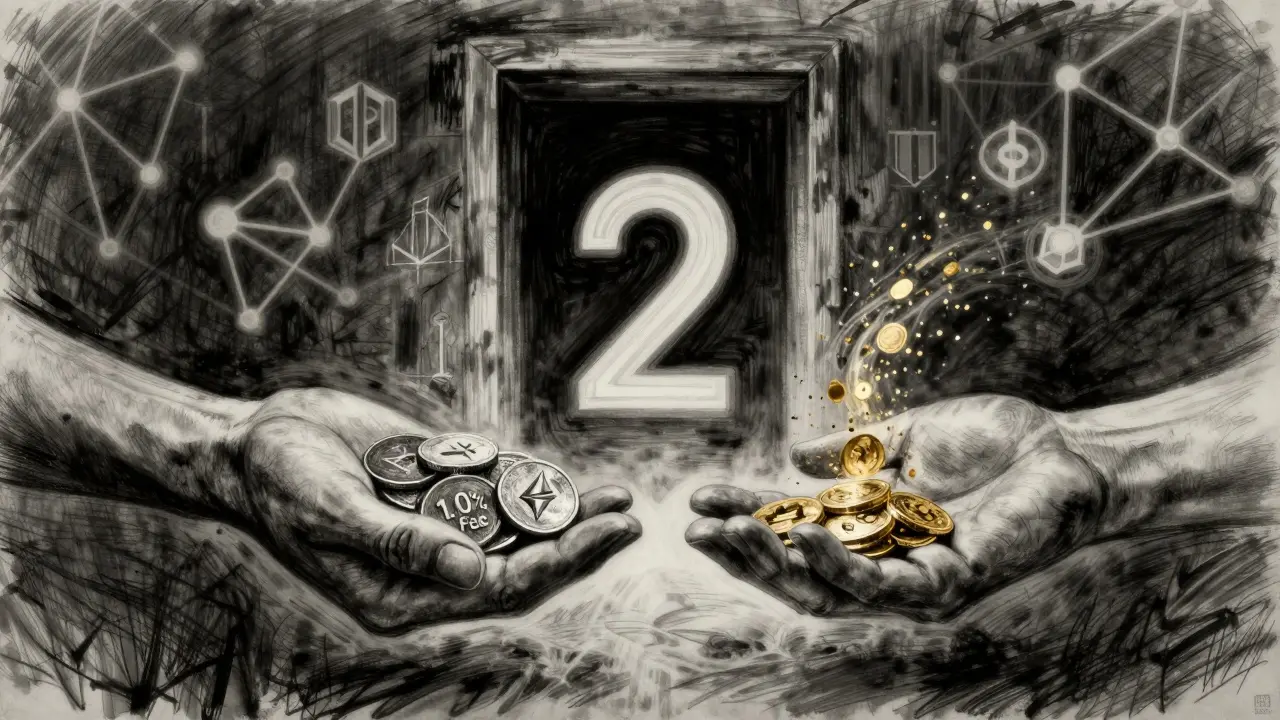
Most DEXes charge 0.3%. Thruster v2 charges 1.0%. That’s over three times higher. At first glance, it’s insane. Why pay more?
The answer is yield. That extra 0.7% isn’t just profit for the platform. It’s redistributed to liquidity providers. The math works like this: if you put $1,000 into a USDB/ETH pool, you earn 8.2% APY. That’s $82 a year. But on a regular DEX, you’d earn maybe $30. The higher fee covers the cost of that extra yield - and then some.
Think of it like a subscription. You pay more upfront, but you get a better service. For active traders in Blast, the math often adds up. A user on Reddit, CryptoDegen88, reported earning 9.1% APY on USDB/ETH after gas - beating manual staking by 3.4x. That’s real money.
But here’s the catch: if you’re swapping rarely, or trading low-volume tokens, that 1% fee eats you alive. One $500 swap with 4.7% slippage? You just lost $25 in fees and price impact. That’s not a trade. That’s a loss.
What You Can Trade (Spoiler: Not Much)
As of October 2024, Thruster v2 supports only two cryptocurrencies and two trading pairs: USDB/ETH and BLAST/ETH.
That’s it.
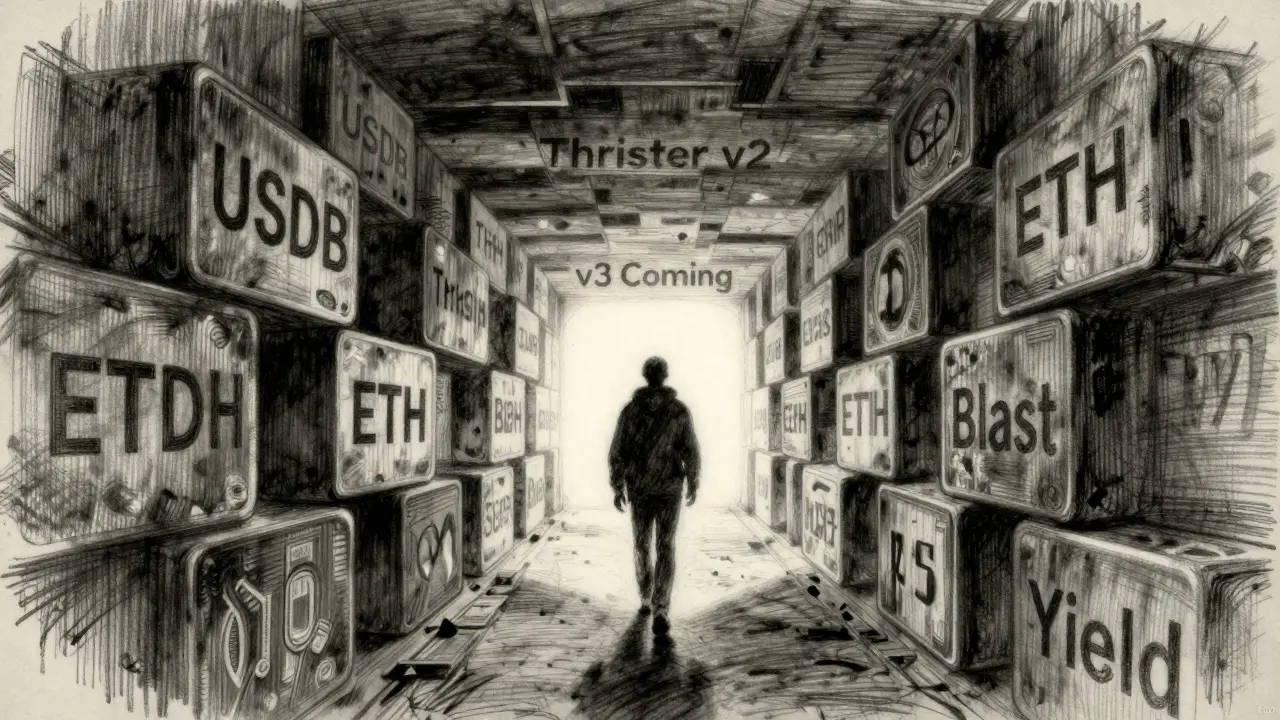
No SOL. No ADA. No Shiba Inu. No new memecoins unless they’re officially listed on Blast. Compare that to Uniswap’s 1,200+ pairs. Thruster isn’t a marketplace. It’s a tunnel. You enter through Blast, and you stay inside.
This isn’t a bug. It’s a feature. Thruster’s team wants to control the ecosystem. They don’t want random tokens flooding in, crashing liquidity or creating rug pulls. They want clean, verified projects that align with Blast’s vision. That’s why institutional traders ignore it. But for degens chasing early yields on Blast-native tokens? It’s gold.
Who Should Use Thruster v2?
Thruster v2 isn’t for everyone. It’s not even for most crypto users. But if you fit this profile, it’s one of the best tools you’ll find:
- You’re already using Blast Layer 2
- You trade ETH or USDB regularly
- You want to earn yield without staking or farming separately
- You’re okay with limited token choices
- You understand how AMMs and concentrated liquidity work
If you’re new to DeFi? Don’t start here. The interface is clean, but the assumptions are advanced. Onboarding takes 15-22 minutes if you’ve used MetaMask before. If you’ve never bridged tokens or added liquidity? Expect 45+ minutes and a lot of Googling. The official docs have 12 guides, but they’re written for people who already speak DeFi.
And if you’re looking to trade across chains? Forget it. Thruster v2 has zero integration with Bitcoin, Solana, or Polygon. It’s Blast-only. No exceptions.
What’s Missing (And Why It Matters)
Thruster v2 is barebones by design. Here’s what it doesn’t have:
- No limit orders
- No margin trading
- No cross-chain support
- No advanced charting tools
- No mobile app
That’s not an oversight. It’s intentional. Thruster’s goal isn’t to be a full exchange. It’s to be the fastest, most efficient way to swap and earn yield inside Blast. Everything else is noise.
But that also means if you need even one of those features - say, a limit order to avoid slippage - you’re stuck. You’ll have to switch platforms. And that breaks the flow. The whole point of Thruster is to keep you inside the ecosystem. If you leave, you lose the yield advantage.
Community & Performance
Thruster’s Telegram group has 4,382 members. Daily active users? Around 287. That’s not massive. But it’s consistent. Most users are experienced - 68% have been in crypto for 3+ years, according to Cryptorank’s September 2024 report. Only 22% are intermediate. Enterprises? None. This isn’t a tool for banks. It’s for individual traders who know what they’re doing.
Reviews are split. On CoinAcademy’s platform, users gave it 3.8/5 stars. Praised: easy interface for Blast newcomers, automatic yield. Complained: too few tokens, poor documentation, failed transactions during spikes. Thirty-two percent of negative reviews mention transaction failures during high traffic. That’s a red flag - but not a dealbreaker. The community has already built 87 troubleshooting scripts on GitHub to fix common issues.
Thruster v2 sits at #3 among Blast-native DEXes, behind ODOS and xExchange. It’s not the biggest. But it’s the most efficient for yield-focused traders.
What’s Next? Thruster v3 Is Already Coming
Thruster v2 is already outdated. The team is working on v3, mentioned in ICORankings’ September 2024 review. The roadmap, published in October 2024, promises:
- 15+ trading pairs by Q1 2025
- Cross-margin trading by Q2 2025
- Institutional analytics by Q3 2025
If they deliver, Thruster could become the go-to DEX for serious Blast traders. But if Blast’s growth stalls - and TVL drops - Thruster dies with it. That’s the risk. It’s 100% tied to Blast’s success. Analysts at CoinLocally estimate a 72% chance Thruster survives two more years. ICORankings calls it a "high-risk, high-reward niche play." Both are right.
Final Verdict: Use It - But Only If You’re in Blast
Thruster v2 (1.0% fee tier) is not for beginners. It’s not for multi-chain traders. It’s not for people who want 100 coins to choose from.
But if you’re trading on Blast, and you want to earn the highest possible yield on ETH or USDB without lifting a finger - then this is the best tool you’ll find. The 1.0% fee hurts if you’re casual. But if you’re active, it pays you back in yield. Fast. Reliable. Automatic.
It’s a specialist’s tool. Like a scalpel, not a hammer. Use it right, and it’s powerful. Use it wrong, and you’ll lose money fast.
Bottom line: If you’re not on Blast, skip it. If you are? Try it. Start small. Deposit $100. Swap USDB for ETH. Watch the yield compound. See if it feels worth it. If it does, you’ve found your home.
Frequently Asked Questions
Is Thruster v2 safe to use?
Thruster v2’s smart contracts have been audited by Blast-certified auditors, though the exact firm isn’t named. The platform is non-custodial, meaning you hold your own keys. No one else can touch your funds. But like all DeFi, you’re responsible for your own security. Always double-check contract addresses before connecting your wallet. Avoid phishing sites - the real platform is at thruster.finance.
Can I use Thruster v2 on my phone?
There’s no official Thruster mobile app. But you can access it through any mobile Web3 wallet like MetaMask or Rabby. Just open the website in your browser, connect your wallet, and trade. The interface is responsive, so it works fine on phones. Just be careful of fake apps on the App Store or Google Play - only use the official site.
Why does Thruster v2 only have two trading pairs?
Thruster v2 focuses on quality over quantity. It only lists tokens that are native to Blast or have strong backing within the ecosystem. This reduces risk and keeps liquidity deep. Adding too many tokens too fast would dilute yield and increase slippage. The team plans to expand to 15+ pairs by early 2025, but only after ensuring each new pair has enough demand and security.
How does Thruster v2’s 1.0% fee compare to other DEXes on Blast?
Most other DEXes on Blast charge 0.3% or less. But they don’t offer automatic yield. Thruster’s 1.0% fee is higher, but it’s offset by higher returns. For example, on USDB/ETH, you earn 8.2% APY with Thruster. On a 0.3% DEX, you’d get 3-4% APY - and you’d have to manually compound rewards. After factoring in gas and time, Thruster often gives you 2-3x more net yield.
What happens if Blast shuts down?
If Blast’s ecosystem collapses, Thruster v2 becomes useless. It has zero functionality outside Blast. No cross-chain bridges. No Ethereum integration. Nothing. Your liquidity would be locked in a dead chain. That’s the biggest risk. Thruster isn’t just a DEX - it’s a bet on Blast’s future. If Blast fails, Thruster fails. Don’t invest more than you’re willing to lose.