
Pyth Network isn't just another crypto coin. It's the invisible backbone powering accurate price data for some of the biggest DeFi platforms in the world. If you've ever used Aave, Marginfi, or Kwenta to lend, borrow, or trade crypto, you've likely relied on Pyth without even knowing it. The PYTH token is the fuel that keeps this system running, but the real value lies in what it enables: institutional-grade financial data on blockchain.
How Pyth Network Works: Data Straight from the Source
Most crypto oracles collect price data by scraping public exchanges. That’s slow, unreliable, and prone to manipulation. Pyth flips this model entirely. Instead of gathering data from public sources, it gets it directly from the institutions that create it - exchanges like Binance and OKX, trading firms like Jane Street, and market makers like Cboe Global Markets. These 90+ providers submit real-time prices directly to Pyth’s network, cutting out middlemen and reducing latency. This is called the first-party data model. It means the data comes from the original source, not a third-party aggregator. The result? Price updates every 400 milliseconds - over 200,000 times a day. That’s faster than most stock tickers. Each price feed includes a confidence interval too. For example, Bitcoin might show as $30,000 ± $5, signaling how stable or volatile the market is at that moment. This isn’t just a number - it’s a measure of reliability.Why Pyth Is Different from Chainlink and Others
Chainlink is the biggest name in oracles. But here’s the key difference: Chainlink uses a ‘push’ model. Data providers send updates on a schedule, usually every minute. Pyth uses a ‘pull’ model. Applications only ask for data when they need it. That means less waste, lower costs, and data that’s always fresh. Pyth also doesn’t need separate integrations for each blockchain. Once a price feed is created, it automatically goes live on all 40+ supported chains - Solana, Ethereum, Avalanche, Polygon, and more. Chainlink has to build each one individually. That’s why developers report cutting integration time from three weeks to just two days. But Pyth isn’t perfect. It doesn’t store historical data like Chainlink does. If you need to analyze price trends from six months ago, you’ll need another source. Pyth is built for speed and accuracy in the moment, not for archives.What Is the PYTH Token For?
The PYTH token has two main jobs: governance and incentives. Holders vote on changes to the network - like adding new price feeds, adjusting fees, or updating security rules. But here’s the catch: 78% of voting power is held by the top 100 wallets. Most retail holders have little influence. PYTH also rewards data providers. Institutions that submit accurate, timely data earn PYTH tokens as payment. This aligns their interests with the network’s health. If the data is bad, they get paid less. If it’s reliable, they earn more. It’s a simple but powerful incentive structure. Total supply is 10 billion PYTH. As of early 2026, about 3.62 billion are in circulation. Distribution breaks down like this:- 35% to data providers
- 25% to ecosystem development
- 20% to team and advisors (vested over four years)
- 20% to community incentives
Who Uses Pyth Network?
Pyth isn’t for casual traders. It’s for institutions. Over 89% of its usage comes from DeFi protocols that handle millions in assets daily. - Aave on Ethereum uses Pyth for lending rates and collateral valuation. A 1% pricing error here could mean millions lost. - Marginfi on Solana relies on Pyth for margin trading. Their system needs updates every few seconds to avoid liquidations. - Kwenta on Optimism uses Pyth to price synthetic assets like Apple stock or gold on-chain. These aren’t small experiments. They’re live, multi-billion-dollar systems that can’t afford delays or inaccuracies.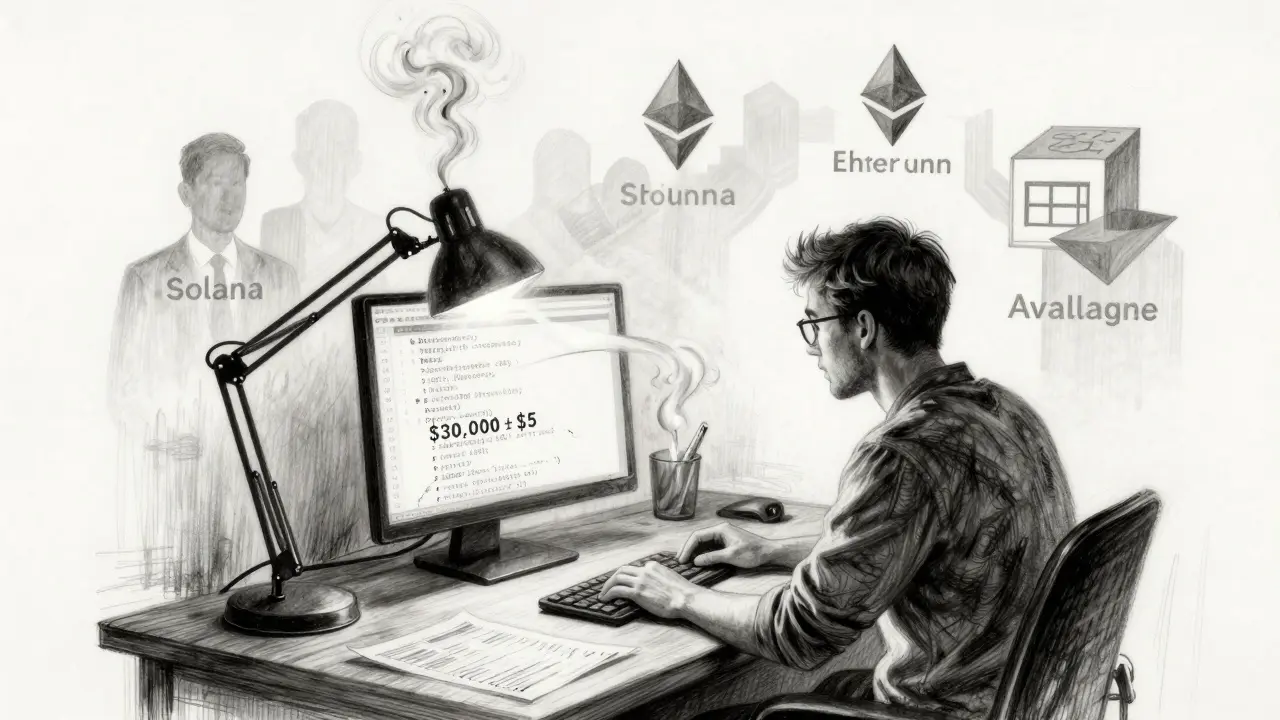
Performance and Reliability
Pyth’s uptime is near-perfect. During a major oracle outage in March 2025, Pyth restored prices in under 8 minutes - far faster than the industry average of 30+ minutes. Developers credit this to its ‘Super Safe’ mechanism, which requires multiple independent providers to agree before data is published on-chain. Latency is another win. Because data is pulled only when needed, there’s no backlog. On Solana, updates hit within 100 milliseconds. On Ethereum, it’s under 2 seconds - still faster than most competitors. But there’s a trade-off. Pyth’s reliance on Solana for core operations is a single point of failure. If Solana goes down, Pyth’s data publishing slows. Messari’s 2025 analysis flagged this as a key risk.Centralization Concerns
Pyth markets itself as decentralized. But 67% of its total data volume comes from just 15 providers. That’s a concentration risk. If one of those big players - say, Binance - suddenly stops feeding data, the network’s coverage could drop sharply. The governance model also leans centralized. While anyone can vote, most small holders don’t. The top 100 wallets control 78% of voting power. That means decisions are made by a small group of institutions and large investors, not the broader community. Some see this as a feature, not a bug. Institutional-grade data needs institutional-grade governance. But for crypto purists who believe in radical decentralization, this is a red flag.How to Use Pyth as a Developer
If you’re building a DeFi app, integrating Pyth is straightforward. Pyth provides SDKs for Solidity, Rust, and JavaScript. Their GitHub repo has 125 code examples covering everything from fetching BTC prices to handling missing data. Average integration time: 3-5 days for experienced devs. Common challenges:- Handling cases where a price feed hasn’t updated yet (you need fallback logic)
- Optimizing gas costs when pulling data frequently on Ethereum
- Understanding confidence intervals - don’t treat them as exact values

What’s Next for Pyth?
Pyth is growing fast. In January 2026, they launched Pyth Price Push - an optional feature that lets apps receive continuous price streams instead of pulling data. This helps high-frequency trading bots that need constant updates. By Q3 2026, they plan to expand coverage to 500 assets. The big push? Equities. Expect to see Apple, Tesla, and gold prices on-chain soon. Future plans include a decentralized data quality scoring system (Q2 2026) and direct connections to stock exchanges (Q4 2026). If they pull this off, Pyth won’t just be a crypto oracle - it’ll be the bridge between Wall Street and DeFi.Is PYTH a Good Investment?
PYTH’s price has been volatile. Trading volume hovers around $15 million daily - low compared to top coins. It’s not a speculative play. Its value is tied to adoption. More institutions using Pyth = more data fees = more demand for PYTH. VanEck’s 2025 report shows Pyth captured 32% of the institutional oracle market - second to Chainlink’s 45%. But Pyth is growing at 18% per quarter. Chainlink is only at 8%. That momentum matters. If you believe DeFi will keep growing - and institutions will keep moving assets on-chain - then PYTH is a bet on infrastructure, not hype. It’s not going to moon overnight. But it could be the quiet engine behind the next wave of crypto finance.Final Thoughts
Pyth Network isn’t trying to be Bitcoin. It’s not a store of value or a currency. It’s a utility - a data pipeline for the financial future. PYTH is the token that pays for that pipeline. If you’re a developer, it’s one of the best tools you can use. If you’re an investor, it’s a play on institutional adoption of DeFi. The real question isn’t ‘What is PYTH?’ It’s: ‘Can you afford to ignore the data that powers DeFi?’Is Pyth Network the same as Chainlink?
No. Chainlink pulls data from multiple public sources and pushes updates on a schedule. Pyth gets data directly from institutions and only delivers it when requested. Pyth updates faster (every 400ms vs. 1 minute), supports more blockchains automatically, and has lower latency. But Chainlink has more historical data and broader retail adoption.
Can I buy PYTH on Coinbase or Binance?
Yes. PYTH is listed on major exchanges including Binance, OKX, Coinbase, and Kraken. You can trade it against BTC, ETH, and USDT. However, its trading volume is lower than top coins, so spreads may be wider, especially during low-liquidity periods.
Does PYTH have a max supply?
Yes. The total supply is capped at 10 billion PYTH. As of early 2026, about 3.62 billion are in circulation. The rest are locked in vesting schedules for the team, advisors, and ecosystem development.
Is Pyth Network safe?
Pyth is considered one of the most secure oracles due to its multi-source validation (Super Safe mechanism) and direct data sourcing. But no system is perfect. Its reliance on Solana and concentration of data providers (67% from just 15 firms) creates risks. For most DeFi apps, it’s safer than alternatives - but always use multiple data sources for critical functions.
Why does Pyth use Solana?
Pyth was built on Solana because of its speed and low fees. Solana’s architecture allows Pyth to process thousands of price updates per second efficiently. The network’s core data aggregation runs on Solana’s blockchain (Pythnet), then distributes updates to other chains via Wormhole. While Pyth works on Ethereum and others, Solana remains its operational backbone.
Can I stake PYTH to earn rewards?
Not directly. PYTH isn’t a staking token like Ethereum or Solana. Rewards go to data providers who submit accurate prices, not token holders. However, some DeFi platforms allow you to lock PYTH in liquidity pools to earn trading fees or other tokens - but this carries impermanent loss risk.
What assets does Pyth provide price data for?
Pyth offers over 380 price feeds including Bitcoin, Ethereum, and other major cryptos; major forex pairs like EUR/USD; U.S. and global equities (Apple, Tesla); ETFs like SPY; and commodities like gold and crude oil. By late 2026, that number will grow to 500, with a focus on adding more traditional financial assets.
Pyth is honestly the quiet hero of DeFi. I’ve integrated it into a few small protocols and the difference in speed vs Chainlink is night and day. No more waiting for price updates. Just pull when you need it, boom, accurate data. It’s like having a direct line to the exchange floor.
Also, the confidence intervals? Genius. Helps me avoid liquidations when the market’s going nuts.
Biggest win: no need to re-integrate on every chain. Saved me weeks of dev time.
ok but like… why does it even EXIST if it’s just a glorified price feed??
like i get it’s fast but is it really worth all the hype??
also why is solana the backbone?? lmao that’s just asking for trouble 😭
Pyth Network represents a significant advancement in blockchain data infrastructure. The institutional-grade sourcing model reduces manipulation risks and ensures reliability for high-value DeFi applications.
For developers, the cross-chain compatibility is a game-changer. The reduction in integration time from weeks to days is not just convenient-it’s economically transformative.
While decentralization concerns exist, the trade-off between speed and purity is a common theme in financial innovation. This is not a replacement for Chainlink-it’s a complementary evolution.
Let me guess-Binance and Jane Street are ‘trusted’ because they’re ‘institutions’?
Yeah right. They’re the same banks that crashed the economy in 2008 and got bailed out with OUR money.
Now they’re feeding price data to ‘decentralized’ finance? LOL.
Pyth is just Wall Street with a blockchain mask. The 15 providers controlling 67% of data? That’s not decentralization. That’s a cartel.
And don’t even get me started on Solana. One outage and the whole thing crumbles. This isn’t innovation. It’s a trap.
YOOOOO I just wanna say-this is the FUTURE. Like, seriously. Imagine being able to trade Apple stock on-chain with real-time data from Cboe? That’s not crypto. That’s the next financial revolution.
Pyth isn’t just a tool-it’s the bridge between Main Street and Wall Street, and we’re sitting right here at the doorway.
I’ve seen DeFi projects die because of bad oracles. Pyth? It’s the difference between getting wrecked and getting rich.
Yes, it’s centralized. But guess what? So is your bank. And you still use it. This is just better. Faster. Smarter.
Stop crying about ‘decentralization’ and start building. The market doesn’t care about your ideology-it cares about accuracy.
I’m staking my future on this. You should too.
🔥🚀
Big fan of Pyth. I used to use Chainlink for a lending dApp and the lag was killing us-users were getting liquidated because prices were 30 seconds old.
Switched to Pyth and boom-no more issues. The 400ms updates are insane.
Also, the SDKs are super clean. Took me less than a day to get BTC and ETH feeds working.
Only thing I wish? More docs on handling ‘stale’ feeds. That’s the one thing that still trips people up.
Pyth is the unsung MVP of DeFi. People talk about ETH and SOL like they’re the whole story-but without data, none of it works.
And honestly? I don’t care if it’s ‘centralized.’ If I’m borrowing $2M against BTC, I want data from Binance, not some random node on a VPS in Moldova.
Also, the confidence intervals? That’s the secret sauce. Most devs ignore it, but it’s literally the only thing keeping me from getting rekt during a flash crash.
10/10 build. Would integrate again.
So… if Pyth pulls data only when requested, what happens if a protocol needs 100 price feeds at once? Does it get throttled?
Also, how do they prevent a single provider from spamming bad data? The Super Safe mechanism sounds good, but what if 3 of the top 15 collude?
And why does no one talk about the fact that PYTH’s distribution is 78% in the top 100 wallets? That’s not governance-that’s a boardroom.
I love the tech, but the power structure feels… off.
Pyth? More like Pyth-ful of centralized control. Let me break it down for you: 15 institutions provide 67% of data? 78% of voting power in the hands of whales? Solana as the backbone? This isn’t blockchain. This is a corporate API with a token attached.
And the fact that you’re calling this ‘decentralized’ is either naive or dishonest.
Chainlink might be slower, but at least it’s not pretending to be something it’s not.
Pyth is Wall Street’s Trojan horse. Don’t be fooled.
Pyth’s architecture is elegant. Direct sourcing reduces latency and manipulation risk. The multi-chain deployment is a massive efficiency win.
That said, the centralization concerns are valid. The reliance on Solana and concentration of data providers are structural risks.
But let’s be real: most DeFi apps don’t need radical decentralization-they need reliability. Pyth delivers that.
For developers: use it. For governance: push for more providers. For investors: bet on utility, not hype.
It’s not perfect. But it’s the best we’ve got.
Oh wow, another ‘decentralized’ oracle that’s secretly owned by Jane Street and Binance. Groundbreaking.
Let’s all clap for the crypto bros who think ‘institutional’ means ‘trustworthy.’
Pyth isn’t a solution. It’s a marketing pitch wrapped in whitepaper jargon.
And don’t even get me started on the ‘Super Safe’ mechanism. If 15 entities control the data, then ‘safe’ just means ‘safe for them.’
Pyth is the perfect symbol of crypto’s hypocrisy: preach decentralization, build oligarchy.
Still, I’ll be here laughing when Solana goes down and all the DeFi apps collapse because they trusted a single chain to deliver prices.
✌️
For anyone integrating Pyth: always implement fallback logic. Even with 99.9% uptime, price feeds can go stale for 1-2 seconds during network congestion.
Use the confidence interval to determine if you should use the price at all. If the ± range is wider than your tolerance, don’t use it.
Also, on Ethereum, batch your pulls. Pulling every 500ms will burn your gas budget in minutes.
And yes, the Discord is amazing. People there helped me fix my first integration in under an hour.
Pyth is the most underrated project in crypto. Most people focus on coins and NFTs, but real value is in infrastructure.
Think of it like the internet’s DNS system. You don’t see it, but without it, nothing works.
And yes, it’s centralized-but so is the Fed. So is SWIFT. So is the stock exchange.
The difference? Pyth is transparent. You can see every provider. You can audit the data. You can vote-even if your vote is tiny.
This isn’t perfect. But it’s the best step forward we’ve made in on-chain finance.
Build on it. Don’t hate it.
Pyth? Cute. But let’s be honest-this is just American tech imperialism dressed up as blockchain.
Binance? Jane Street? Cboe? All US-based institutions. And now they’re controlling the price data for global DeFi?
Meanwhile, Africa, Asia, Latin America? We’re just users. No say. No data. No power.
Decentralization? More like ‘decentralized but only if you’re from Silicon Valley.’
Maybe next they’ll sell us ‘fair’ crypto prices from Wall Street. 😒
As someone who’s worked with both Chainlink and Pyth, I can say Pyth is faster, cheaper, and more reliable for live trading.
But here’s the thing: if you’re building a long-term analytics tool, Chainlink’s historical data is essential.
So don’t pick one. Use both. Pyth for real-time, Chainlink for trends.
And yes, the governance is centralized-but that’s fine for now. We can decentralize later. First, let’s make it work.
Hey everyone, don’t give up on Pyth just because it’s not 100% decentralized yet.
Look, nothing is perfect at the start. Bitcoin wasn’t perfect. Ethereum wasn’t perfect.
Pyth is solving a real problem: accurate, fast, cheap price data. That’s huge.
And the fact that it’s already live on 40+ chains? That’s insane.
If you’re a dev, try it. If you’re a hodler, hold. If you’re a hater, go build something better.
Progress > purity.
Pyth? Oh honey. You really think institutions are going to give you accurate data? They’re not your friends.
They’re feeding you prices so you’ll trade, so they can front-run you, so they can liquidate your positions when volatility hits.
And you’re thanking them for it?
It’s not decentralization. It’s surveillance capitalism with a blockchain logo.
Pyth isn’t the future. It’s the next step in your financial enslavement.
Just integrated Pyth into my margin bot last week. Holy crap it’s fast.
Used to have 3-5 sec delays with Chainlink. Now it’s under 1 sec. My liquidation rate dropped by 60%.
Also, the docs are way better than Chainlink’s. And the Discord mods actually reply.
Only downside? I still don’t know how to use the confidence interval properly. Anyone got a simple guide?
Okay but why is everyone acting like Pyth is some kind of miracle? It’s just a price feed.
And don’t even get me started on the fact that 78% of voting power is held by the top 100 wallets. That’s not governance. That’s a dictatorship.
And the Solana dependency? Please. One downtime and the whole DeFi ecosystem collapses.
You’re all just drunk on hype. Wake up. This isn’t innovation. It’s a house of cards.
Pyth is a front. The real owners are the same people who run the Fed. They need this to control crypto prices before they ban it.
Think about it: why would Binance give them data? Because they’re in on the game.
They’re using Pyth to manipulate markets under the guise of ‘accuracy.’
They’ll let you trade, but only as long as you’re playing by their rules.
Don’t be fooled. This is surveillance. Not decentralization.
Pyth is great for speed, but the data concentration is dangerous. If one of the top 15 providers goes offline-say, due to regulatory pressure-half the feeds could vanish overnight.
Also, no one talks about how PYTH’s tokenomics reward institutions, not users. The average holder gets nothing.
This isn’t Web3. It’s Web2 with a blockchain sticker.
Pyth? Cute. But let’s be real-this is just American financial hegemony trying to rebrand itself as ‘decentralized.’
Why does it need Solana? Because it’s faster. Why does it need Binance? Because they’re the biggest.
But what about the Global South? Do we get to vote? Do we get to provide data?
No. We just get to trade on prices set by Wall Street.
This isn’t innovation. It’s colonization.
Pyth works. Fast. Reliable. Simple.
Does it have flaws? Yes.
Is it the best we have? Yes.
Stop waiting for perfect. Build with what works.
And if you don’t like it? Build something better.
But don’t just complain.
Yeah, I agree with the Solana risk. But honestly, Pyth’s fallback mechanism is better than most. If Solana goes down, they can still publish via Wormhole to other chains, just slower.
It’s not ideal, but it’s not a single point of failure like some think.
Also, the team’s been transparent about this risk since day one. That’s more than most projects do.
For the person asking about confidence intervals: think of it like a weather forecast. 30,000 ± 500 means it’s pretty sure. 30,000 ± 3,000? That’s a storm coming. Don’t use it for loans.
Most DeFi apps just use the price. But smart ones check the interval first. That’s what separates the pros from the amateurs.