

The days of flying under the radar with your cryptocurrency holdings are officially over. If you thought moving coins between wallets or holding assets in offshore exchanges kept you off the government’s radar, think again. The global landscape for international crypto tax regulations has shifted dramatically between 2024 and 2026. Governments are no longer guessing how to tax digital assets; they are building automated systems to track every transaction.
In 2025, we saw the first major wave of data sharing between countries. By 2026, the rules tighten further, forcing exchanges and even some non-custodial platforms to report directly to tax authorities. For investors, this means one thing: accurate record-keeping is no longer optional-it is mandatory. This guide breaks down exactly what these new international frameworks mean for you, how different countries are handling the shift, and what steps you need to take right now to stay compliant.
The Global Standard: Understanding the OECD’s CARF Framework
To understand where things stand today, you have to look at the Organisation for Economic Co-operation and Development (OECD). In 2022, they established the Crypto-Asset Reporting Framework (CARF), which serves as the backbone for modern international crypto taxation. Think of CARF as the CRS (Common Reporting Standard) for cryptocurrencies. It creates a standardized way for countries to automatically exchange information about crypto transactions.
As of late 2025, over 110 countries have committed to implementing CARF by 2027. What does this actually do? It requires reporting entities-like exchanges and custodians-to collect 20 specific data points for each customer. These include your name, address, tax identification number, birth date, and detailed transaction history. Crucially, they must report transaction values in both crypto and fiat equivalents.
The goal is simple: eliminate anonymity. If you hold assets in Country A but live in Country B, both governments will soon know about those assets. The first automatic data exchanges under CARF began in January 2025, covering approximately $47.2 billion in cross-border transactions. While full implementation is staggered until 2027-2028 for some nations like India and Brazil, the infrastructure is already live. This creates a temporary gap, but relying on that gap for long-term tax planning is risky.
United States: The Shift to Mandatory Broker Reporting
The United States took a distinct path with its own implementation timeline, finalized through IRS Notice 2023-73. Starting January 1, 2025, U.S.-based crypto brokers were required to issue Form 1099-DA for all transactions. You likely received your first of these forms in early 2026, detailing your activity from the 2025 calendar year.
Here is the critical change: unlike previous voluntary reporting, this mandates standardized reporting of gross proceeds from sales and exchanges. Initially, only gross proceeds were reported. However, starting January 1, 2026, cost basis reporting was phased in. This means the IRS now knows not just how much you sold, but what you originally paid for it, making capital gains calculations transparent to the government before you even file your return.
A significant complication arose in April 2025 when legislation known as the DeFi Clarity Act (H.R. 1339) was signed into law. This nullified IRS crypto reporting obligations for decentralized finance (DeFi) platforms. While celebrated by privacy advocates and DeFi users, experts warn this creates a massive regulatory loophole. Non-custodial transactions remain largely unreported, creating an uneven playing field and complicating international coordination efforts. If you use DeFi protocols, you are currently responsible for self-reporting, but be aware that this exemption may face scrutiny in future legislative sessions.
| Jurisdiction | Tax Treatment | Key Thresholds/Rates | Reporting Requirement |
|---|---|---|---|
| United States | Property (Capital Gains) | Short-term up to 37%; Long-term 0%-20% | Form 1099-DA from brokers (Gross proceeds + Cost basis from 2026) |
| European Union (MiCA/DAC8) | Varies by Member State | N/A (National rates apply) | VASPs report to tax authorities via DAC8 by Jan 1, 2026 |
| Japan | Miscellaneous Income | Progressive rates up to 55% | Self-reporting with strict audit trails |
| South Korea | Capital Gains | Flat 20% + 2.8% local tax on profits >$1,500 | Exchange reporting mandatory |
| Germany | Tax-exempt if held >1 year | Income tax rates if held <1 year | Self-declaration with bank-level scrutiny |
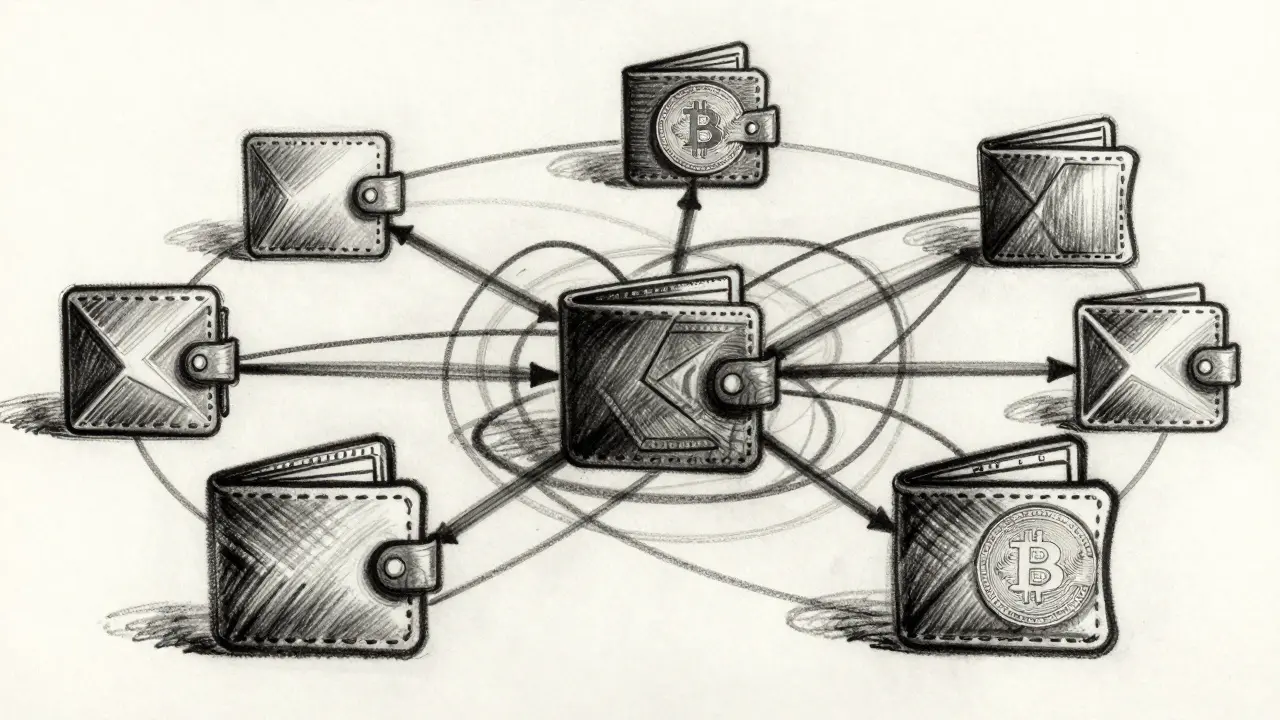
Europe: MiCA and the DAC8 Directive
While the U.S. focused on broker reporting, the European Union moved forward with the Markets in Crypto-Assets Regulation (MiCA), which took effect on June 30, 2024. MiCA itself is primarily a consumer protection and market integrity regulation, but its tax implications come through the accompanying DAC8 directive.
DAC8 requires Virtual Asset Service Providers (VASPs) to report transaction data directly to tax authorities. Full implementation hit on January 1, 2026. This means any EU-based exchange or wallet provider must integrate with national tax portals using standardized XML schemas. The scope is broad: it covers not just centralized exchanges but also certain non-custodial services if they facilitate transactions exceeding €1,000.
This creates a high level of transparency within the EU. If you trade on a platform licensed in Germany, France, or Spain, your activity is visible to your home country’s tax authority regardless of where you reside within the bloc. For non-EU residents using EU platforms, this data may eventually flow back to your home country via bilateral agreements or CARF channels.
Asia-Pacific: Divergent Approaches
The Asia-Pacific region shows significant divergence in how crypto gains are treated. Japan updated its guidelines in March 2024, treating all cryptocurrency gains as miscellaneous income. This is harsh for active traders, as it subjects profits to progressive income tax rates that can reach up to 55%. There is no separate capital gains rate for crypto here; it is lumped in with other income, potentially pushing you into a higher tax bracket.
In contrast, South Korea introduced a more targeted approach. Starting January 1, 2025, the National Tax Service began enforcing a capital gains tax on crypto profits exceeding 2 million KRW (approximately $1,500). The rate is a flat 20% plus a 2.8% local tax. This threshold exempts small-scale investors while capturing significant profit-taking activity.
Singapore offers a more investor-friendly environment. The Inland Revenue Authority (IRAS) treats staking rewards and general trading profits as non-taxable unless you are engaged in a trade or business context. This distinction is crucial: casual investors rarely pay tax, but professional traders who make frequent, systematic trades may find themselves liable for corporate or personal income tax.

Practical Challenges for Investors in 2026
Knowing the rules is one thing; applying them is another. The transition period of 2025-2026 has been described by legal experts as the most significant regulatory shift since the IRS classified crypto as property in 2014. Here are the biggest hurdles you will face:
- Wallet-by-Wallet Accounting: The U.S. mandated a shift from universal accounting to wallet-by-wallet tracking starting January 1, 2025. This means you cannot simply average your cost basis across all Bitcoin holdings. You must track the specific cost basis of coins in each individual wallet. This increases complexity and compliance costs significantly.
- Cross-Border Transfers: Moving crypto between exchanges in different countries often triggers taxable events. A user on Reddit reported an unexpected $327 tax liability from transferring 0.5 BTC between Coinbase and a non-custodial wallet due to poor cost basis tracking. Always verify if a transfer is considered a disposal in your jurisdiction.
- Staking and Rewards: Treatment varies wildly. The IRS considers staking rewards taxable as ordinary income at fair market value when received. Singapore does not tax them unless part of a business. You must classify each reward correctly based on your residency.
- NFTs as Collectibles: In the U.S., final regulations issued in April 2025 clarified that NFTs deemed collectibles face a 28% long-term capital gains tax rate, higher than the standard 20%. This impacts artists and collectors significantly.
Professional help is becoming essential. H&R Block reported average crypto tax return fees rising to $315 for basic returns and $895 for complex international cases in 2025. While expensive, the penalty for non-compliance is far higher, especially with automated data matching now in place.
How to Prepare for Compliance
You do not need to become a tax expert, but you do need a system. First, consolidate your records. Use software that supports wallet-by-wallet accounting if you are in the U.S. Ensure your tools can handle cross-chain transactions and calculate cost basis accurately. Second, monitor your jurisdictions. If you travel or hold dual citizenship, you may be subject to multiple tax regimes. Third, keep detailed logs of airdrops and staking rewards, including the date, time, and fair market value at receipt.
Finally, stay alert to changes in DeFi regulations. The current exemption for non-custodial platforms is fragile. As global pressure mounts for transparency, expect tighter rules on decentralized exchanges and liquidity pools in the coming years. Proactive compliance today protects you from retroactive penalties tomorrow.
What is the CARF framework and why does it matter?
The Crypto-Asset Reporting Framework (CARF) is an OECD standard for automatic exchange of crypto-asset information between tax authorities. It matters because it enables countries to share data on your crypto holdings and transactions, eliminating the ability to hide assets in foreign jurisdictions. Over 110 countries have committed to implementing it by 2027.
Do I need to pay taxes on crypto if I don't sell it?
Generally, no. Capital gains tax is triggered only when you dispose of an asset (sell, trade, or spend it). However, receiving crypto as income (through mining, staking, or airdrops) is taxable as ordinary income in many jurisdictions like the U.S., regardless of whether you sell it immediately.
How does the DeFi Clarity Act affect my taxes?
The DeFi Clarity Act, passed in April 2025, nullified IRS reporting requirements for decentralized finance platforms. This means DeFi protocols do not send transaction reports to the IRS. However, you are still legally required to self-report these transactions. Failure to do so can result in severe penalties during an audit.
What is the difference between gross proceeds and cost basis reporting?
Gross proceeds reporting tells the tax authority how much you received from selling crypto. Cost basis reporting adds the original purchase price. The U.S. started with gross proceeds in 2025 and added cost basis reporting in 2026. This allows the IRS to calculate your exact gain or loss without relying solely on your self-reported numbers.
Is crypto tax-free in Europe?
It depends on the country. Germany exempts crypto gains if you hold the assets for more than one year. Portugal taxes only professional trading activity. However, the EU’s DAC8 directive ensures that all transaction data is reported to tax authorities, so even if you owe no tax, you must declare your activities accurately.