

When you hear about DAOs making decisions-like changing a protocol, spending millions in treasury funds, or rolling out a new feature-it might sound like a boardroom full of executives. But it’s not. It’s thousands of people scattered across the world, each holding a digital token that gives them a vote. That’s the power of governance tokens.
What Governance Tokens Actually Do
Governance tokens aren’t meant to be traded like Bitcoin or Ethereum. They’re voting rights wrapped in code. If you hold them, you get a say in how a decentralized organization runs. No CEO. No board. Just smart contracts that count votes and execute decisions automatically.
The first real example was MakerDAO’s MKR token in late 2017. Back then, people were trying to figure out how to run a decentralized lending system without any central authority. The answer? Let token holders vote on everything: who gets loans, what collateral is accepted, even how much fees to charge. Today, that model is used by hundreds of DAOs, from Uniswap to Aave.
Here’s how it works in practice: if you own 10,000 UNI tokens, you get 10,000 votes. If you own 100, you get 100. It’s simple: one token, one vote. That’s the default setup for most DAOs. But it’s not the only way.
How Voting Power Is Calculated
Not all DAOs use the same system. Some try to fix the problems that come with pure token-based voting-like giving too much power to big holders.
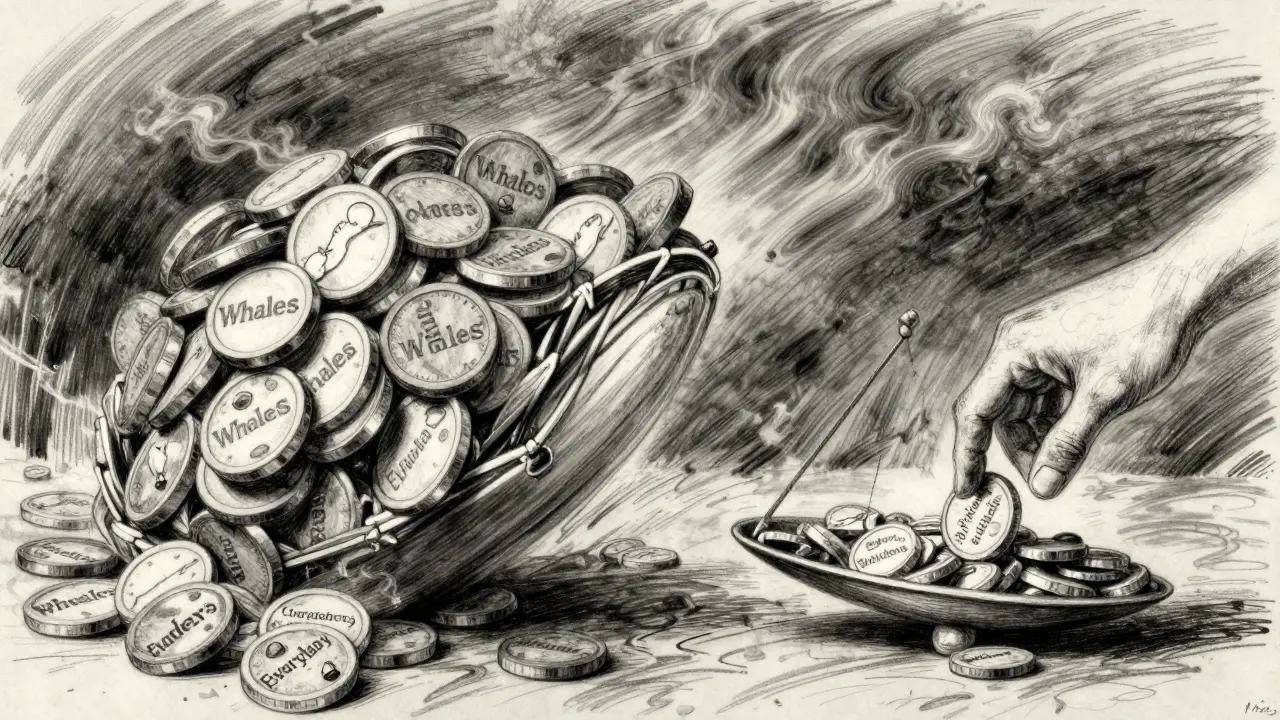
- One token, one vote - Used by 68% of DAOs. Simple, transparent, but lets whales dominate. In Uniswap’s DAO, the top 10 holders controlled nearly 25% of all voting power in 2023.
- Quadratic voting - Used by about 12% of DAOs. To cast 3 votes, you need 9 tokens. 5 votes? 25 tokens. This makes it expensive for one person to overpower the crowd. Gitcoin Grants used this for funding public projects and saw whale influence drop by 73% after switching.
- Reputation-based voting - Used by 9% of DAOs. Instead of tokens, your voting power comes from how much you’ve contributed. Did you write code? Translate docs? Moderate forums? You earn reputation points. But measuring contribution fairly is hard-some early systems got gamed by people farming reputation without real work.
- Delegated voting - Used by 45% of DAOs. You don’t have to vote yourself. You can assign your tokens to someone else you trust. Uniswap found that over half of all voting power was delegated to just 1,200 people. That’s efficient-but it risks creating a new class of power brokers.
- Multisig voting - Used by 8%. A small group of trusted members handles execution, while the community votes on direction. MakerDAO used this during the 2020 market crash to freeze risky loans. It’s fast, but it’s also centralized. A lot of people hate that.
The choice matters. A DAO using only token-based voting will likely see low participation from average users. One using quadratic or reputation systems might have more diverse input-but it’s harder to understand.

Why People Don’t Vote (And Why It Matters)
Here’s the ugly truth: most DAO voters don’t vote at all.
Across 500 DAOs, the average voter turnout is just 3.2%. That means 97 out of 100 token holders never cast a ballot. Why?
- Too many proposals. One user reported getting 27 governance notifications in a single week.
- Too complex. Treasury proposals often involve financial jargon, charts, and risk models most people can’t parse.
- Too slow. Voting lasts 3-7 days. By the time you read the proposal, the vote’s already closing.
- Too little impact. In the BanklessDAO survey, 78% of users said they’d never voted on treasury spending because they didn’t understand it.
And then there’s the whale problem. In 2022, Aave passed a proposal that 67% of small holders opposed. It still passed because the top 5 wallets held enough tokens to tip the scale. That’s not democracy. That’s plutocracy.
Some DAOs are trying to fix this. Aave now lets users assign different delegates for different types of votes-like one for treasury, another for protocol changes. Uniswap added a 30-day cooldown after large holders vote, to slow down sudden swings. These aren’t perfect fixes, but they’re steps in the right direction.
Real-World Risks and Attacks
Governance tokens aren’t magic. They’re code-and code can be hacked.
In 2021, an attacker borrowed $60 million worth of Cream Finance’s governance token, voted to drain the treasury, and walked away with $13 million. No one saw it coming. The system trusted that token holders were real users. They weren’t.
Another common tactic is vote buying. Someone offers to pay you in ETH or another token if you vote a certain way. Chainalysis found this happened in 12% of DAOs in 2023. And it’s hard to stop because votes are anonymous and on-chain.
Security firms like Immunefi reported a 217% increase in governance attacks in 2023, costing projects over $127 million. The lesson? Voting systems need more than just smart contracts. They need safeguards-like time-locked voting power, minimum holding periods, and proposal fees to stop spam.
What’s Next for DAO Voting?
The future of governance isn’t just one system. It’s a mix.
DAOs are starting to combine methods. Optimism’s “Citizen House” lets people earn voting power through public contributions-not just token holding. Aave’s power delegation lets users customize who votes for them. And Vitalik Buterin’s idea of “conviction voting” is gaining traction: the longer you support a proposal, the more your vote counts.
Time-locked tokens are another shift. Instead of letting someone vote with tokens they just bought, some DAOs now require you to lock them up for 30, 60, or even 180 days. That stops short-term speculators from flipping in, voting, and cashing out.
By 2025, over 60% of DAOs plan to use hybrid models. That means blending token weight with reputation, time, or contribution. The goal? Make governance more fair, not just more efficient.
Is This Really Democracy?
Let’s be honest: DAO voting isn’t like voting in a country. You don’t get a ballot in the mail. You don’t have a voting booth. You log into a website, read a long GitHub post, and click a button.
But it’s still revolutionary. For the first time, people who aren’t CEOs or investors can directly shape the tools they use. A developer in Indonesia, a student in Brazil, a retiree in Germany-they all have a voice if they hold the token.
That’s powerful. But it’s fragile. Without better design, governance tokens will just become another way for the rich to control the system. The real test isn’t whether DAOs can vote. It’s whether they can vote fairly.
Right now, the system is still experimental. It’s messy. It’s slow. It’s full of bugs. But it’s also the closest thing we have to true decentralized control. And that’s worth trying to fix.
What exactly is a governance token?
A governance token is a cryptocurrency that gives holders the right to vote on decisions within a DAO. These decisions include protocol upgrades, treasury spending, fee changes, and more. Unlike regular tokens, governance tokens aren’t primarily meant for trading-they’re meant for participation.
Can I vote without holding tokens?
In most DAOs, no. Voting power is tied directly to token ownership. However, some DAOs allow delegation-you can assign your voting power to someone else if you don’t want to vote yourself. There are also reputation-based systems where contribution, not tokens, determines voting weight, but these are still rare.
Why do some DAOs use quadratic voting?
Quadratic voting reduces the influence of large holders. To cast 1 vote, you need 1 token. To cast 4 votes, you need 16 tokens. This makes it expensive for one person to dominate the vote, giving smaller holders more relative power. It’s designed to reflect how strongly people feel about an issue, not just how many tokens they own.
Are governance tokens regulated?
Yes, increasingly so. The U.S. Securities and Exchange Commission (SEC) has signaled that governance tokens could be classified as securities if they function like investment contracts. Uniswap Labs faced enforcement action in 2023 over this exact issue. Many DAOs are now restructuring their tokens to avoid legal risks.
How do I start voting in a DAO?
First, acquire the governance token-usually by buying it on a crypto exchange or earning it through participation. Then, connect your wallet to the DAO’s voting platform (like Snapshot or Tally). Read the proposal carefully, check voting deadlines, and submit your vote. Most platforms let you vote for free using off-chain signatures, so you don’t pay gas fees.
What happens if I don’t vote?
Your vote doesn’t count, but your tokens still do. If you don’t vote, your voting power is effectively given to those who do. In practice, that means large holders or delegates end up making decisions for you. Not voting isn’t neutral-it’s handing power away.
Can DAOs be hacked through governance?
Yes. Governance attacks happen when someone gains enough voting power-often by borrowing tokens temporarily-to pass malicious proposals. The Cream Finance attack in 2021 is a prime example. To prevent this, DAOs now use time locks, proposal fees, and minimum holding requirements before voting.


