
You’ve probably seen the headlines. Someone bought a JPEG of a monkey for millions of dollars. Or maybe you heard about a digital ticket that proves you were at a concert. It sounds wild, right? But beneath the hype and the price tags lies a piece of technology that is actually changing how we think about owning things online. That technology is the Non-fungible token, or NFT.
If you’re confused by all the jargon, you aren’t alone. The crypto world loves to complicate simple ideas. But at its core, an NFT is just a receipt. It’s a digital certificate of authenticity that lives on a public ledger called a blockchain. This article breaks down exactly how these tokens work, why they are unique, and what happens behind the scenes when you buy or sell one.
What Makes an NFT Different?
To understand NFTs, you first need to understand the word "fungible." Fungible means interchangeable. Think about a dollar bill. If I give you a $20 bill and you give me a different $20 bill, nothing changes. The value is identical. Bitcoin works the same way; one Bitcoin is always equal to another Bitcoin.
NFTs are the opposite. They are non-fungible. Each one has a unique identification code embedded in it. No two NFTs are the same, even if they look identical. Imagine two paintings by the same artist. One might be signed, or one might have been owned by a famous person. That history makes them unique. In the digital world, an NFT provides that uniqueness through cryptography.
When you own an NFT, you don’t necessarily own the copyright to the image or music attached to it (unless the contract says otherwise). Instead, you own the specific token that points to that asset. It’s like owning the original Mona Lisa versus owning a high-quality poster of it. Everyone can see the painting, but only one person holds the title to the original.
The Role of the Blockchain
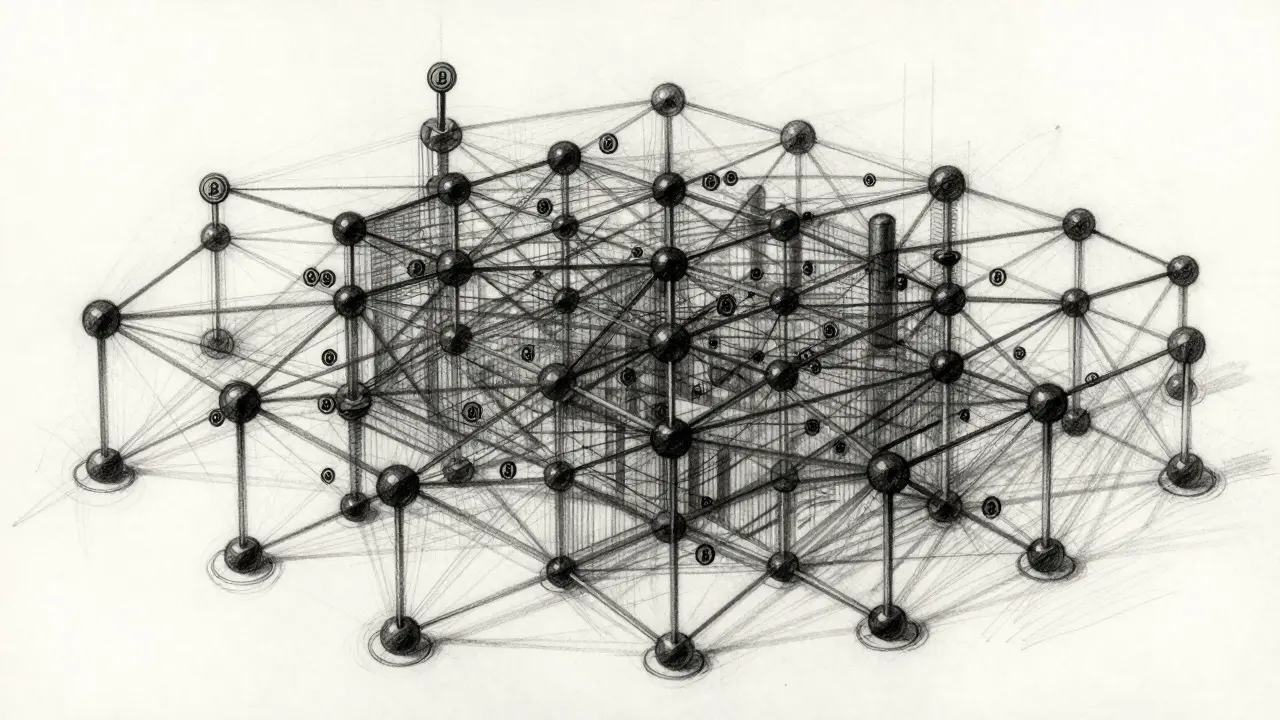
An NFT doesn’t exist in isolation. It needs a home, and that home is the blockchain. A blockchain is a decentralized digital ledger. Think of it as a shared Google Sheet that everyone can read, but no single person can edit or delete. Once data is written into this ledger, it is permanent.
Ethereum is the most popular blockchain for hosting NFTs, handling approximately 80% of all NFT transactions as of mid-2023. However, other networks like Solana is a high-performance blockchain known for low fees and fast transaction speeds and Polygon are also widely used. The choice of blockchain matters because it affects speed and cost.
When an NFT is created, or "minted," a record is added to the blockchain. This record contains:
- A unique token ID.
- The address of the creator.
- The address of the current owner.
- A link to the metadata (more on that later).
Because this information is stored on thousands of computers worldwide, it cannot be faked. If someone claims they own an NFT, anyone can check the blockchain to verify it. This transparency is the foundation of trust in the NFT ecosystem.
Smart Contracts: The Rules of the Game
So, who enforces these rules? Who ensures that when you pay for an NFT, you actually get it? The answer is smart contracts. A smart contract is a self-executing program stored on the blockchain. It runs automatically when certain conditions are met.
For example, imagine you want to buy an NFT from Alice. You send cryptocurrency to the smart contract holding the NFT. The contract checks if you sent enough money. If yes, it instantly transfers the NFT to your wallet and sends the money to Alice. No middleman, no bank, no waiting period. This process is immutable and transparent.
Smart contracts also handle royalties. Many artists set up their NFTs so that every time the token is resold, a small percentage (often 5-10%) goes back to the original creator. This feature was revolutionary for digital artists, who previously had no way to earn from secondary sales. According to industry analysis, this automated royalty system is one of the key innovations driving creator adoption.
Token Standards: ERC-721 vs. ERC-1155
Not all NFTs are built the same way. Developers use specific coding standards to ensure wallets and marketplaces can read the tokens. The two most common standards on Ethereum are ERC-721 and ERC-1155.
| Feature | ERC-721 | ERC-1155 |
|---|---|---|
| Primary Use Case | Unique assets (art, collectibles) | Multiple types of assets (gaming items, batches) |
| Uniqueness | Each token is strictly unique | Can represent both unique and semi-fungible items |
| Gas Efficiency | Higher gas costs for batch transfers | Up to 90% lower gas costs for batch operations |
| Complexity | Simpler structure | More complex, requires careful implementation |
ERC-721 was the first standard, launched in 2017. It treats every token as completely distinct. If you mint 10,000 images, each one gets its own separate entry on the blockchain. This is great for high-value art but inefficient for games where players might hold thousands of identical swords or potions.
ERC-1155, introduced in 2018, solves this problem. It allows a single smart contract to manage multiple types of tokens. This reduces the computational load on the network, which translates to lower fees for users. If you’re building a game with many duplicate items, ERC-1155 is usually the better choice.
Metadata and Storage: Where Is the Art?
This is where things get tricky. When people say they "own" an NFT, they often assume they own the image file itself. In reality, the NFT usually only contains a link to the file. The actual image, video, or audio file is too large to store efficiently on most blockchains. So, it’s stored elsewhere.
In the early days, many projects stored files on centralized servers like Amazon Web Services (AWS). This created a risk: if the server went down or the company deleted the file, the NFT would point to nothing. We call this "link rot." Reports from 2021 showed that a significant percentage of early NFT collections lost access to their underlying assets due to server migrations.
To fix this, the industry moved toward decentralized storage solutions like IPFS (InterPlanetary File System) and Arweave. These systems distribute file pieces across a global network of computers. Even if one computer fails, the file remains accessible. As of 2023, over 60% of new NFTs use some form of decentralized storage to ensure longevity. Always check where the metadata is stored before buying an expensive NFT.
Minting and Gas Fees
Minting is the process of creating an NFT on the blockchain. It requires a small payment to the network validators to process the transaction. On Ethereum, this payment is called "gas." Gas fees fluctuate based on network congestion. During busy periods, minting an NFT could cost tens of dollars. During quiet times, it might cost less than a dollar.
This volatility has driven many creators to alternative chains. Solana, for instance, charges fractions of a cent per transaction. Polygon offers Ethereum compatibility with much lower fees. Your choice of platform depends on your budget and your target audience. If you’re selling high-end art, Ethereum’s prestige might matter. If you’re selling affordable gaming items, Solana or Polygon might be more practical.
Real-World Utility Beyond Art
While digital art got the attention, NFTs are finding serious use in traditional industries. Supply chain management is a prime example. Companies like Walmart and LVMH are using NFT-like tokens to track physical goods. An NFT can prove that a handbag is authentic or that a diamond came from a conflict-free mine.
Ticketing is another area. Concert promoters are issuing NFT tickets to prevent scalping and fraud. Because the ticket is on the blockchain, it can’t be duplicated. The promoter can also enforce resale limits, ensuring fans get fair prices. By 2025, major entertainment studios are expected to implement NFT-based royalty systems, further integrating this tech into mainstream media.
Risks and Considerations
Despite the potential, risks remain. Scams are common. Phishing sites, fake collections, and "rug pulls" (where developers abandon a project after raising funds) plague the space. Always verify the contract address before connecting your wallet. Never share your seed phrase with anyone.
Market volatility is another factor. Most NFTs lose value quickly. Only a tiny fraction maintain their price long-term. Treat NFTs as speculative investments unless they provide clear utility, like access to a community or a product. Regulatory uncertainty also looms, with agencies like the SEC scrutinizing projects that resemble securities.
The Future of Digital Ownership
The technology behind NFTs is maturing. Upgrades to Ethereum, such as EIP-4844, promise to reduce transaction costs significantly. New standards are emerging to improve interoperability between different blockchains. As the infrastructure improves, we’ll likely see fewer speculative bubbles and more practical applications in identity verification, real estate, and intellectual property.
Understanding how NFTs work gives you the power to navigate this space safely. Whether you’re an artist looking to monetize your work or a collector seeking unique digital assets, knowing the mechanics behind the token helps you make informed decisions. The future of ownership is digital, and it’s being written on the blockchain.
Do I own the copyright to an NFT?
Usually, no. Buying an NFT typically grants you ownership of the token, not the underlying intellectual property rights. Unless the smart contract explicitly states that copyright is transferred, the creator retains the rights to reproduce and distribute the asset. Always read the terms of service for the collection.
What happens if the website hosting my NFT disappears?
If the NFT uses centralized storage, you might lose access to the visual content, though the token itself remains on the blockchain. However, if the project uses decentralized storage like IPFS or Arweave, the file is preserved across a distributed network and will remain accessible regardless of any single website's status.
Are NFTs environmentally friendly?
It depends on the blockchain. Older proof-of-work chains like pre-Merge Ethereum consumed significant energy. However, Ethereum now uses proof-of-stake, reducing energy use by over 99%. Chains like Solana and Tezos are also highly energy-efficient, making modern NFT trading much greener than in the past.
Can I create an NFT without coding knowledge?
Yes. Marketplaces like OpenSea and Rarible offer "lazy minting" options that allow creators to list NFTs without writing code or paying upfront gas fees. The fees are paid by the buyer upon purchase. For more complex needs, no-code tools and platforms are available to help deploy smart contracts.
What is the difference between ERC-721 and ERC-1155?
ERC-721 is designed for unique, one-of-a-kind items where each token has a distinct ID. ERC-1155 allows a single contract to manage multiple types of tokens, including duplicates. This makes ERC-1155 more efficient for games or projects with large volumes of similar items, resulting in lower transaction fees.