

Imagine buying a house only to find out later that the seller didn't actually own it. Or worse, discovering that someone forged your signature to mortgage your home while you were on vacation. These aren't just plot twists from a thriller; they are real risks in the traditional real estate market. Title fraud, identity theft, and forged documents cost billions annually and leave buyers with nightmares instead of keys.
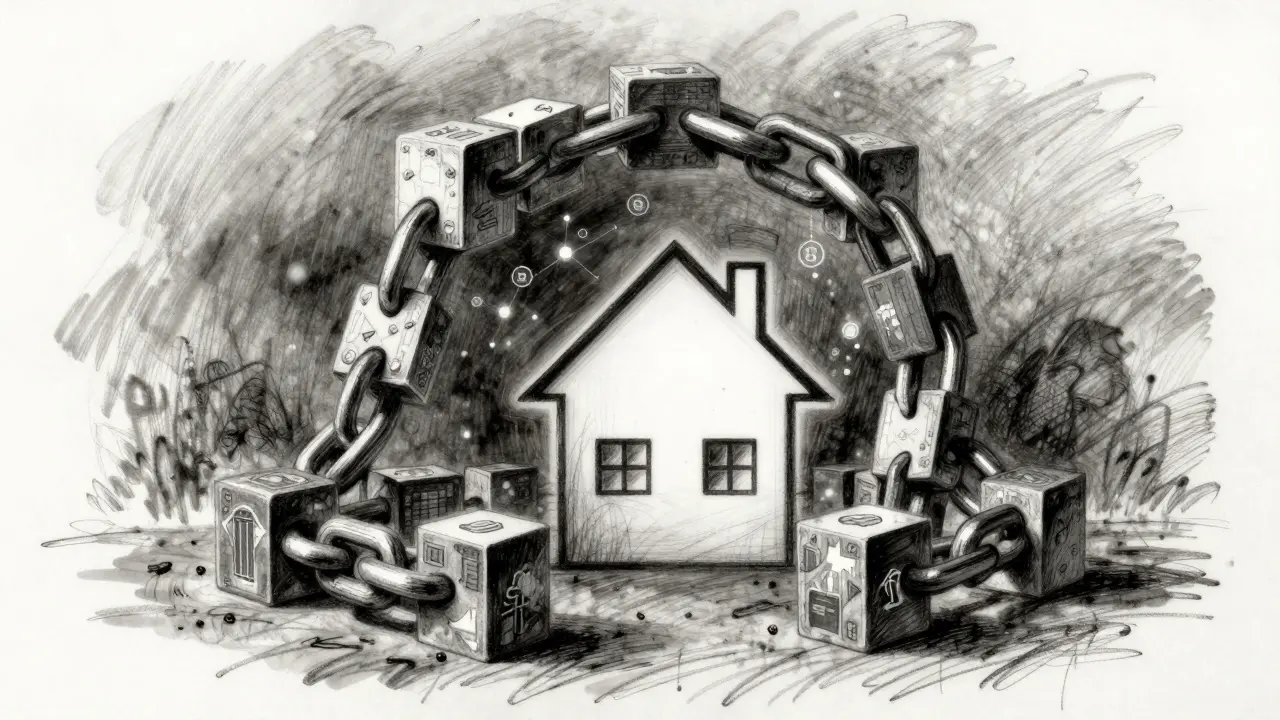
Enter Blockchain, a decentralized digital ledger technology that records transactions across many computers so that the record cannot be altered retroactively without altering all subsequent blocks. In the context of real estate, blockchain acts as an unchangeable historical record. It creates a single, irrefutable point of truth for property ownership, drastically reducing the window of opportunity for fraudsters.
The Core Problem: Why Traditional Systems Fail
To understand why blockchain is necessary, we have to look at how broken the current system is. Today, property records are often stored in fragmented, centralized databases managed by local governments or private title companies. These systems are slow, prone to human error, and vulnerable to hacking or insider manipulation.
Consider the issue of defective titles. Statistics suggest that approximately one-quarter of real estate transactions require legal action to fix title defects. This means that for every four homes sold, one has a hidden problem-perhaps an old lien, an unresolved inheritance dispute, or a clerical error-that surfaces during closing. Buyers protect themselves by purchasing title insurance, which adds thousands of dollars to the purchase price. But insurance doesn't prevent the fraud; it just pays for the cleanup afterward.
Furthermore, identity verification remains a weak link. Fraudsters frequently impersonate homeowners to refinance properties or steal equity. In cross-border transactions, this risk multiplies because verifying identities across different jurisdictions is complex and expensive. The lack of a unified, secure identity standard allows bad actors to slip through the cracks.
How Blockchain Secures Property Records
Blockchain addresses these vulnerabilities through its fundamental architecture: decentralization and immutability. When a property transaction is recorded on a blockchain, it is encrypted and linked to previous transactions in a chain. Once confirmed, that record becomes permanent. No single entity can alter it without the consensus of the entire network.
This structure eliminates the "single point of failure" inherent in traditional registries. If a hacker tries to change a property's ownership status on one node, the rest of the network rejects the change because it doesn't match the majority of copies. This makes forgery nearly impossible. For example, if a fraudster attempts to create a fake deed, the blockchain will flag it as invalid because it lacks the cryptographic proof required by the network.
Moreover, blockchain provides transparency without sacrificing privacy. While the ledger is public, sensitive personal data can be encrypted. Authorized parties-such as buyers, sellers, lenders, and lawyers-can access specific details using private keys. This ensures that everyone involved sees the same accurate information simultaneously, reducing disputes caused by miscommunication or outdated documents.
| Feature | Traditional System | Blockchain System |
|---|---|---|
| Data Storage | Centralized, siloed databases | Decentralized, distributed ledger |
| Immutability | Vulnerable to alteration/hacking | Cryptographically secured, tamper-proof |
| Verification Speed | Days to weeks (manual checks) | Near-instant (automated validation) |
| Cost of Title Insurance | High (due to risk mitigation) | Potentially eliminated or reduced |
| Transparency | Limited, opaque processes | Full audit trail for authorized users |
Smart Contracts: Automating Trust
One of the most powerful features of blockchain in real estate is the use of Smart Contracts, self-executing contracts with the terms of the agreement directly written into code. These programs automatically enforce and execute agreements when predefined conditions are met, removing the need for intermediaries like escrow agents or notaries.
Here’s how it works in practice. A buyer and seller agree on a price. The smart contract holds the buyer’s funds in escrow on the blockchain. When the title transfer is verified and recorded on the ledger, the contract automatically releases the funds to the seller. If any condition isn’t met-for instance, if a lien appears on the title-the transaction halts, and the money returns to the buyer.
This automation reduces human error and speeds up closings. Instead of waiting days for banks and lawyers to exchange paperwork, the process happens in minutes. It also prevents fraud where intermediaries might mishandle funds or forge signatures. Since the code is transparent and immutable, both parties can trust that the rules will be followed exactly as written.
Digital Identity and AI Integration
Identity theft is a major driver of real estate fraud. Blockchain combats this by enabling secure Digital Identity Verification, systems that use cryptographic keys and biometric data to authenticate users without revealing sensitive personal information. Users control their own identity data, sharing only what is necessary for each transaction.
When combined with Artificial Intelligence (AI), technology that simulates human intelligence processes such as learning and problem-solving, the system becomes even more robust. AI algorithms can analyze vast amounts of transaction data in real-time to detect anomalies. For example, if a property suddenly changes hands multiple times in a short period with unusual payment patterns, the AI flags it for review before the blockchain confirms the final transfer.
This integration is particularly valuable for overseas buyers. Verifying identities across borders is traditionally difficult and risky. With blockchain-based digital IDs, an international investor can prove their identity instantly and securely, without needing physical presence or extensive documentation. This streamlines cross-border transactions while maintaining high security standards.
Impact on Title Insurance and Market Access
If blockchain makes title records tamper-proof, does title insurance become obsolete? Many experts argue yes. Currently, title insurance exists because there is a significant risk of undiscovered defects. With a blockchain ledger providing a complete, verified history of ownership, that risk drops dramatically. Some pilot programs suggest that NFTs (Non-Fungible Tokens) could represent property deeds, replacing paper titles entirely. This would eliminate the need for costly insurance premiums, saving buyers thousands of dollars.
Beyond fraud prevention, blockchain democratizes access to real estate data. Historically, detailed property histories were hard to obtain. Now, anyone with internet access can verify a property’s chain of ownership, check for liens, or review past sales prices. This transparency empowers consumers, preventing speculative bubbles and market manipulation. Investors can conduct due diligence efficiently, leading to a healthier, more stable market.
Challenges to Widespread Adoption
Despite its benefits, blockchain adoption in real estate faces hurdles. Regulatory frameworks are still catching up. Laws vary by jurisdiction, and integrating blockchain with existing legal systems requires careful planning. Additionally, the initial setup costs for migrating legacy data to a blockchain can be high. Governments and large institutions must collaborate to establish standardized protocols.
User experience is another concern. Managing private keys and understanding cryptographic concepts can be daunting for average homebuyers. Solutions need to be intuitive, hiding the technical complexity behind simple interfaces. Finally, scalability remains a challenge. Blockchains must handle millions of transactions quickly and cheaply to support global real estate markets. Emerging technologies like Layer-2 solutions aim to address this by processing transactions off-chain while maintaining security on-chain.
Can blockchain completely eliminate real estate fraud?
While blockchain significantly reduces the risk of fraud by making records immutable and transparent, it cannot eliminate all forms of fraud. Human error in data entry before recording on the blockchain, social engineering attacks targeting users' private keys, and legal loopholes remain potential vulnerabilities. However, it drastically minimizes opportunities for document forgery and title manipulation.
What are smart contracts in real estate?
Smart contracts are self-executing agreements coded on a blockchain. They automatically trigger actions, such as transferring funds or updating ownership records, when specific conditions are met. This removes the need for intermediaries like escrow agents, speeding up transactions and reducing costs.
Is my personal data safe on a blockchain?
Yes, if implemented correctly. Blockchain uses advanced encryption to protect sensitive information. Personal details are not stored publicly; instead, cryptographic hashes verify data integrity. Only authorized parties with private keys can access specific information, ensuring privacy while maintaining transparency for transaction validity.
Will blockchain replace title insurance?
It may eventually. Title insurance exists to protect against hidden title defects. With blockchain providing a tamper-proof, complete history of ownership, the risk of such defects decreases significantly. As adoption grows, the need for traditional title insurance could diminish, potentially lowering costs for buyers.
How does blockchain help international property buyers?
Blockchain simplifies cross-border transactions by enabling secure digital identity verification and automated compliance checks. Buyers can verify property titles and complete payments remotely without needing physical presence or navigating complex bureaucratic processes in foreign jurisdictions.