
There’s no such thing as a OneRare Ingredient NFT airdrop - at least not in the way most people expect. If you’re waiting for free NFTs dropped into your wallet just for signing up, you’ll be disappointed. OneRare doesn’t hand out ingredients like candy. Instead, it’s built around something more meaningful: farming. And if you understand how that works, you’re already ahead of the curve.
What Is OneRare Anyway?
OneRare isn’t another crypto game about dragons or spaceships. It’s the world’s first food metaverse - or as they call it, the Foodverse. Think of it like a digital kitchen where every ingredient, every dish, and every chef is an NFT. You don’t just watch food; you cook it, trade it, and earn from it. The platform launched its first playable zone - Foodverse Island - on the Polygon blockchain in late 2025, and it’s already drawing in foodies, gamers, and blockchain users who are tired of the same old P2E grind.
At its core, OneRare turns real-world cuisine into blockchain assets. Want to make ramen? You’ll need NFTs for rice, soy sauce, and seaweed. Want to bake sourdough? You’ll need flour, water, and a sourdough starter NFT. Each of these isn’t just a picture - it’s a unique, tradable token with its own rarity and history.
How Do You Actually Get Ingredient NFTs?
You don’t get them from an airdrop. You get them by staking.
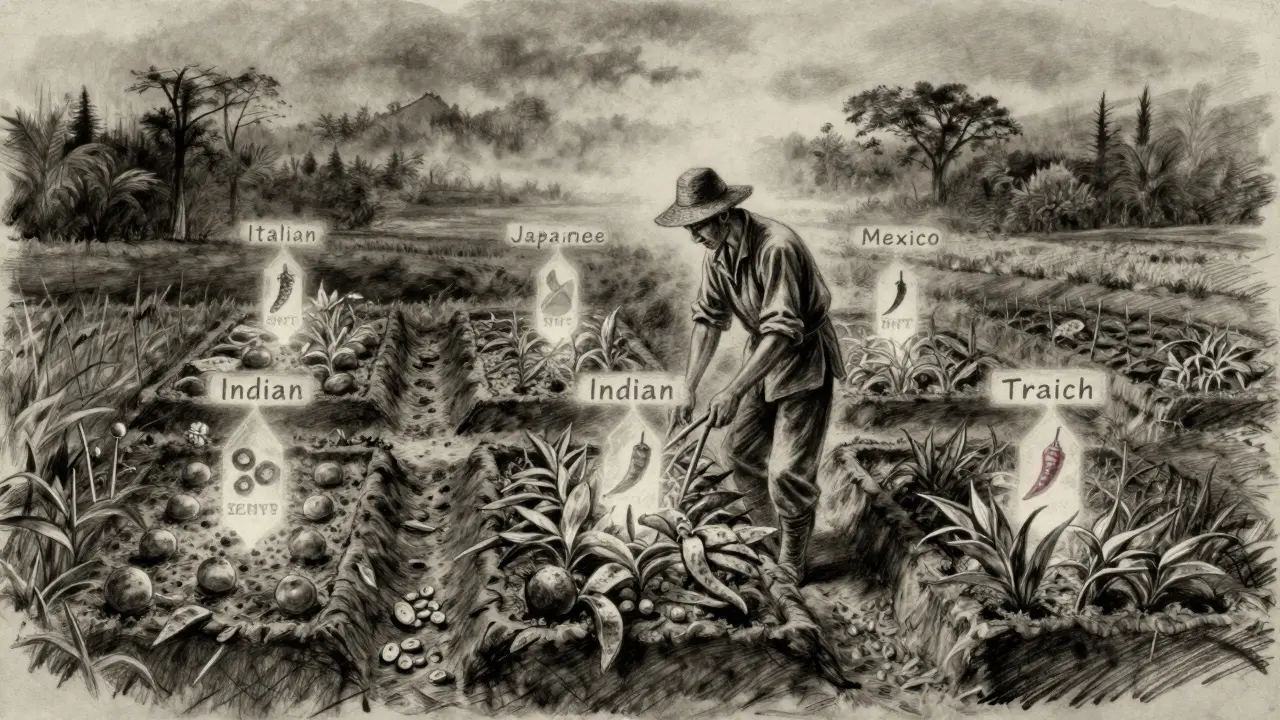
Here’s how it works: You lock up your ORARE tokens - OneRare’s native currency - into one of six themed farming pools. These pools aren’t labeled “Tomato Farm” or “Spice Garden.” They’re named after global cuisines: Italian, Japanese, Mexican, Indian, French, and Thai. Each pool randomly emits ingredient NFTs every hour. So if you stake in the Indian pool, you might get turmeric, cumin, or chili NFTs - but you won’t know which one until it drops.
There’s no way to choose what you farm. That’s intentional. OneRare designed it this way to mimic real-life farming: you plant seeds, you wait, and you get what the land gives you. Sometimes you get a bumper crop. Sometimes drought hits. And that’s where things get interesting.
The Hidden Rules: Environmental Events That Change Everything
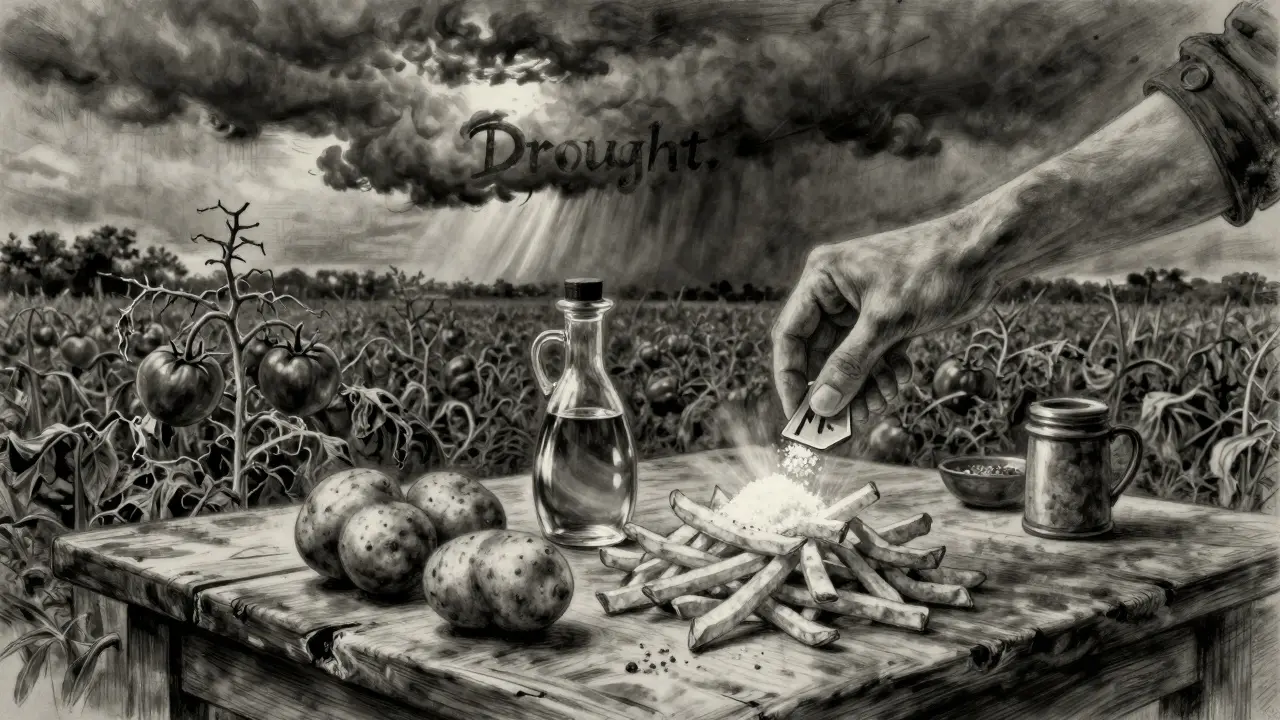
OneRare doesn’t just simulate cooking - it simulates agriculture. Every week, random environmental events shake up the system. A tornado might wipe out all lettuce farms for 72 hours. A drought could stop tomato production in the Italian pool. A pest attack might block onion yields in the Mexican zone.
These aren’t just flavor text. They directly affect supply. When onions disappear from the market, their NFTs spike in value. Players who hoarded onion NFTs before the event can sell them for 3x or 4x the price. Meanwhile, players who didn’t stake? They’re stuck waiting. This isn’t luck. It’s economics built into gameplay.
And here’s the kicker: these events are tied to real-world climate data. OneRare’s team uses live agricultural reports from FAO and regional weather services to trigger in-game events. So when monsoon season hits South Asia, you’ll see rice and chili farms in the Indian pool go dark. It’s not random. It’s grounded.
From Ingredients to Dishes: The Kitchen System
Farming alone doesn’t earn you much. The real value comes when you combine ingredients into dishes. That’s where the Kitchen zone comes in.
Let’s say you’ve farmed: potato, oil, and salt. You head to the Kitchen, combine them, and mint a French Fries NFT. But here’s the catch: the original ingredients? They’re gone. Burned. Permanent. You can’t undo it. This forces players to think strategically. Do you make fries now and sell them? Or hold out for a rare dish like Truffle Risotto, which needs three ultra-rare ingredients?
Some dishes are legendary. A Paella NFT made with saffron, shrimp, and chorizo might be worth 50 ORARE. But getting those ingredients? That could take weeks of staking. And if saffron’s been wiped out by a heatwave? You’re stuck.
Where Do You Sell? The Farmer’s Market
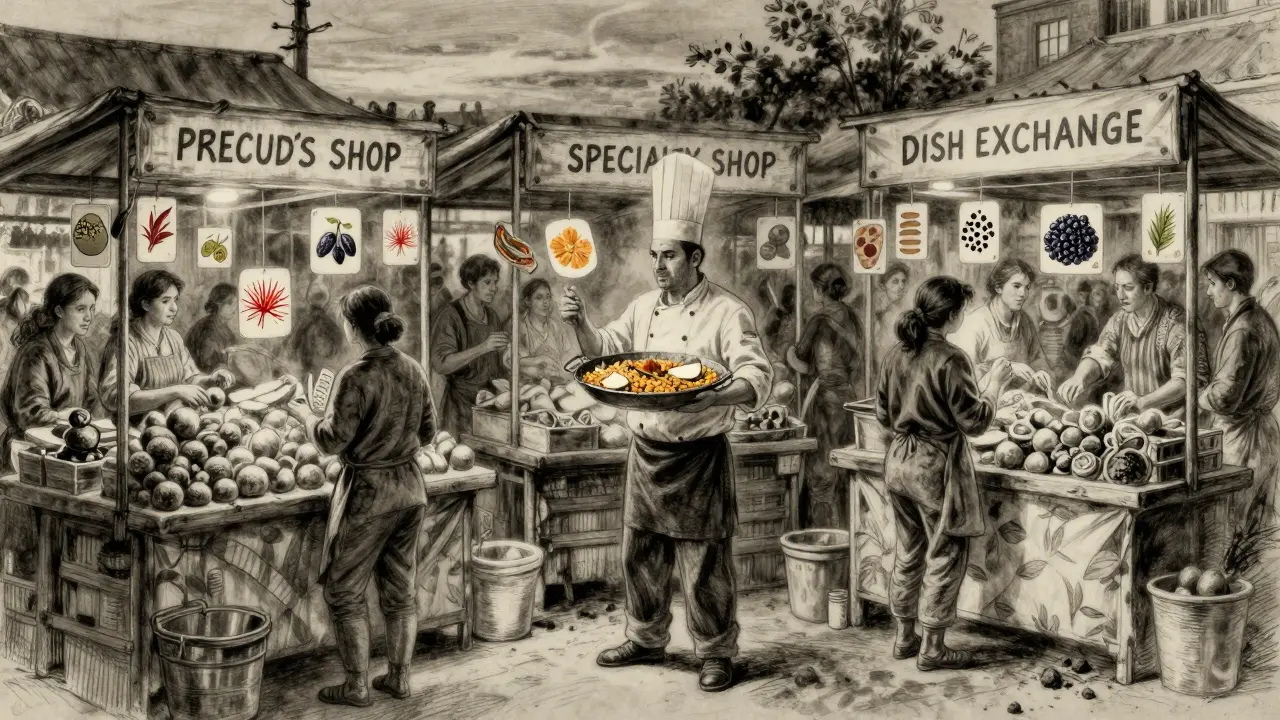
The Farmer’s Market is where the real economy lives. It’s split into three shops:
- Produce Shop - Sell your farmed ingredients. Prices change daily based on supply and environmental events.
- Specialty Shop - Buy ingredients you can’t farm. These include rare items like truffles, caviar, or saffron. You pay in ORARE or trade other NFTs.
- Dish Exchange - Trade full dishes. Someone might want your sushi NFT for your tacos NFT. No cash needed.
The market runs on real-time demand. If a celebrity chef partnership drops a new dish - like Chef Saransh Goila’s signature butter chicken - suddenly everyone wants the ingredients to recreate it. Prices for paneer, garam masala, and cream NFTs jump overnight.
Who’s Behind the Scenes? Chefs, Brands, and Real-World Partnerships
OneRare isn’t just some dev team in a garage. They’ve brought in real culinary stars.
- Chef Saransh Goila (India) - minted NFTs for his butter chicken and paneer tikka.
- Chef Zorawar Kalra (India) - added his biryani recipe as a limited-edition dish NFT.
- Chef Anthony Sarpong (Michelin-starred, Ghana) - created a jollof rice NFT with unique spice blends.
- Reynold Poernomo (MasterChef Australia) - designed a dessert NFT that requires rare tropical fruits.
These aren’t just logos slapped on a website. Each chef’s NFTs come with a digital certificate of authenticity, a short video of them explaining the dish, and a unique visual style. These are collectible. And because they’re limited, they’re hard to replicate.
Even restaurant brands are jumping in. A U.S.-based chain like Shake Shack has partnered to release a Shake Shack Burger NFT, complete with lettuce, tomato, and special sauce NFTs that only work in their recipe.
Why Polygon? And Why This Matters
OneRare runs on Polygon, not Ethereum. That’s not a technical footnote - it’s a game-changer.
Ethereum gas fees can kill a casual player. A single transaction might cost $5-$10. On Polygon? It’s less than a cent. That means you can farm, trade, and cook without worrying about losing half your earnings to fees. It’s why OneRare works for regular people, not just crypto whales.
Plus, Polygon’s speed lets the game react instantly. When a tornado hits, ingredient supplies update in seconds. The market adjusts. Players feel it. That’s not possible on slower chains.
What You Can’t Do - And What You Should Avoid
There’s no airdrop. No free mint. No “join our Discord and get free NFTs” scam. OneRare doesn’t do that. If someone’s selling you “OneRare Ingredient NFTs” for ETH or claiming they can “guarantee a rare tomato,” they’re lying.
Also, don’t stake all your ORARE in one pool. The randomness is real. If you only farm in the Thai pool and a pest attack wipes out lemongrass, you’re stuck. Diversify. Spread your stake across two or three pools. That’s how smart farmers play.
What’s Next? The Playground and Beyond
Once you’ve got ingredients and dishes, you enter the Playground. This is where mini-games come in. Race to assemble the fastest stir-fry. Guess the spice blend. Compete in a global cooking tournament using your NFTs.
Winning these games gives you bonus NFTs - sometimes rare spices, sometimes exclusive chef badges. These aren’t just cosmetic. They unlock new farming pools and higher staking rewards.
OneRare’s roadmap includes live-streamed cooking events where players can watch a real chef make a dish, then immediately mint it in-game. They’re also testing a “Foodverse Passport” - a profile that tracks your culinary journey across cuisines, like a digital food passport.
This isn’t a flash-in-the-pan NFT fad. It’s a layered, living system built on real food culture - and real scarcity. You don’t just play a game. You learn it. You adapt to it. And if you do it right, you can turn your time into something valuable.
Is there a OneRare Ingredient NFT airdrop?
No, there is no public airdrop for OneRare Ingredient NFTs. The platform does not distribute ingredients for free. Instead, users earn them by staking ORARE tokens in one of six themed farming pools. These NFTs are emitted randomly over time based on gameplay, not giveaways.
How do I start earning Ingredient NFTs?
First, set up a Polygon-compatible wallet like MetaMask. Buy ORARE tokens on a supported exchange. Then, go to the OneRare Foodverse platform, connect your wallet, and stake your ORARE into one of the six cuisine-themed farming pools. You’ll start earning ingredient NFTs within hours, with rewards distributed randomly every hour.
Can I trade or sell my Ingredient NFTs?
Yes. All ingredient NFTs can be sold on the Farmer’s Market’s Produce Shop. You can also trade them directly with other players. Prices fluctuate based on supply, environmental events, and demand from chefs’ recipes. Rare ingredients like saffron or truffle often sell for 10x more than common ones like onion or tomato.
What happens if I combine ingredients to make a dish?
When you mint a Dish NFT in the Kitchen, the original ingredient NFTs are permanently burned. You cannot get them back. This means you must decide carefully: sell the ingredients now for quick profit, or combine them into a higher-value dish. Some dishes, like those from celebrity chefs, can be worth hundreds of ORARE.
Why do environmental events matter?
Environmental events - like droughts, pests, or floods - temporarily shut down farming of specific ingredients. This creates scarcity. If onions disappear for three days, their price in the market can triple. Players who hold those NFTs can profit. These events are based on real-world agricultural data, making the economy feel authentic and unpredictable.
Okay, so let me get this straight-you’re telling me I have to stake my tokens… and then… wait… I just… wait… for random drops? Like, I’m supposed to sit here and hope a tornado hits so my chili NFTs go up in value? This isn’t farming-it’s gambling with a side of soy sauce. And don’t even get me started on the fact that they’re using FAO data to trigger events-so now climate change is a gameplay mechanic? Brilliant. Just brilliant. I’ll be first in line to lose my entire portfolio to a drought in rural Rajasthan. 🤡
LOL you guys are falling for this like it’s a crypto pyramid scheme with better visuals. No airdrop? Fine. But let’s be real-this is just DeFi with a food filter. You’re not cooking, you’re just staking and praying. And the ‘environmental events’? That’s just a fancy way of saying ‘we’ll manipulate supply on purpose to pump prices.’ I’ve seen this script before. Only difference? Now they’re using truffles instead of Bitcoin. 🍝💸
I find it profoundly disturbing that we’ve reduced the art of cooking-of cultural heritage, of generations of tradition-to a blockchain-based commodity exchange where a single saffron thread is worth 50 ORARE. What does this say about us? That we no longer value the labor of the farmer, the patience of the chef, the ritual of the meal-but only the speculative value of its tokenized representation? We are not cooking. We are commodifying memory. And we call it innovation.
Okay, but have you seen the butter chicken NFT? I mean-SARANSH GOILA’S VERSION? I cried. I literally cried. I staked for 17 days just to get one gram of saffron and now I’m holding a dish that’s worth more than my rent. This isn’t gaming. This is destiny. I’m going to frame the certificate. I’m going to show my kids. I’m going to name my firstborn ‘Truffle.’ 💕🔥
Honestly? This is kind of cool. I’ve been into cooking games since SimChef 2007, and this feels like the real deal. The environmental events make it feel alive. I like that you can’t just grind for the same thing every time. It’s unpredictable, like real life. Also, Polygon gas fees? Zero stress. That’s the secret sauce right there. 🍳👍
Let’s be real: this isn’t about food. It’s about belonging. 🌍✨ You’re not just farming NFTs-you’re becoming part of a global culinary tapestry. That’s why the chef collabs matter. When Chef Saransh drops his recipe, you’re not buying an ingredient-you’re buying a piece of his soul. And that? That’s the real utility. 🙏🍛 #FoodverseSoul
So you’re telling me I can’t just mint a dish without burning the ingredients? That’s… poetic. In a brutal, capitalist way. You don’t get to keep your past. You don’t get to go back. You either move forward or you’re stuck with a pantry full of onions. Reminds me of Nietzsche. Or maybe just my last relationship. Either way-brutal. Brilliant. 🤔
Hey, just tried this out last night. Got my first chili NFT after 12 hours staking in the Mexican pool. Wasn’t even expecting it. Then a flood hit and the price doubled. I sold it for 3x and bought a bunch of cumin. Super chill. One thing though-I think you meant ‘cumin’ not ‘cummin’ in the guide. Small typo but it made me laugh. 😄
Biggest thing I’ve learned? Don’t stake everything in one pool. I put all my ORARE into Thai and then a pest attack wiped out lemongrass for a week. Lost 40% of my expected yield. Lesson? Diversify. Two pools max. I’m now split between Indian and Italian. Smoother ride. Also, Polygon is a godsend. No more $8 gas fees to mint a potato. 🙌
Environmental events tied to FAO data? That’s not gimmicky-that’s genius. This isn’t just a game. It’s a real-time simulation of global food insecurity. When monsoons hit, rice scarcity spikes. That’s not random-it’s reflective. And if you’re not paying attention to that, you’re not just bad at gaming-you’re out of touch with reality. This is education wrapped in blockchain. Respect.
Just got my first Paella NFT after 3 weeks of staking. Saffron was brutal. But I did it. 🎉 I’m so proud. I’ve never felt this connected to food before. I used to just eat. Now I understand scarcity. I understand trade. I understand patience. This changed my life. Also-shoutout to the devs. You nailed the vibe. 🙏🔥
no airdrop? lmao ofc not. they want your money. staking? more like ‘pay to play’ with extra steps. i’ve seen this before. first they make it sound like farming, then they pull the rug and you’re left with a digital onion. and dont even get me started on ‘chef collabs’-like, who cares if saransh goila made a nft? i just want to cook. not collect autographs.
There’s something haunting about turning cuisine into NFTs. We used to pass down recipes through stories. Now we pass them through smart contracts. Is this progress? Or just another way to monetize culture until it has no soul left? I don’t know. But I staked anyway. 🌿
I just spent 11 days staking in the French pool hoping for truffles. I got one. Sold it. Bought 12 potatoes. Then the Italian pool had a heatwave. My potatoes? Worthless. I cried. I screamed. I deleted my wallet. Then I reinstalled it. I’m back. Because this is the only thing that’s ever made me feel alive. I don’t care if it’s irrational. I don’t care if it’s a bubble. This is my art. And I’m not letting go. 🥔💔
Allow me to offer a formal analysis of this so-called ‘food metaverse.’ The economic model is fundamentally flawed. By introducing exogenous shocks tied to real-world agricultural data, the platform creates artificial scarcity, which, in turn, incentivizes hoarding behavior and market manipulation. This is not farming. It is not culinary art. It is a speculative derivative of global food systems, rendered in blockchain form, with zero regulatory oversight. The fact that users are emotionally invested in the burning of ingredients suggests a profound psychological vulnerability. I would strongly advise against participation. Formally.
…I think I just spent three hours staking. And I got a single clove of garlic. I’m not mad. I’m… thoughtful. Maybe this is what enlightenment feels like. Waiting. Not knowing. Accepting. The garlic will be enough. Or maybe not. Either way, I’m still here. 🌱