
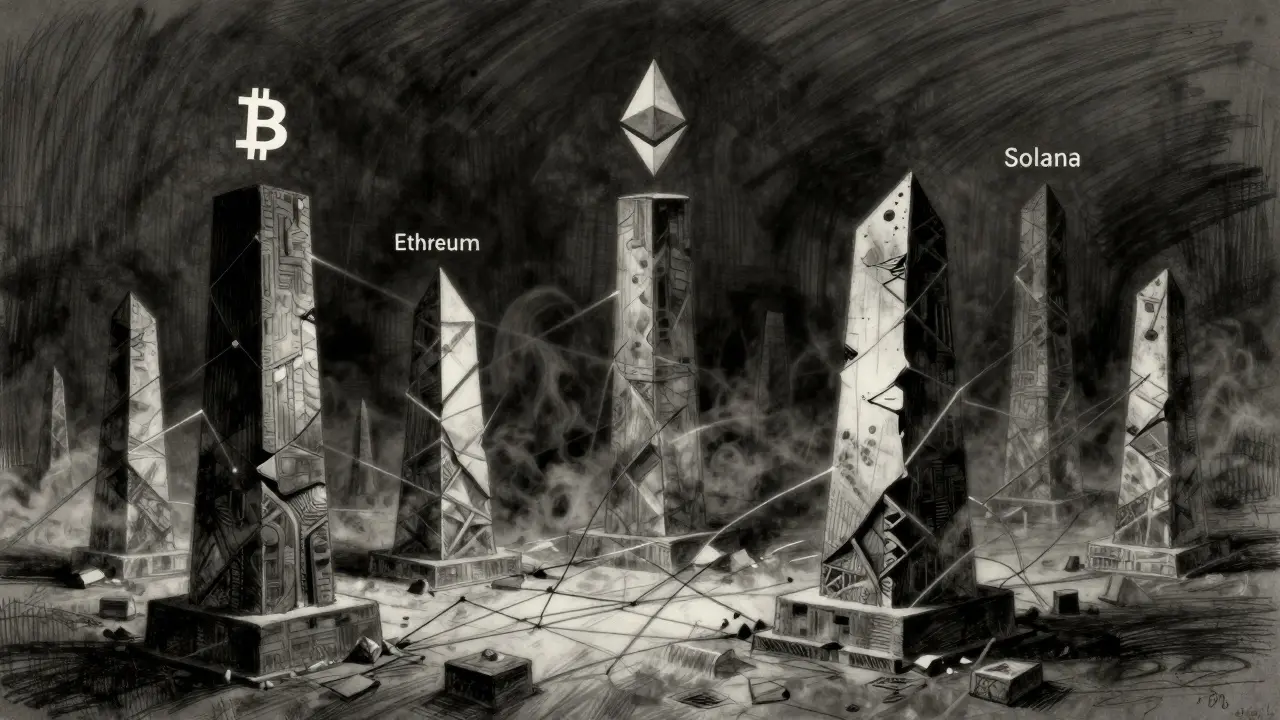
Imagine trying to send a package from New York to London, but the postal services refuse to talk to each other. You’d need a third-party courier, extra paperwork, and a whole lot of patience. That was the state of blockchain technology for most of its early life. In 2025, that frustration has finally hit a breaking point. The industry stopped asking *if* blockchains should connect and started demanding *how* they can do it securely.
We are no longer in the era where Bitcoin is just Bitcoin and Ethereum is just Ethereum. Today, you have Solana, Avalanche, Polkadot, Cosmos, and dozens of Layer 2 networks like Arbitrum and Optimism all running simultaneously. Each one is a walled garden with its own rules, speed limits, and security models. The biggest challenge-and opportunity-in crypto right now isn't building a new chain; it's making them all play nice together. This is what we call blockchain interoperability.
The Shift from Silos to Ecosystems
For years, the narrative was "one chain to rule them all." We thought Ethereum would eventually handle everything, or maybe Solana would take over due to speed. Reality proved otherwise. Different chains excel at different things. Bitcoin remains the ultimate store of value. Ethereum dominates smart contracts and decentralized finance (DeFi). Solana offers high-speed transactions for gaming and payments. Polkadot and Cosmos were built specifically to solve the connectivity problem.
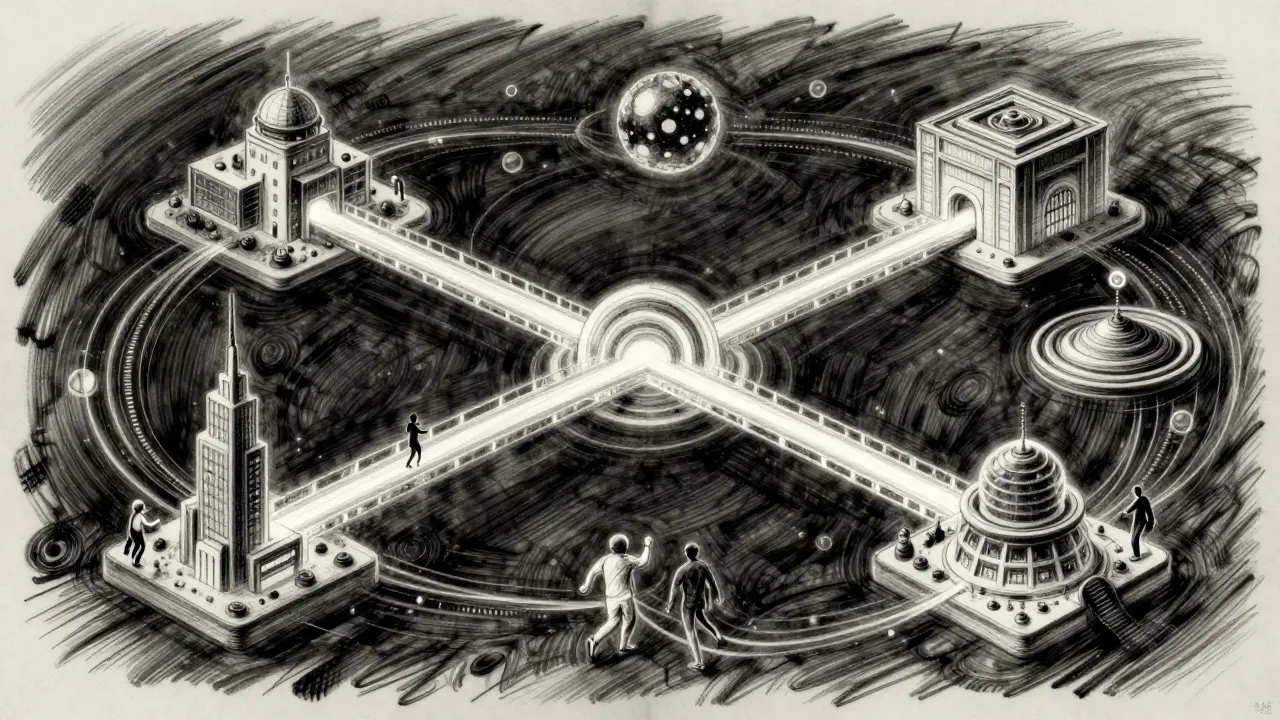
In 2025, users expect seamless movement of assets. If you hold USDC on Ethereum, you shouldn't need to understand complex technical jargon to use it in a DeFi app on Polygon. The friction of moving assets between chains has become the primary barrier to mass adoption. Interoperability solutions act as the translators, bridges, and highways that allow these disparate systems to exchange data and value without losing trust.
How Interoperability Actually Works
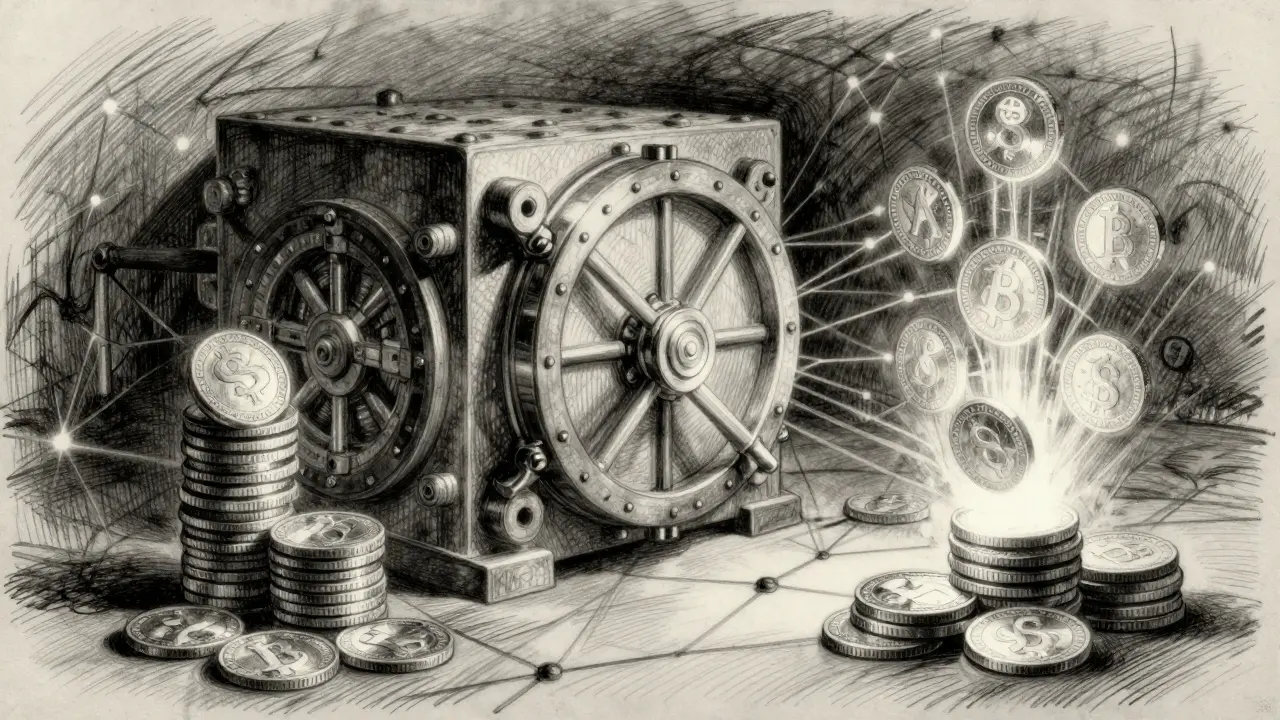
To understand the solutions, you first need to grasp the mechanics. When you move an asset from Chain A to Chain B, you aren't physically moving the original token. Blockchain ledgers are immutable; you can't delete a record on Ethereum and paste it onto Solana. Instead, interoperability uses a lock-and-mint mechanism or a burn-and-mint process.
- Locking: You deposit your tokens into a secure smart contract or vault on the source chain. These tokens are effectively frozen.
- Verification: A network of validators or oracles watches this transaction. They confirm that the lock happened correctly.
- Minting/Burning: Once verified, an equivalent amount of "wrapped" tokens is minted on the destination chain. Or, if you're moving back, the wrapped tokens are burned, and the originals are unlocked.
The critical part here is verification. If the bridge between the chains is hacked, the locks fail, and users lose everything. This is why 2025 saw a massive shift away from centralized custodial bridges toward decentralized, cryptographic proofs.
Key Interoperability Protocols in 2025
Several major players have emerged as the backbone of cross-chain infrastructure. Understanding these distinctions helps you choose safer routes for your assets.
| Protocol | Core Mechanism | Best For | Security Model |
|---|---|---|---|
| LayerZero | Omnichain messaging via Ultra Light Nodes (ULNs) | High-volume DeFi applications needing instant transfers | Decentralized oracle + relayer network |
| IBC (Inter-Blockchain Communication) | Light client validation within the Cosmos ecosystem | Applications built on Cosmos SDK chains | Cryptographic proof via Tendermint consensus |
| Polkadot XCM | Cross-Consensus Message format across parachains | Enterprise-grade multi-chain ecosystems | Relay chain security shared by all parachains |
| Wormhole | Guardian nodes signing messages between chains | Broad compatibility including non-EVM chains | 19 guardian nodes (centralized risk mitigation) |
LayerZero has become particularly dominant in 2025 because it doesn't require wrapping tokens in a specific way. It acts as a messaging protocol. Apps can build directly on top of LayerZero to send instructions like "transfer this value" rather than just moving tokens. This flexibility allows for complex cross-chain logic, such as swapping tokens on one chain while borrowing against them on another.
IBC (Inter-Blockchain Communication), native to the Cosmos ecosystem, remains the gold standard for security within its network. Because every chain in the Cosmos hub runs a light client of every other chain, the verification is mathematically proven rather than trusted to a third party. However, its reach is limited primarily to Cosmos-based chains unless paired with other bridges.
Polkadot’s XCM (Cross-Consensus Messaging) takes a different approach. Instead of bridging separate blockchains, Polkadot connects "parachains" that share the same security layer. This means if the main Relay Chain is secure, all connected parachains inherit that security. It’s less about connecting strangers and more about managing a unified family of chains.
The Rise of Atomic Swaps and DEX Aggregators
Not all interoperability requires heavy infrastructure. For simple token swaps, atomic swaps have matured significantly. An atomic swap is a peer-to-peer transaction where two parties exchange cryptocurrencies on different blockchains without a middleman. The trade either completes entirely or not at all-hence "atomic." If something goes wrong during the process, both sides get their original assets back.
In 2025, you rarely execute atomic swaps manually. Instead, you use DEX aggregators like 1inch, Matcha, or Jupiter. These platforms scan multiple liquidity pools and bridges simultaneously to find you the best rate. They might route your ETH through Uniswap, then bridge it to Arbitrum via LayerZero, and finally swap it for USDT on Curve-all in one click. The complexity is hidden behind a user-friendly interface, which is crucial for mainstream adoption.
Security Risks: The Bridge Problem
We cannot talk about interoperability without addressing the elephant in the room: security. Bridges have historically been the weakest link in crypto. In previous years, billions of dollars were stolen from centralized bridges because they held custody of user funds. A single compromised key could drain the entire pool.
By 2025, the industry has largely moved toward trustless bridges. These don't hold your funds. Instead, they use cryptographic signatures to prove ownership. However, new risks have emerged. Smart contract bugs remain a threat. If the code governing the cross-chain message has a flaw, attackers can exploit it regardless of the underlying security model.
Additionally, there is the issue of liquidity fragmentation. When assets are spread across ten different chains, liquidity becomes thin. This leads to higher slippage (the difference between expected price and executed price) and makes large trades expensive. Solutions like cross-chain liquidity networks are attempting to pool resources across chains, but it remains a work in progress.
Real-World Use Cases Beyond Speculation
Interoperability isn't just for traders flipping coins. It enables real utility:
- Decentralized Identity (DID): Your digital identity can be stored on one secure chain but verified on another. For example, you might prove your age on a privacy-focused chain while accessing a service on a public chain, without revealing unnecessary data.
- Supply Chain Tracking: Manufacturers often use private enterprise blockchains, while regulators use public ones. Interoperability layers allow data to flow from private ledgers to public verification systems, ensuring transparency without compromising proprietary information.
- Gaming Assets: Imagine earning a sword in a game built on Immutable X and using it as collateral for a loan on Aave (Ethereum L2). Interoperability makes true asset portability possible in Web3 gaming.
What to Watch in 2026 and Beyond
As we look ahead from our vantage point in mid-2026, the next frontier is modular blockchains. Instead of one chain doing everything (execution, settlement, consensus), tasks are split among specialized layers. Interoperability will evolve from simple bridges to universal composability. This means any application on any chain can interact with any other application seamlessly, much like how websites today can embed content from YouTube or Twitter without knowing the underlying tech stack.
Regulatory clarity is also improving. Governments are beginning to recognize that cross-chain transactions must comply with Anti-Money Laundering (AML) laws. Expect to see more standardized compliance layers integrated into interoperability protocols, allowing for legal cross-border transfers without sacrificing decentralization.
Is it safe to use cross-chain bridges?
Safety varies significantly by protocol. Trustless bridges that use cryptographic proofs (like IBC or certain LayerZero implementations) are generally safer than custodial bridges that hold your funds. Always check the audit history of the bridge and avoid locking large amounts of capital on newer, unaudited platforms. Diversifying your exposure across multiple established protocols reduces risk.
What is the difference between a bridge and a swap?
A swap typically exchanges one token for another on the same blockchain (e.g., ETH for USDC on Ethereum). A bridge moves assets from one blockchain to another (e.g., ETH on Ethereum to ETH on Arbitrum). While some platforms combine these functions, the underlying mechanisms differ: swaps rely on liquidity pools, while bridges rely on verification and minting/burning processes.
Why do I need wrapped tokens?
Wrapped tokens (like wBTC) represent assets from one chain on another. Since blockchains are isolated, you can't natively spend Bitcoin on Ethereum. Wrapping locks the original asset and creates a 1:1 representation on the target chain. This allows you to use Bitcoin in Ethereum-based DeFi applications. However, you must trust the wrapping mechanism to redeem your original asset later.
Which interoperability solution is best for beginners?
Beginners should stick to well-established, user-friendly aggregators like Jupiter (for Solana) or official bridge interfaces provided by major Layer 2 networks (like the Arbitrum Bridge or Optimism Gateway). These platforms abstract away the complexity and usually offer competitive rates. Avoid direct interactions with obscure bridge contracts unless you fully understand the risks.
Will interoperability replace the need for multiple blockchains?
Unlikely. Different blockchains are optimized for different needs-speed, privacy, cost, or governance. Interoperability enhances this diversity by allowing users to leverage the strengths of each chain without being locked into one. The future is likely a multi-chain ecosystem where specialization thrives, connected by robust interoperability layers.