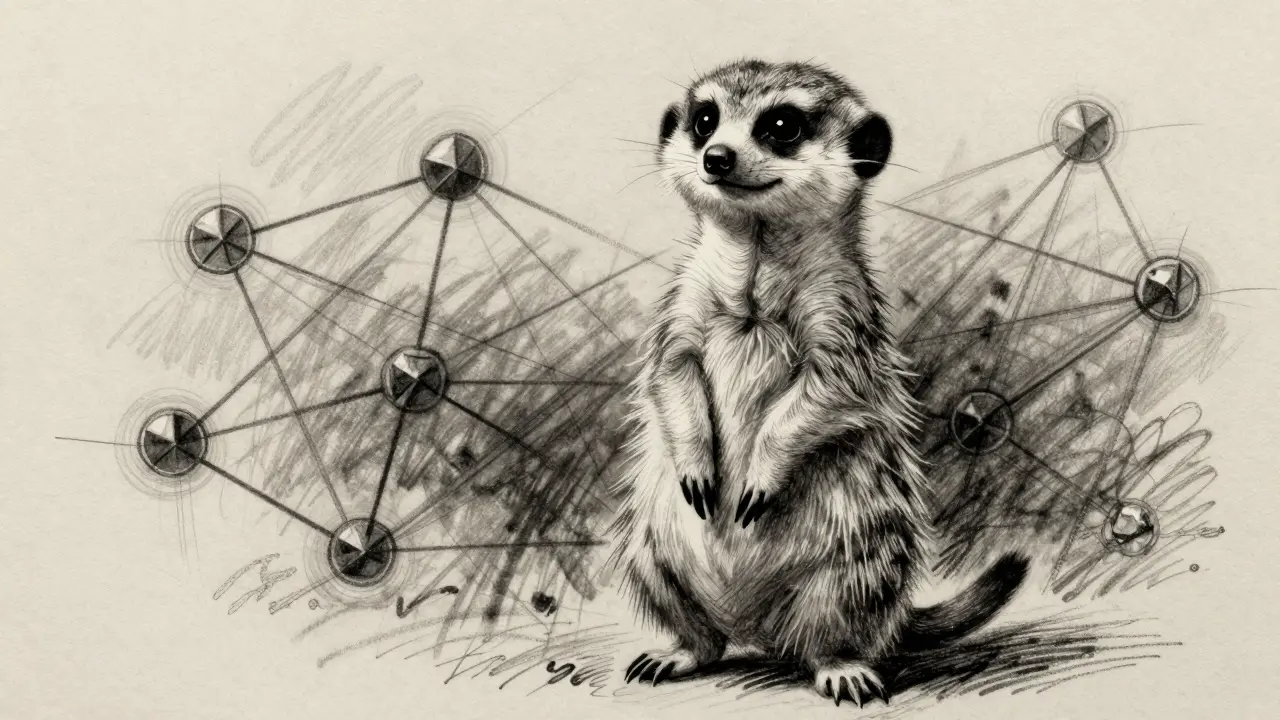
You’ve probably seen it on a chart or heard it mentioned in a Discord server: NearKat (KAT). It’s one of those tokens that pops up when you’re digging into the NEAR Protocol ecosystem, but unlike the big infrastructure projects, it doesn’t have a complex whitepaper or a roadmap full of enterprise partnerships. So, what exactly is it? Is it a serious investment, or just another internet joke?
The short answer is that NearKat is a fan-made meme coin. It celebrates the original mascot of the NEAR blockchain-a meerkat-and serves as a community-driven digital asset for people who love the network. If you are looking for high-tech utility or governance power, this isn’t it. But if you want to understand how meme culture works on a major Layer-1 blockchain, KAT is a perfect example.
Where Did NearKat Come From?
To get NearKat, you first need to understand the vibe of the NEAR Protocol. NEAR has always had a friendly, developer-focused brand identity, and its original mascot was a meerkat-affectionately called "Nearkat." Meerkats are social animals that live in groups, watch out for predators, and dig burrows. In crypto terms, the project team used this analogy to describe how nodes on the network work together: they form large peer-to-peer networks, hunt down bugs (vulnerabilities), and help keep the system scalable and fast.
NearKat ($KAT) launched in 2024 as a tribute to that mascot. It wasn’t created by the core NEAR developers as an official token. Instead, it emerged from the community as a "fan memecoin." The idea was simple: create a fungible token that represents the spirit of the network’s maintenance and bug-hunting culture. It’s playful, it’s niche, and it’s built entirely on the NEAR blockchain.
Unlike many meme coins that launch on Ethereum with gas fees costing more than the token itself, NearKat runs natively on NEAR. This means transactions are cheap and fast, which is essential for a low-value speculative asset where users might trade small amounts frequently.
Technical Specs and Tokenomics
If you are technical enough to look at the blockchain explorer, here is what you will find. NearKat is implemented as a standard fungible token contract. You can verify its existence on the NEAR Blocks explorer using the contract address: kat.token0.near.
Here are the hard numbers you need to know:
- Total Supply: 1,000,000,000 KAT (One Billion). This is a fixed cap. There is no inflation mechanism, meaning no new tokens can be minted after the initial supply is distributed.
- Decimals: 18. This allows for very precise fractional trading, which is common for tokens priced in fractions of a cent.
- Standard: It follows the conventions of NEP-141, the widely accepted standard for fungible tokens on the NEAR network.
The lack of a complex tokenomic breakdown is actually a feature of its design. There are no documented allocations for venture capitalists, no reserved pools for marketing teams, and no staking rewards program. Most trackers list the circulating supply as equal to the total supply (1 billion), though some data providers show discrepancies due to how they count locked or illiquid wallets. For all practical purposes, treat it as a fully circulating, fixed-supply asset.
Price Performance and Market Status (July 2026)
Let’s talk about the money-or rather, the lack thereof. As of early July 2026, NearKat is firmly in the "micro-cap" category. This is not a blue-chip asset like Bitcoin or even the native NEAR token.
| Metric | Value / Estimate |
|---|---|
| Price (USD) | $0.000050 - $0.000053 |
| Market Cap | $52,000 - $165,000 |
| 24-Hour Volume | $0 - $130 |
| Circulating Supply | 1,000,000,000 KAT |
| Ranking | #5,600+ globally |
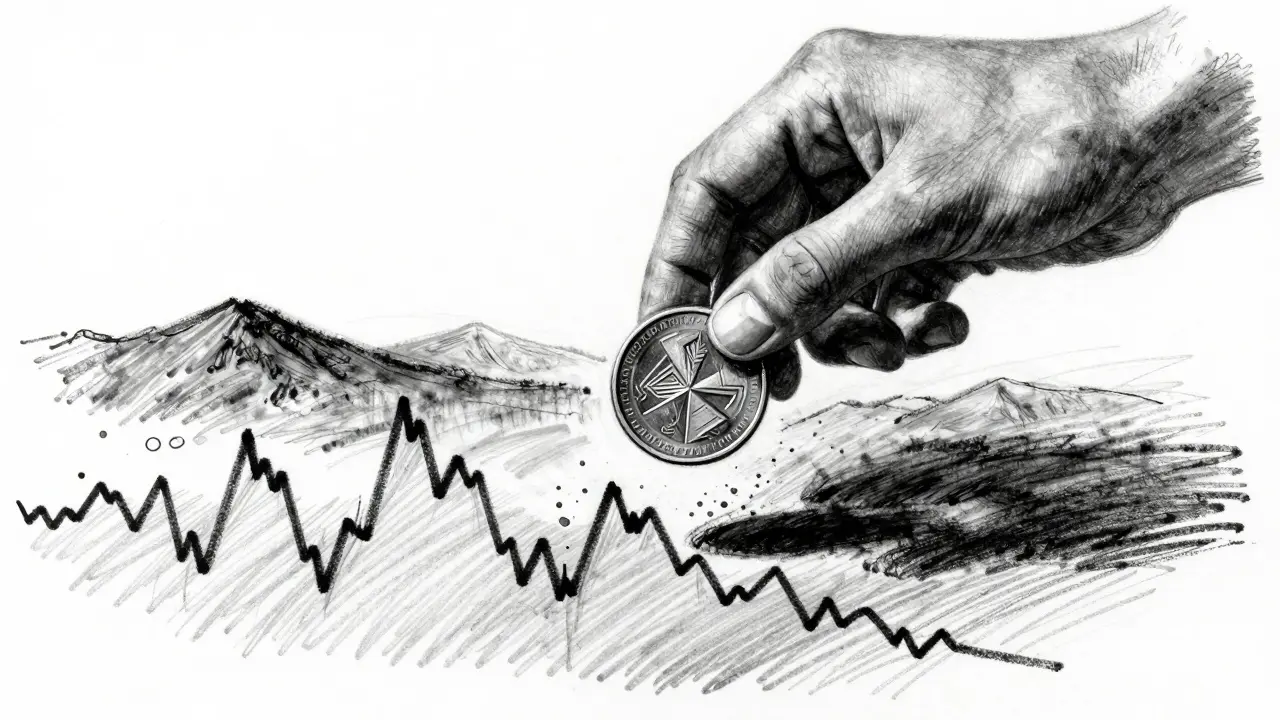
A few things stand out here. First, the price is incredibly low-fractions of a penny. Second, the trading volume is extremely thin. On some days, the recorded volume is zero because there simply aren’t enough trades happening to register significant activity on aggregators like CoinMarketCap. On active days, you might see around $130 in volume, mostly flowing through decentralized exchanges.
This low liquidity means two things. One, it’s risky; a single large sell order could crash the price significantly. Two, it’s volatile; a small buy order can pump the price by 5% or 10% instantly. If you are holding KAT, you are betting on community sentiment, not fundamental cash flows.
How to Buy and Trade NearKat
You won’t find NearKat listed on major centralized exchanges like Binance or Coinbase for direct spot trading. While these platforms may track the price for informational purposes, they do not offer a market for you to buy it directly. To get your hands on KAT, you need to go decentralized.
- Get a NEAR Wallet: Download a wallet compatible with the NEAR ecosystem, such as MyNearWallet or Sender. Make sure you have backed up your seed phrase securely.
- Fund Your Wallet: Buy NEAR tokens on a major exchange (like Coinbase or Kraken) and transfer them to your wallet. You will need some NEAR to pay for transaction fees (gas).
- Access a DEX: Navigate to a NEAR-based decentralized exchange. Rhea Finance is currently the most popular venue for trading KAT. Other options include Ref Finance or Jumbo Exchange.
- Swap NEAR for KAT: Find the KAT/WNEAR pair (WNEAR is wrapped NEAR). Enter the amount of WNEAR you want to swap and execute the transaction.
Pro Tip: Because liquidity is low, use limit orders if the DEX supports them, or split your purchase into smaller chunks. If you try to buy $100 worth of KAT in one go on a day with only $130 in volume, you will experience massive slippage, meaning you’ll get far fewer tokens than expected.
The Big Confusion: NearKat vs. Katana (KAT)
This is the most critical warning in this entire guide. There is another cryptocurrency with the ticker symbol **KAT**. It is called Katana Network.
Katana is a completely different project. Launched in 2025, it is a DeFi-focused Layer-2 blockchain. Its KAT token has a total supply of 10 billion, is used for governance, staking, and fee-sharing, and has detailed documentation and audits. It is a serious financial infrastructure project.
NearKat, on the other hand, is a meme coin on NEAR with 1 billion supply and no utility beyond fandom.
Why does this matter? Because data aggregators sometimes mix them up. You might see a news article claiming "KAT token offers staking rewards," but that refers to Katana, not NearKat. If you are researching NearKat, always check the contract address (kat.token0.near) and ensure the context is the NEAR Protocol ecosystem. Do not confuse the two, or you might end up buying the wrong asset entirely.
Is NearKat a Good Investment?
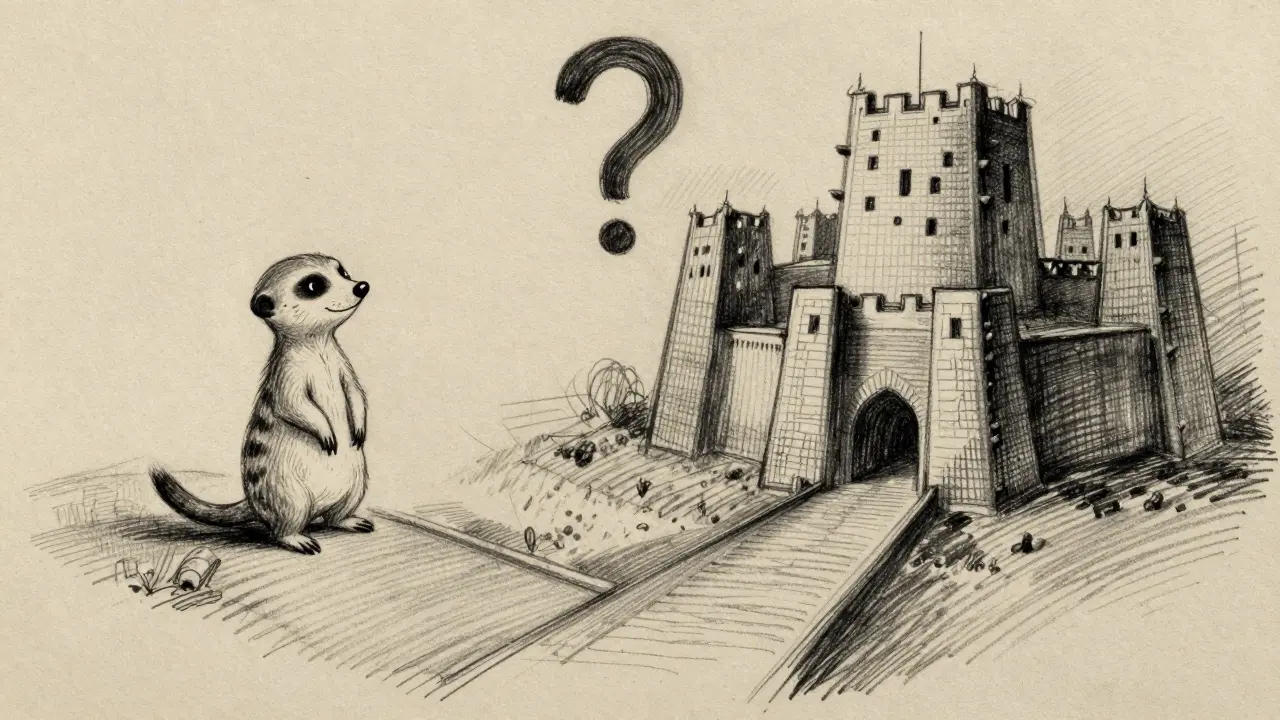
I’m not a financial advisor, but I can tell you what the data says. NearKat lacks a whitepaper, security audits, or a development roadmap. It has no revenue model. Its value is derived purely from community enthusiasm and the broader trend of meme coins.
In the crypto world, meme coins are high-risk, high-reward speculation. They can go to zero if the community loses interest, or they can spike if a viral moment hits. With a market cap under $200,000 and daily volumes often below $100, NearKat is a micro-cap gamble. It is not suitable for conservative investors or anyone looking for long-term stability.
If you enjoy the NEAR ecosystem and want to support the culture, buying a small amount of KAT is harmless fun. But do not put money into it that you cannot afford to lose. Treat it like buying a novelty t-shirt for the internet, not a stock in a tech company.
Final Thoughts
NearKat (KAT) is a fascinating slice of crypto culture. It shows how communities build identity around mascots and memes within larger technological ecosystems. It’s technically sound as a smart contract on NEAR, but financially, it’s a lightweight speculative asset. Keep an eye on the contract address, avoid confusing it with Katana, and trade carefully given the low liquidity. Whether it survives the next cycle depends entirely on whether the NEAR community continues to rally behind their furry mascot.
What is the contract address for NearKat (KAT)?
The official contract address for NearKat on the NEAR Protocol is kat.token0.near. Always verify this address before swapping to avoid scams.
Is NearKat the same as Katana KAT?
No. NearKat is a meme coin on the NEAR blockchain with a 1 billion supply. Katana KAT is a governance token for the Katana Network Layer-2 chain with a 10 billion supply. They are unrelated projects sharing only a ticker symbol.
Can I stake NearKat to earn rewards?
No. NearKat is a pure meme token with no staking mechanism, yield farming, or governance utility. Any claims about staking KAT likely refer to the unrelated Katana Network token.
Where can I buy NearKat?
You cannot buy NearKat on major centralized exchanges like Binance or Coinbase. You must use a NEAR-compatible wallet and trade on decentralized exchanges like Rhea Finance by swapping WNEAR for KAT.
What is the total supply of NearKat?
The maximum total supply of NearKat is fixed at 1,000,000,000 (one billion) tokens. There is no inflationary mechanism to create more tokens.
The irony of a meme coin celebrating the 'bug hunting' culture of nodes is rich, considering most people here just hunt for green candles. 🐱💻 The contract address kat.token0.near is the only thing keeping this from being total chaos.
One must appreciate the sheer audacity of launching a token with zero utility on a blockchain that prides itself on developer efficiency. It is a philosophical statement on the absurdity of value assignment in the digital age. The meerkat watches us all squabble over fractions of cents while the network hums along indifferent to our greed. Truly a masterpiece of modern folly. I find it fascinating how we project meaning onto empty code. The burrow is deep, my friends. Very deep indeed. We are but ants digging in the sand of liquidity. Or lack thereof. The silence of the chart is deafening.
You idiots are ignoring the slippage. Buy $100 worth and you lose half instantly. It’s not an investment, it’s a donation to whoever holds the other side of the order book. Wake up.
I have been thinking about the nature of community driven assets for a very long time now and it seems to me that when we attach emotional value to a mascot like a meerkat we are essentially creating a shared hallucination that has no basis in reality but feels real because everyone else is participating in the same dream. The fact that the supply is fixed at one billion does not change the fact that the demand is purely speculative and therefore the price is entirely disconnected from any intrinsic worth which leads me to believe that holding such an asset is less about financial gain and more about belonging to a tribe that agrees on the value of a picture of a rodent. This is a profound commentary on human social behavior rather than economics.
hey guys! i think its cute that they made a token for the mascot. its nice to see community projects. just be careful ok? dont put in money you need for rent or food. its fun tho!
the whole crypto space is built on scams and lies so why should we trust this one more than the next. its all grift. these devs will rug pull eventually. its just a matter of time before the meerkat eats your wallet. stay woke.
they are hiding something in the smart contract. i bet the team wallets are disguised as illiquid wallets. always check the top holders. if you cant verify the source code yourself you are already compromised. :)
The liquidity profile is abysmal. A single whale can manipulate the price by orders of magnitude. It is a toy for children who do not understand market microstructure. I pity those who engage with such trivialities.
I hope everyone stays safe out there!! It is really important to remember that meme coins are risky!!! Please make sure you read the entire guide before doing anything!!!
you can do it!! just start small and learn the ropes. its okay to make mistakes. the community is here to support you. keep smiling and stay positive!! 💖
In many cultures, animals symbolize traits we admire. The meerkat represents vigilance and cooperation. It is interesting to see this translated into a digital asset. It brings a sense of unity to the NEAR ecosystem users.
Boring. Another dead coin. I want action. I want drama. This is just dust. 😴
its wrong to gamble with peoples money. these tokens are predatory. they exploit the poor. stop buying garbage.
Listen up chumps. If you are buying this you are dumb. But hey, maybe youll get lucky. Most wont. 🤡
Oh my stars! 🌟 The meerkat is adorable! I love the idea of supporting the culture! It feels so warm and fuzzy inside my heart! Let's hug the cat! 🐱💕✨
I must ask, is it truly wise to invest in something with no whitepaper? The risks seem extreme. Please consider the implications carefully before proceeding. I am concerned for your financial well-being.
Katana is L2. NearKat is meme. Different tickers. Do your homework.
I have analyzed the transaction history on Rhea Finance and it appears that the volume is artificially inflated by wash trading bots which creates a false sense of activity among retail investors who are not aware of these sophisticated manipulation techniques employed by early insiders to attract unsuspecting buyers into a highly illiquid market where exit strategies are virtually non-existent without significant slippage costs that erode any potential gains.