
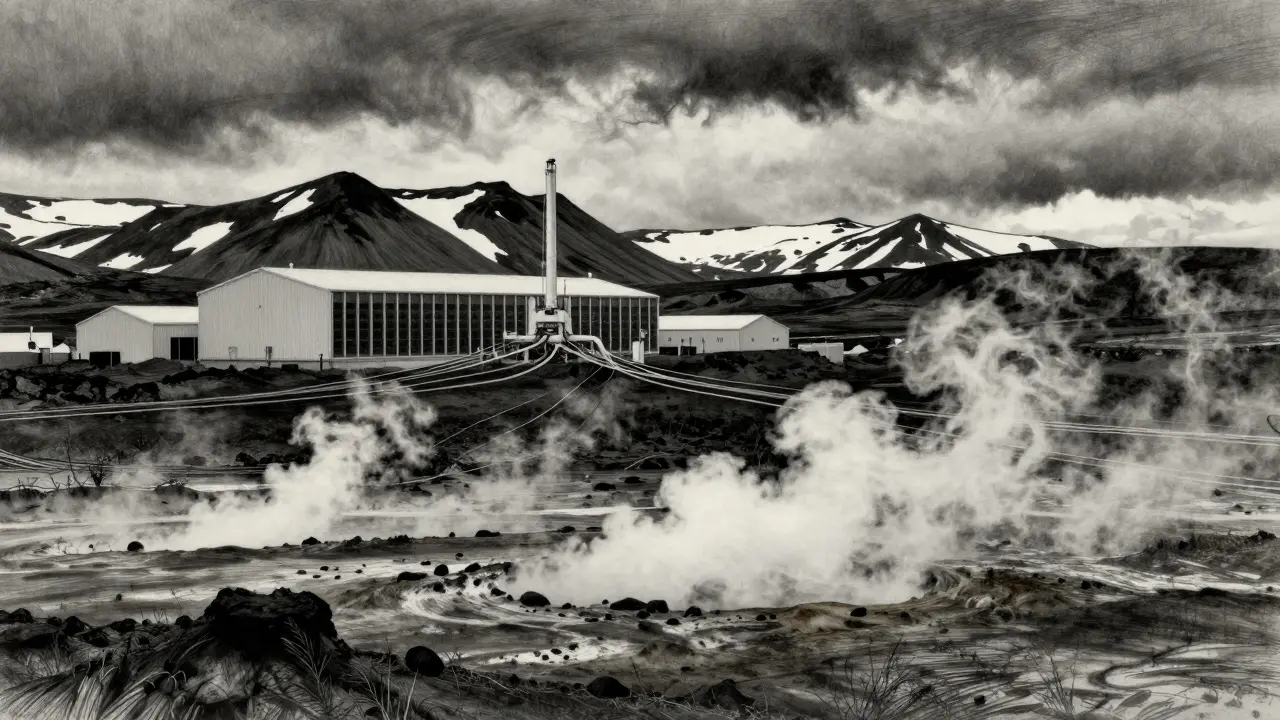
Imagine running a factory that consumes as much electricity as an entire small country. Now imagine that the national grid starts saying "no more." That is exactly the tension playing out in Iceland. For years, this Nordic island was the holy grail for cryptocurrency miners. You had cheap geothermal power, freezing air for natural cooling, and a government that looked the other way. But by 2026, the party is winding down. The question isn't whether you can mine here anymore-it's whether you can afford to stay.
The shift didn't happen overnight. It wasn't just one law passed on a Tuesday. It was a slow burn caused by rising energy demands, public pressure, and hard decisions made by Landsvirkjun, Iceland’s state-owned power company. If you are looking to set up shop or wondering if your existing rig will get cut off, you need to understand how the rules have changed from "come as you are" to "prove your worth."
The Golden Age of Icelandic Mining
To understand why the restrictions feel so harsh now, you have to remember what drew everyone here in the first place. Around 2017, crypto mining accounted for nearly 90% of Iceland’s data center power consumption. That number sounds insane until you look at the geography. Iceland sits on top of volcanic activity, giving it access to limitless geothermal energy. Unlike solar or wind, which fluctuate, geothermal baseload power runs 24/7.
Companies like Hive Blockchain Technologies, Genesis Mining, and Bitfury Holding poured millions into infrastructure here. They weren't just renting space; they were building industrial-scale facilities. For these companies, Iceland offered two things money couldn't buy elsewhere: reliability and low cost. The arctic climate meant they could use outside air to cool servers, slashing electricity usage for HVAC systems by up to 40% compared to desert locations.
This boom helped Iceland recover economically after the 2008 financial crisis. Foreign investment flowed in, jobs were created, and GDP grew. At the time, few people asked questions about where that power came from. The narrative was simple: clean energy meets high-tech innovation. Everyone won.
Why the Grid Can’t Keep Up
Then reality hit. By 2024, projections showed that Bitcoin mining operations alone would consume more energy than the entire Icelandic population combined. Think about that for a second. A handful of server farms were drawing enough juice to light up every home, hospital, and school in the country.
Landsvirkjun, the national power company, found itself in a tough spot. Their mandate is to provide stable, affordable electricity to citizens and traditional industries like aluminum smelting. Suddenly, they had to choose between powering families during winter storms or keeping hash rates climbing. There was no middle ground.
In March 2024, Iceland’s Prime Minister publicly stated a desire to reduce cryptocurrency mining activities. This wasn’t a threat-it was a warning shot. The government realized that unchecked growth threatened national security. If a major grid failure occurred, who gets priority? The hospital or the miner? The answer became obvious quickly.
Landsvirkjun’s New Rules
So what does this mean for operators today? Landsvirkjun hasn’t banned mining outright, but they’ve made it significantly harder to operate profitably without meeting strict criteria. Here’s how the new landscape looks:
- Pricing Tiers: Power costs have increased dramatically for non-essential users. Miners no longer qualify for the same subsidized rates given to heavy industry unless they prove long-term economic benefit beyond energy export.
- Capacity Caps: New connections face severe limits. Landsvirkjun prioritizes residential and critical infrastructure loads. Getting approval for a new megawatt-scale facility requires navigating complex bureaucratic hurdles.
- Environmental Audits: Operators must demonstrate minimal environmental impact. This includes water usage for cooling systems and carbon offset contributions, even though geothermal is inherently low-carbon.
These aren’t just suggestions-they’re enforceable conditions tied directly to power contracts. Break them, and your plugs get pulled. Literally.
| Factor | Pre-2024 Environment | Post-2025 Reality |
|---|---|---|
| Power Cost | Low, subsidized rates | Higher, tiered pricing based on necessity |
| Grid Priority | Equal footing with industry | Secondary to residential/critical services |
| New Facility Approvals | Rapid, minimal oversight | Lengthy review process with caps |
| Public Sentiment | Supportive, seen as tech progress | Mixed, concerns over resource allocation |
| Regulatory Focus | Economic growth | Sustainability and national resilience |
The Role of Renewable Energy Mandates
You might think that because Iceland uses 100% renewable energy, miners should be exempt from criticism. Not quite. The issue isn’t pollution-it’s scarcity. Geothermal plants take decades to develop and require massive upfront investment. You can’t just flip a switch to produce more power when demand spikes.
This creates a zero-sum game. Every kilowatt-hour used by a mining operation is one less available for local manufacturing, tourism, or household heating. As global interest in sustainable crypto grows, Iceland has decided to protect its own sustainability goals first. They want blockchain development, sure-but not at the expense of their grid stability.
That’s why you’ll see more emphasis on efficiency metrics now. Miners using older ASIC models that draw excessive power per terahash are being phased out. Newer generations like the Antminer S21 series or WhatsMin M30S++ offer better joules-per-terahash ratios, making them eligible for preferential treatment under certain programs.
What About CBDCs and Institutional Shifts?
If speculative mining is getting squeezed, what’s replacing it? Enter central bank digital currencies (CBDCs). The Central Bank of Iceland has been exploring digital krona initiatives since 2022. While still in early stages, this signals a broader strategic pivot-from supporting private miners to fostering institutional-grade blockchain infrastructure.
This means opportunities may exist for companies involved in payment processing, identity verification, or supply chain tracking rather than pure proof-of-work hashing. If you’re operating in Iceland, consider diversifying your services. Pure play mining is becoming a liability; integrated solutions are gaining traction.
Public Opinion and Cultural Context
Don’t underestimate the role of public sentiment either. After rebuilding their economy post-2008, Icelanders value transparency and fairness. When headlines started showing that foreign-owned data centers were draining resources while locals faced higher bills, trust eroded fast.
Average citizens don’t care about Bitcoin prices-they care about whether their heating works during blizzards. Polls indicate growing concern among residents about energy allocation. Politicians respond accordingly. Expect stricter enforcement moving forward, especially ahead of election cycles.
Alternatives Within Reach
If Iceland feels too restrictive, where do you go next? Several alternatives offer similar advantages with fewer political risks:
- Norway: Similar hydroelectric abundance, though slightly higher costs.
- Canada (Quebec): Stable grid, favorable tax incentives for green tech.
- Sweden: Strong regulatory framework, excellent connectivity.
Each comes with trade-offs-higher labor costs, colder climates requiring additional insulation, or different legal structures. But none carry the same level of existential risk regarding power cuts that Iceland currently presents.
Final Thoughts on Operating in Iceland Today
Is crypto mining dead in Iceland? No. Is it easy? Absolutely not. Success now depends on smart planning, efficient hardware, and strong relationships with local authorities. If you’re willing to adapt, there’s still room-but only for those who respect the limits of the system.
The era of wild west expansion is over. Welcome to the age of responsible scaling.
Can I still start a new crypto mining farm in Iceland?
Technically yes, but practically very difficult. New projects face stringent capacity caps, higher electricity tariffs, and lengthy approval processes through Landsvirkjun. Most experts recommend focusing on optimizing existing setups instead of expanding.
Did Landsvirkjun ban all cryptocurrency mining?
No, they did not implement a total ban. Instead, they introduced conditional restrictions including price increases, load management protocols, and environmental compliance requirements designed to prioritize essential services.
How much does electricity cost for miners in Iceland now?
Rates vary depending on contract type and volume, but generally range between €0.08-€0.12 per kWh for approved commercial operations-significantly higher than historical averages below €0.05.
Are there any benefits left for mining in Iceland?
Yes-reliable baseload power, natural cooling reducing operational expenses, and established infrastructure. However, these advantages come at a premium compared to emerging markets.
Will restrictions tighten further in 2027?
Likely. Government statements suggest continued focus on balancing economic gains against national energy security. Expect incremental tightening rather than sudden bans.
The distinction between geothermal baseload and intermittent renewables is critical here. Many analysts overlook that you cannot simply scale geothermal output on demand like a natural gas peaker plant. The infrastructure requires decades of drilling and permitting. Landsvirkjun's decision to prioritize residential load isn't just political; it is an engineering necessity for grid stability during peak winter demand. If they allowed unrestricted mining expansion, the risk of cascading failures in the transmission network would become unacceptable.
i totally get what u are saying about the grid but its kinda sad how they treat the miners now. i mean we put so much money into their economy right? feels like they are kicking us out after we helped them recover from 2008. maybe if they had better communication earlier things wouldnt be this tense now. whats the point of having open policies if they just change them when it gets inconvenient?
Oh please. :D
You think your servers are more important than a hospital keeping life support running during a blizzard? It is elementary economics. Supply and demand. They subsidized you until the subsidy became a liability. Now you pay market rate or leave. Not complicated.
The irony is palpable. You claim victimhood while consuming the energy resources of a nation smaller than Rhode Island. Do not mistake privilege for partnership. The 'golden age' was merely a period where ignorance of externalities prevailed. Now reality asserts itself. Adapt or perish. That is the only philosophy that matters in thermodynamics.
Wow!! This is such a great discussion!!! I really think everyone should look at the alternatives mentioned in the article!! Norway and Canada seem like fantastic options!! There is still hope for efficient miners who adapt to new standards!!! Let's keep supporting sustainable tech solutions!!!
I've been watching this space for a while. It makes sense that Iceland wants to protect its own citizens first. I don't blame them. Just interesting to see how quickly the sentiment shifted from 'tech utopia' to 'resource drain.' Makes me wonder if other countries will follow suit.
So you're saying my business model is dead? Seriously? I invested based on public policy. Now you want me to move? Who pays for the relocation? You?
Hey Harvey, let's try to look at the bigger picture here. While it is frustrating, shifting to Quebec might actually offer better long-term stability with those tax incentives. We can collaborate on finding the best migration strategy. It is all about adaptation!
🇨🇦 Quebec is looking pretty good right now 🌲⚡️
Cold enough for cooling, stable enough for uptime. Why fight the current when you can swim with it? 😎
It is quite dramatic how quickly the narrative has changed. One day you are the hero of green crypto, the next you are a parasite on the national grid. I suppose this is the price of relying on political goodwill rather than contractual certainty. The formal requirements for environmental audits are a welcome addition, though. It forces efficiency.
I am curious about the specific efficiency metrics being enforced. Does Landsvirkjun have a published joules-per-terahash threshold? Or is it purely discretionary? Understanding the technical cutoff points would help operators decide whether to upgrade hardware or exit the market entirely.
upgrading to S21s is definitely worth it if you plan to stay. the older rigs are just burning money now. plus it helps with the environmental audit part. win win situation really
You people never learn. Greed is the root of all evil. Consuming energy for digital tokens while others freeze? Disgusting. The moral decay of society is evident in your defense of these practices. You should feel ashamed.
oh sure blame the miners. because clearly the government didn't subsidize them for years to boost GDP. now that the bill comes due suddenly we are the villains. classic hypocritical narrative. boring.
I understand why everyone is upset. It is tough when rules change. But we need to remember that Iceland is a small country with limited resources. Maybe we can find a middle ground where mining supports the local economy without hurting families. Communication is key here.
yeah i guess thats fair. its hard to balance everything. im just worried about the costs going up so much. does anyone know if there are any grants for upgrading to more efficient equipment? i heard something about that but cant rember the details
There are no specific grants for hardware upgrades currently offered by Landsvirkjun. However, some commercial banks offer favorable financing terms for energy-efficient industrial projects. It is advisable to consult with a financial advisor specializing in renewable energy infrastructure before making capital expenditures.
This sucks. I hate losing money. Why do they care about hospitals? People die anyway. My hash rate matters more. I want to go back to the old days. Stop being so negative about the restrictions. They are weak.
Hey Tony! 🌟 I know it feels rough right now, but let's focus on the positives! 💪 Diversifying into CBDC infrastructure could be a huge opportunity! 🚀 You can still be part of the blockchain revolution without the power struggles! Let's keep moving forward! ✨
the shift to institutional blockchain is inevitable really. pure PoW is becoming a legacy asset class. embrace the change or become obsolete. simple as that