

Imagine walking into a bank, but instead of telling a teller what you want, you just type a command into your computer. No waiting in line, no manager approving your loan, and no middleman taking a cut. That is the core promise of Decentralized Finance, often called DeFi. It is a financial system that runs on code rather than corporate headquarters.
If you have heard the term "DeFi" thrown around in tech circles or news headlines since 2018, you might feel like it’s part of an exclusive club. But really, it is just a new way to handle money using blockchain technology and smart contracts. Instead of relying on banks, brokers, or insurance companies, DeFi uses open-source software to let people lend, borrow, trade, and earn interest directly with each other. This guide breaks down exactly how it works, why it matters, and what risks you need to watch out for in 2026.
The Core Idea: Removing the Middleman
To understand DeFi, you first have to look at how traditional finance works. When you deposit money in a bank, the bank holds your funds. They lend those funds to others and keep a portion of the interest as profit. If you want to trade stocks, you use a brokerage that charges fees and acts as the counterparty. These institutions are "centralized," meaning one entity controls the rules, the data, and the access.
DeFi flips this model. It is built on distributed ledger technology, primarily the Ethereum blockchain. In this ecosystem, there is no central authority. Instead, financial services are provided by protocols-sets of rules written in code-that anyone can access if they have an internet connection. The Federal Reserve defines DeFi as emerging financial products operating on decentralized platforms to record and share data without a central organization.
This shift means three big things for you:
- Permissionless Access: You don’t need a credit check or a minimum balance to join. If you have a digital wallet, you can participate.
- Non-Custodial Control: Your assets stay in your wallet until you decide to interact with a protocol. No bank freezes your account arbitrarily.
- Transparency: Every transaction is recorded on the blockchain, visible to everyone, making the system auditable in real-time.
How DeFi Actually Works: Smart Contracts and Liquidity
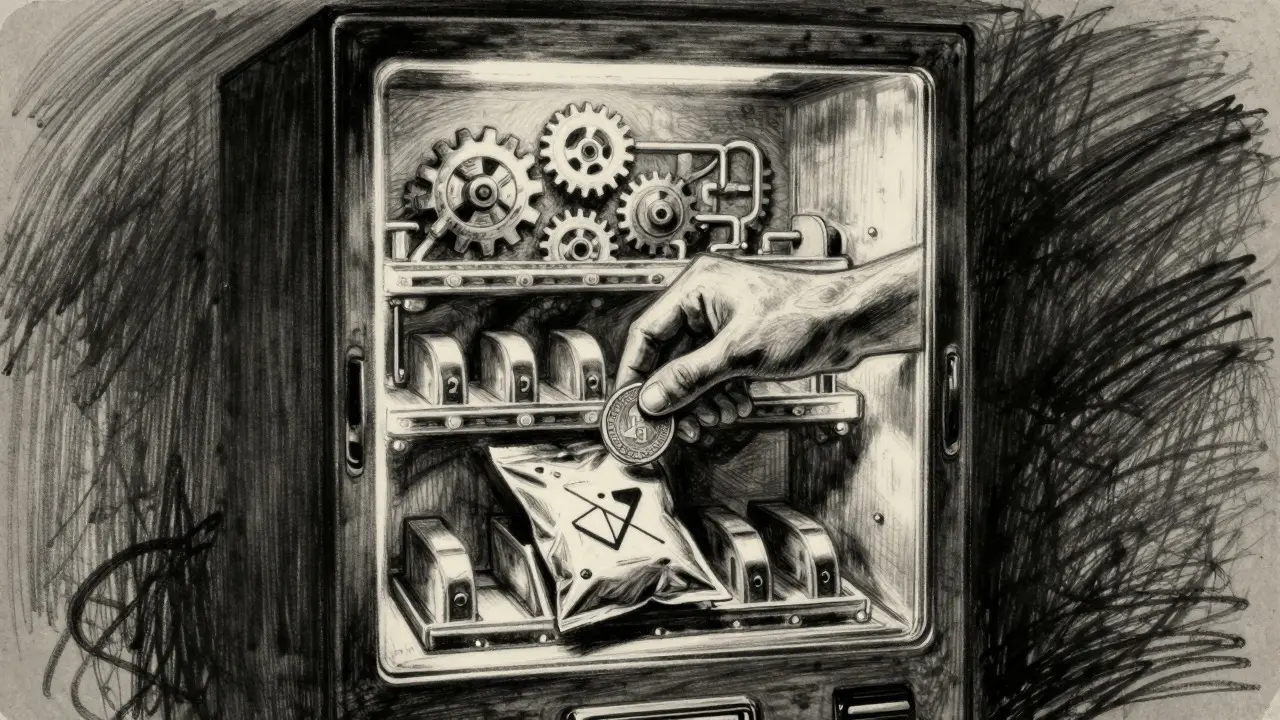
The engine behind DeFi is the smart contract. Think of a smart contract as a digital vending machine. You put in money (or cryptocurrency), select an item (a service like a loan or a trade), and the machine automatically delivers the result if the conditions are met. There is no clerk inside the machine deciding whether you deserve the snack; the code executes automatically.
For example, if you want to borrow money in DeFi, you don’t apply for a loan. You lock up collateral-like Ethereum or Bitcoin-in a smart contract. The contract checks if your collateral value exceeds the loan amount. If it does, it instantly releases stablecoins (crypto pegged to the US dollar) to your wallet. If the value of your collateral drops too low, the contract automatically sells it to repay the loan. All of this happens in seconds, without a human underwriter.
Another key concept is liquidity pools. In traditional trading, you buy from a market maker. In DeFi, you trade against a pool of funds provided by other users. These users, called liquidity providers, earn fees from every trade that happens in their pool. This creates a self-sustaining economy where participants are rewarded for keeping the system running.
Common Use Cases: What Can You Do With DeFi?
DeFi isn’t just one thing; it’s a suite of financial tools. Here are the most common ways people use it today:
| Service | Traditional Finance (CeFi) | Decentralized Finance (DeFi) |
|---|---|---|
| Lending & Borrowing | Banks hold your deposits; loans require credit checks and paperwork. | Over-collateralized loans via smart contracts; instant approval based on asset value. |
| Trading | Centralized exchanges (like Coinbase or Robinhood) match buyers and sellers. | Decentralized Exchanges (DEXs) like Uniswap use automated market makers and liquidity pools. |
| Savings/Yield | Savings accounts offer low interest rates set by the bank. | Yield farming or staking allows users to earn higher returns by providing liquidity. |
| Insurance | Complex policies with exclusions managed by insurance firms. | Peer-to-peer insurance protocols cover smart contract failures or oracle errors. |
Lending Platforms: Protocols like Aave or Compound allow you to earn interest on idle crypto or borrow against it. Because these platforms are algorithmic, interest rates adjust dynamically based on supply and demand, often offering better rates than traditional banks.
Decentralized Exchanges (DEXs): Instead of trusting an exchange with your private keys, you swap tokens directly from your wallet. Uniswap is the most famous example, allowing users to trade thousands of tokens without ever leaving their non-custodial wallet.
Stablecoins: To avoid the volatility of Bitcoin or Ethereum, many DeFi users rely on stablecoins like USDC or DAI. These maintain a $1 value, making them useful for savings, payments, and as collateral within DeFi protocols.
The Risks: Why DeFi Isn't Risk-Free
While the potential is huge, DeFi is not without significant dangers. The Bank for International Settlements (BIS) has noted that DeFi introduces enormous technological complexity that makes risk assessment difficult. Here is what you need to know before diving in:
Smart Contract Vulnerabilities: Since DeFi relies on code, bugs in that code can be catastrophic. Hackers constantly scan for weaknesses in smart contracts. If a flaw is found, millions of dollars can be drained in minutes. Unlike a bank fraud case, there is rarely a customer support team to call for a refund. You must trust the audit reports of the protocol you are using.
Impermanent Loss: If you provide liquidity to a trading pair, you might end up with less value than if you had just held the assets. This happens because the price ratio of the two assets changes while they are in the pool. It’s a complex mathematical reality that can eat into profits if not managed correctly.
Regulatory Uncertainty: As of 2026, regulators are still figuring out how to classify DeFi. The Federal Reserve has warned about financial stability risks, noting that DeFi operates largely outside the prudential regulatory perimeter. This means consumer protections like FDIC insurance do not exist. If a protocol fails, you likely lose everything.
User Error: In DeFi, you are your own bank. If you send funds to the wrong address, sign a malicious transaction, or lose your seed phrase, your money is gone forever. There is no "undo" button. This requires a high level of technical literacy and caution.

Getting Started: A Practical Checklist
If you want to try DeFi, start small and follow these steps to protect yourself:
- Get a Non-Custodial Wallet: Download a reputable wallet like MetaMask or Phantom. This gives you control over your private keys. Never share your seed phrase with anyone.
- Buy Crypto: Purchase Ethereum or another supported token from a centralized exchange and transfer it to your wallet. Remember to keep some aside for "gas fees" (transaction costs).
- Start with Established Protocols: Stick to well-known, audited platforms like Aave for lending or Uniswap for trading. Avoid new, untested projects promising unrealistic returns.
- Verify URLs: Phishing sites are common in DeFi. Always double-check the website address before connecting your wallet.
- Understand Gas Fees: Transactions on Ethereum can be expensive during peak times. Learn to monitor network congestion or consider Layer 2 solutions like Arbitrum or Optimism for cheaper transactions.
The Future of DeFi
DeFi is still in its early stages compared to traditional finance, but it is growing rapidly. The composability of DeFi-often called "money Legos"-allows developers to build new applications on top of existing ones. This innovation cycle is accelerating, leading to more sophisticated products like decentralized derivatives, options, and even identity verification systems.
We are also seeing the rise of alternative blockchains. While Ethereum remains the leader, platforms like Solana, Cardano, and Binance Smart Chain are building their own DeFi ecosystems to offer faster speeds and lower costs. This competition is driving down prices and improving user experience.
As institutional investors begin to explore DeFi, we may see more bridges between traditional finance and decentralized systems. However, the core ethos of DeFi-open, permissionless, and transparent-remains unchanged. Whether it fully replaces traditional banking or exists alongside it, DeFi has already proven that money can be programmed, and that power can be returned to the individual.
Is DeFi legal in 2026?
Yes, DeFi is generally legal in most jurisdictions, but regulations vary widely. While owning crypto and using DeFi protocols is not illegal, tax implications and reporting requirements differ by country. The Federal Reserve and other bodies are actively studying DeFi to determine appropriate regulatory frameworks, so staying informed about local laws is crucial.
Do I need a lot of money to start with DeFi?
No, you can start with very small amounts. Many DeFi protocols allow you to lend or trade fractions of a cent. However, you should always keep enough funds to cover transaction fees (gas), which can sometimes exceed the value of a tiny investment, especially on the main Ethereum network.
What happens if a DeFi protocol gets hacked?
If a smart contract vulnerability is exploited, funds can be drained. Unlike banks, there is usually no insurance or customer service to recover losses. Some protocols have emergency pause mechanisms or insurance funds, but these are not guaranteed. Always research the security audits of any protocol you use.
Can I earn passive income with DeFi?
Yes, through lending, staking, or providing liquidity. However, "passive" doesn't mean "risk-free." You need to monitor your positions, understand impermanent loss, and keep track of changing interest rates. Higher yields typically come with higher risks.
What is the difference between CeFi and DeFi?
CeFi (Centralized Finance) involves intermediaries like banks or exchanges that control your funds and data. DeFi (Decentralized Finance) uses smart contracts on blockchains to facilitate peer-to-peer transactions without a central authority, giving you full custody of your assets.