

For years, the promise of blockchain in healthcare felt like a distant horizon-lots of hype, very little reality. But as we settle into 2026, that landscape has shifted dramatically. We are no longer talking about isolated pilot projects or theoretical concepts. Instead, we are seeing a tangible integration of blockchain technology is a decentralized digital ledger system that records transactions across multiple computers so that the record cannot be altered retroactively with artificial intelligence (AI) and the Internet of Medical Things (IoMT). This convergence is reshaping how we handle clinical workflows, payment systems, and patient data.
The core problem remains the same: our medical history is fragmented. If you’ve ever switched doctors or hospitals, you know the frustration of repeating blood tests or explaining your allergies from scratch. Legacy centralized systems lose this data, making it vulnerable to hacking and corruption. Blockchain solves this by distributing data across a network of nodes. This means unauthorized alterations become nearly impossible, ensuring that when a doctor looks at your record, they are seeing accurate, consistent information they can trust.
Patient-Centric Identity and Data Sovereignty
One of the most significant shifts in 2026 is the move toward self-sovereign identity. In the past, your health data belonged to the hospital or insurer. Now, enterprise blockchain enables models where patients own their health data. You grant access through secure, immutable records, and every interaction is logged on-chain.
This isn't just theory; institutions like Mayo Clinic have piloted decentralized health data initiatives allowing patients to manage access permissions for their records. Imagine sharing specific lab results with a specialist on demand, without giving them access to your entire file. This patient-centric approach builds trust and ensures compliance with strict privacy laws like HIPAA in the United States and GDPR in Europe. It reduces friction in referrals and puts you back in control of your personal information.
| Feature | Traditional Centralized Systems | Blockchain-Enabled Systems |
|---|---|---|
| Data Ownership | Hospital/Insurer controlled | Patient-owned (Self-Sovereign) |
| Security Model | Single point of failure (Central Server) | Distributed network (Decentralized) |
| Access Logging | Often opaque or incomplete | Immutable, transparent audit trail |
| Interoperability | Fragmented between providers | Seamless cross-provider sharing |
Securing the Pharmaceutical Supply Chain
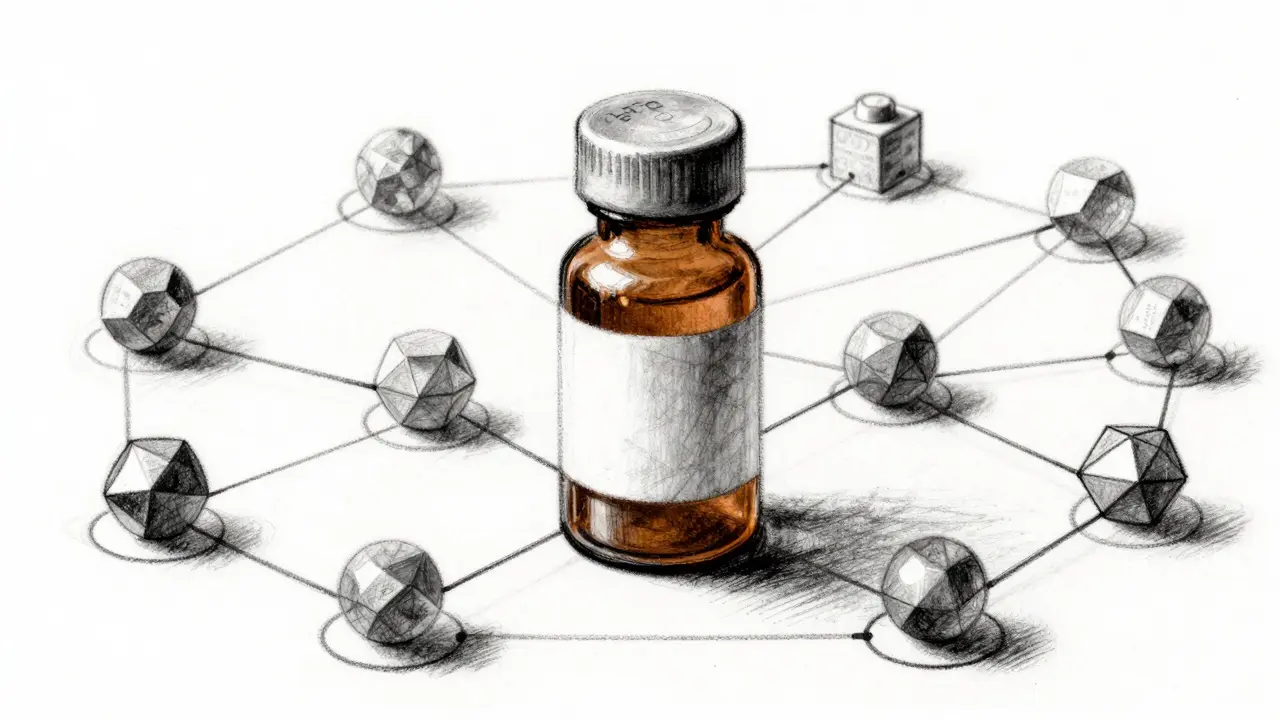
Counterfeit drugs are a massive global threat, costing billions and endangering lives. Blockchain provides traceability through distributed ledger records, while AI algorithms predict shortages or detect irregular patterns. This combined approach gives healthcare organizations complete visibility over drug distribution.
In 2026, this integration is becoming standard practice. When a medication moves from manufacturer to pharmacy, each step is recorded on the blockchain. This creates a verifiable record that prevents counterfeit medications from entering the system. For patients, this means greater confidence that the insulin or antibiotics they take are genuine. For supply chain managers, it means identifying potential disruptions before they occur, thanks to AI-driven analytics working alongside immutable blockchain data.
The Rise of IoMT and Remote Care
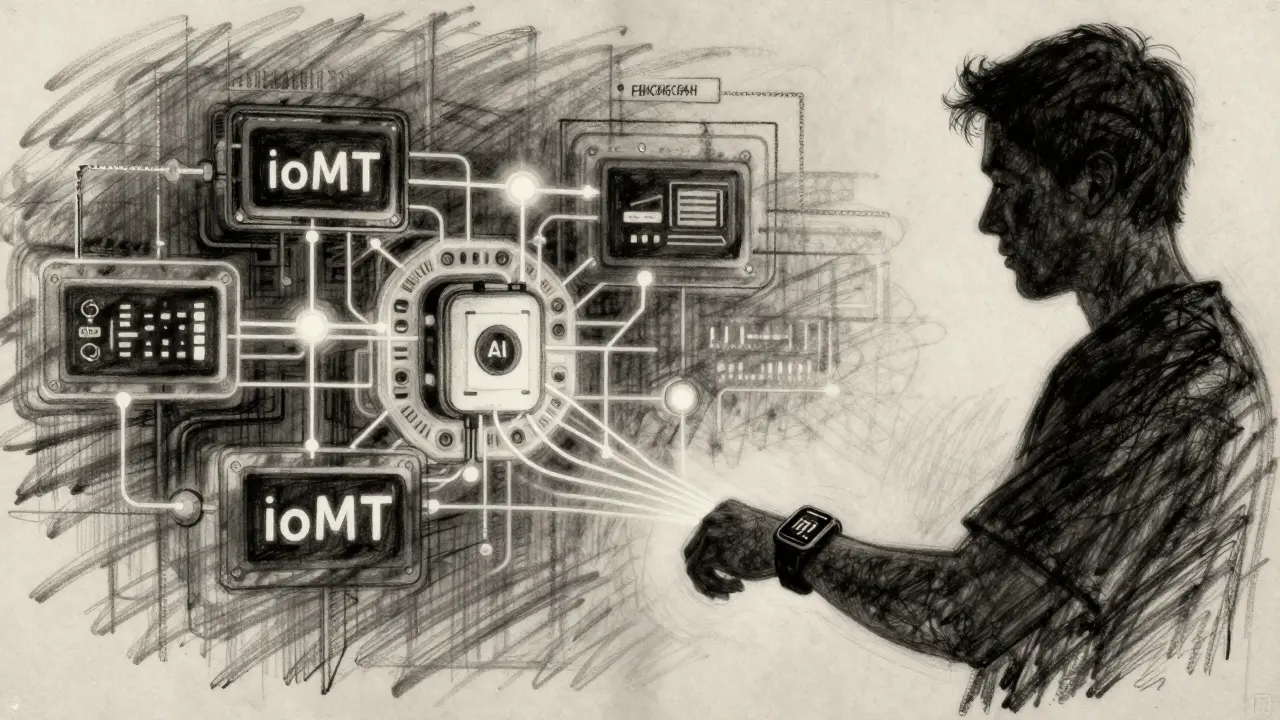
The convergence of blockchain and the Internet of Medical Things (IoMT) is another major trend. Connected medical devices-from smartwatches monitoring heart rates to insulin pumps tracking glucose levels-generate millions of data points daily. Blockchain-backed IoMT guarantees the integrity of this data.
Why does this matter? Because clinicians need to trust remote vitals for diagnosis and intervention. If the data stream is tampered with, the consequences could be fatal. By securing these data streams on a blockchain, healthcare enterprises can move from episodic treatment models to continuous care models. This reduces hospital readmissions and lowers operational costs. Companies like Philips Healthcare are expanding their connected care portfolios, using blockchain to guarantee data integrity and drive recurring revenue through digital health service subscriptions.
Automating Payments with Smart Contracts
Financial aspects of healthcare are undergoing significant transformation. Administrative overhead in insurance claims is notoriously high, often delaying reimbursements for months. Smart contracts are self-executing contracts with the terms of the agreement directly written into code automate this process. When predefined conditions are met-such as a confirmed diagnosis or completed procedure-the contract executes automatically, releasing payments instantly.
Additionally, programmable stablecoins are lowering cross-border payment friction in healthcare transactions. This is particularly useful for international telemedicine consultations or global research collaborations. Traditional Business Process Management (BPM) solutions are increasingly being replaced by generative AI-driven orchestration built on blockchain infrastructure, reducing administrative burden and accelerating cash flow for providers.
Credentialing and Clinician Mobility
As the healthcare workforce becomes more digital and borderless, verifying clinician credentials is crucial. The sector is leveraging decentralized identifiers (DIDs) and verifiable credentials to validate practitioner expertise across regions. This evolution supports safer AI model training and facilitates remote consulting.
Imagine a specialist in New Zealand providing a second opinion to a patient in Europe. With blockchain-based credentialing, the patient’s local provider can instantly verify the specialist’s qualifications without weeks of paperwork. These verifiable digital credentials ease clinician mobility across geographical boundaries, representing a practical advance that matters at the bedside and beyond.
Challenges and Realities of Adoption
Despite the progress, challenges remain. Integrating new blockchain technologies with legacy IT systems is technically complex. Many healthcare systems operate on technologies built decades ago, creating friction when introducing modern solutions. Interoperability between different blockchain platforms requires coordinated standardization efforts.
Furthermore, regulatory heterogeneity poses a hurdle. Ensuring compliance with HIPAA, GDPR, and other jurisdictional requirements demands careful implementation. There is also the risk of speculative hype eroding institutional trust if implementations do not deliver promised benefits. Adoption must be disciplined and values-driven to avoid rushed rollouts that fail patients. However, the trajectory is clear: blockchain is moving from experimental to essential.
Decentralized Science (DeSci) and Research Transparency
A rising trend in 2026 is Decentralized Science (DeSci), which leverages blockchain to restore transparency to stalled research initiatives. This emerging model enables researchers to use distributed ledger technologies for verifiable research data and collaborative funding mechanisms. Blockchain's provenance tracking combines with AI's pattern detection to enable use cases that neither technology could realize alone. This helps accelerate translational research and ensures that scientific findings are reproducible and trustworthy.
How does blockchain improve patient privacy in healthcare?
Blockchain improves privacy by decentralizing data storage, eliminating single points of failure that hackers target. It uses cryptographic protocols to ensure that only authorized users with specific permissions can access sensitive medical records. Every access attempt is logged immutably, creating a transparent audit trail that enhances accountability and trust.
What is the role of AI in blockchain-enabled healthcare?
AI analyzes large volumes of medical data to identify patterns, predict outcomes, and support diagnoses. Blockchain complements this by ensuring the data used by AI is tamper-proof, accurate, and securely sourced. Together, they create a system where AI insights are reliable because the underlying data integrity is guaranteed by the blockchain ledger.
Can blockchain prevent counterfeit drugs?
Yes. Blockchain provides an immutable record of a drug's journey through the supply chain, from manufacturing to dispensing. Each transaction is verified and stored on the distributed ledger. If a counterfeit product enters the system, its lack of valid blockchain verification makes it easily identifiable, preventing it from reaching patients.
What are smart contracts in healthcare?
Smart contracts are self-executing agreements coded on the blockchain. In healthcare, they automate processes like insurance claims processing. When specific conditions are met (e.g., a service is rendered and verified), the contract automatically triggers payment, reducing administrative delays and errors without human intervention.
Is blockchain adoption in healthcare widespread in 2026?
While not universal, blockchain adoption has moved beyond pilot phases into integrated operations for many major healthcare enterprises. Key areas like pharmaceutical supply chains, patient identity management, and remote monitoring (IoMT) see significant usage. However, full interoperability across all legacy systems remains a work in progress due to technical and regulatory complexities.
Oh my gosh, this is such a beautiful vision for the future!!! I am so excited about the idea of owning our own health data. It feels like we are finally getting some control back in our lives!! The part about Mayo Clinic piloting this makes me feel so hopeful that big institutions are actually listening to us patients. We deserve better than fragmented records and endless paperwork. Let's keep pushing for this change because it really matters! 🌟
u dont trust these tech bros with ur soul... they say decentralization but its just another way to monetize ur pain. who owns the nodes? who profits when ur data is sold? its all a scam to make billionaires richer while u think ur safe. wake up sheeple.
The fundamental flaw in this argument lies in the assumption that immutable ledgers solve the 'garbage in, garbage out' problem inherent in clinical data entry. While the cryptographic integrity of the transaction layer is robust, the semantic interoperability between disparate Electronic Health Record (EHR) systems remains a critical bottleneck. Furthermore, the scalability limitations of current consensus mechanisms pose a significant threat to real-time IoMT data ingestion, potentially creating latency issues that could compromise patient safety during acute care episodes. We must also consider the energy expenditure associated with proof-of-work versus proof-of-stake models in the context of healthcare sustainability goals.
I agree with Ella on the technical side, but I think the supply chain part is huge. Counterfeit drugs are a real nightmare. If we can track every pill from factory to pharmacy, that saves lives. It seems like a no-brainer for pharma companies to adopt this.
🤡 Oh please. You guys really think blockchain fixes anything? It’s just a database with extra steps! 💀 The 'decentralized' part is a joke because hospitals will still control the keys. And don’t get me started on smart contracts-what happens when the code has a bug? 💸💥 Your insurance claim gets denied by an algorithm and you can’t even complain to a human! It’s dystopian sci-fi written by venture capitalists who’ve never seen a doctor’s office. 😂📉
This is exactly what they want you to believe. The blockchain isn't for security; it's for total surveillance. They want to link your medical history to your financial transactions and your social credit score. The 'self-sovereign identity' is a lie designed to make you surrender your biometric data to a centralized authority disguised as a network. Wake up! The FDA and Big Pharma are using this to track dissenters. The ledger is permanent, meaning your mistakes follow you forever. It's a digital panopticon. 👁️🗨️
In many countries, we are still struggling with basic internet access. Blockchain sounds nice, but it requires high bandwidth and expensive hardware. How does this help rural communities in Africa or Asia? We need simple solutions first. Maybe focus on mobile health apps that work offline before adding complex crypto layers.
You are all missing the point! This technology is revolutionary for privacy! Why would anyone oppose giving patients control over their own bodies and data? It is unethical to keep medical records locked away in hospital silos. We demand transparency now!
Man, this drama is exhausting. Everyone yelling about conspiracies and bugs. Can we just appreciate that maybe doctors won't have to call three different places to get your blood test results? That would be nice. Simple stuff.
🧘♂️ Interesting perspectives here. But let us ponder: if the data is immutable, how do we correct errors? A mistake in a blockchain record is permanent. In medicine, accuracy is paramount. Is immutability always good? Or is it a rigid cage for living, breathing humans? 🤔📜
they are watching us through the devices. the iomt is not for health it is for control. your smartwatch knows when you are sick before you do and sells that info to insurers to raise your rates. blockchain just seals the deal. no escape. :(
typo alert: 'blockchain' is misspelled in the article title? no wait its fine. anyway this is nonsense. doctors should write prescriptions by hand like in the old days. less hacking then.
Listen up kids. Real men know that centralized servers are fine. Blockchain is for gamblers. Healthcare needs stability not volatility. Stop chasing shiny objects. 🙄💰
you guys are too negative! imagine the possibilities! remote monitoring that actually works! payments that happen instantly! lets cheer for progress instead of crying about bugs. come on team! ✨🚀
I hear both sides. On one hand, the privacy concerns are valid. On the other, the inefficiency of current systems is killing us slowly. Maybe we can find a middle ground where regulation protects us but innovation helps us. It’s not black and white folks. Let’s talk calmly.
i guess it depends on implementation. hard to say without seeing pilot results. quiet observation only.
What a spectacle! The sheer audacity of thinking code can replace human judgment in healthcare! It’s a tragedy waiting to happen. But oh, how the money flows! 💸🎭
im trying to understand the smart contract part. does it mean insurance pays automatically? that sounds helpful for small clinics. hope it works out for everyone.
Ah, the tension between tradition and innovation! It is dramatic, yes, but necessary. We stand at the precipice of a new era. Will we leap or fall? Only time will tell. The stakes are incredibly high for all of humanity. 🌍⚖️
The analysis provided in the post is superficial. It ignores the regulatory fragmentation across EU and US jurisdictions. GDPR’s right to be forgotten directly conflicts with blockchain’s immutability. This legal paradox is not addressed. Therefore, widespread adoption is legally impossible without significant architectural changes that compromise the core tenets of blockchain technology.
:( Typical layman discussion. You fail to grasp the nuance of zero-knowledge proofs in preserving privacy while maintaining auditability. The article mentions HIPAA but misses the mark on how decentralized identifiers actually function within a federated learning framework. Educate yourselves before commenting. 📚👓
I just got hacked last week so I am super paranoid about this. But also, if it stops fake drugs, I am all for it! My grandma almost died from bad insulin once. So yeah, save her life please! 😢💊 Also, why is everyone so angry? Relax! 😊