

Japan Crypto Exchange Compliance Checker
Check Your FSA Compliance Requirements
Determine if your crypto exchange meets Japan's strict FSA regulations before applying for licensing.
Compliance Assessment
Enter your information above to see if you meet Japan's strict FSA requirements for operating a crypto exchange.
Japan doesn’t just regulate crypto exchanges - it tests them. If you think getting a license to run a crypto platform is hard in the U.S. or Europe, try doing it in Japan. The Financial Services Agency (FSA) doesn’t just ask for paperwork. They demand proof - real, verifiable, technical proof - that your business can protect users’ money better than a vault. And they’ve been doing this since 2017, after the Mt. Gox collapse shook public trust. Today, Japan’s rules are the strictest in the world, and they’re getting even tougher.
How Japan Defines Crypto - And Why It Matters
The FSA doesn’t treat crypto like a novelty or a speculative asset. Under the Payment Services Act (PSA), crypto-assets are legally defined as digital values that can be used to pay for goods or services, transferred electronically, and aren’t tied to fiat currency. That’s it. No vague labels. No loopholes. If your token fits this definition, you need an FSA license to trade it, hold it, or exchange it in Japan. But here’s the twist: in June 2025, the FSA announced a major shift. Tokens that act like investments - think tokens that promise profits, voting rights, or dividends - are now being moved under the Financial Instruments and Exchange Act (FIEA). That’s the same law that governs stocks and bonds. This means those tokens now fall under strict disclosure rules, insider trading bans, and market manipulation controls. The new bill is expected to pass in early 2026, making Japan the first major economy to fully integrate crypto securities into its traditional financial framework.The Licensing Gauntlet: What It Actually Takes
Getting licensed isn’t a formality. It’s a full-scale corporate overhaul. To even apply, you need:- A Japanese legal entity - typically a Kabushiki Kaisha (joint stock company)
- A physical office in Japan, not just a virtual address
- A Japanese bank account
- Minimum capital of 10 million yen (about $65,000 USD), though most firms hold much more
- Appointed compliance officers with proven experience
- A detailed operational plan covering AML, KYC, and cybersecurity
The Cold Wallet Rule: No Exceptions
This is where Japan sets itself apart. Every single crypto exchange operating in Japan must store at least 95% of customer assets in cold wallets - offline, air-gapped, physically disconnected from the internet. That’s not a recommendation. It’s the law. If you want to use hot wallets (online wallets for quick trades), you must back every yen of it with your own money. So if you hold $1 million in hot wallets, you must keep $1 million in cash reserves to cover any losses. That’s not insurance. That’s personal liability. The FSA wants you to feel the pain if your system gets hacked - because then you’ll do everything possible to prevent it. No exchange in Japan has ever lost customer funds due to a hack since this rule was enforced. That’s not luck. That’s design.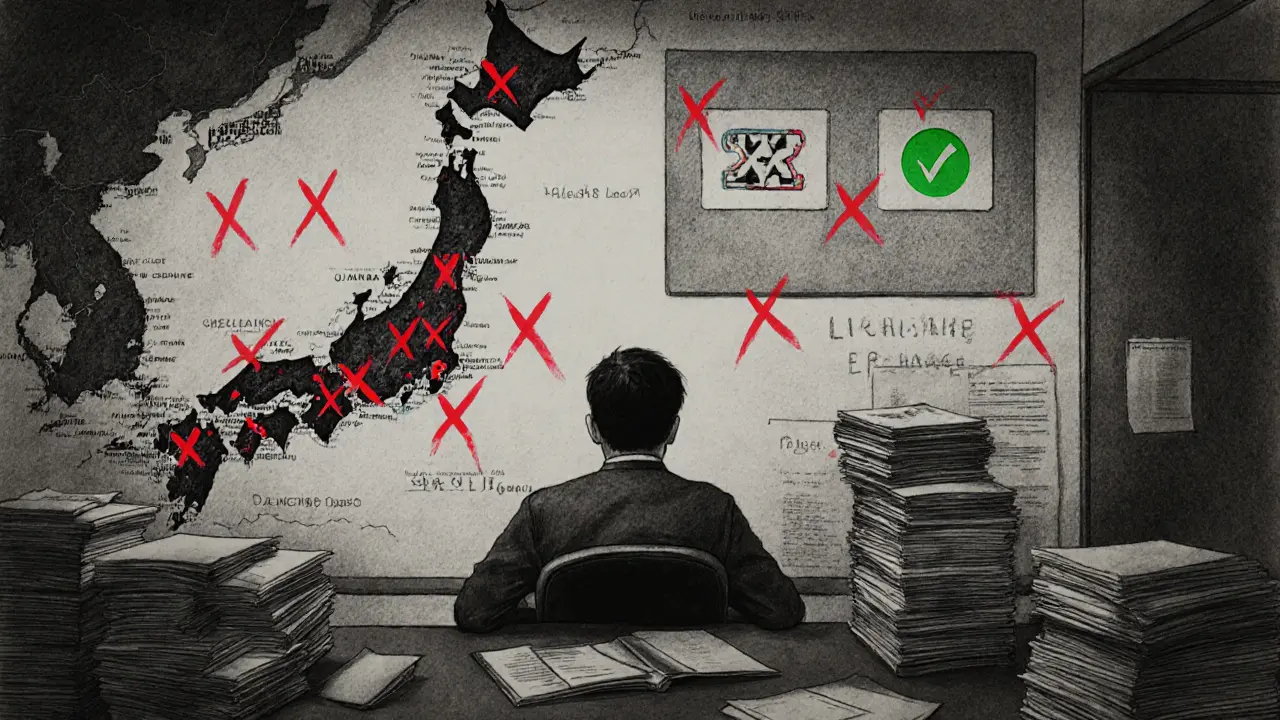
Why Japan’s Rules Are So Strict - And Why They Work
Japan’s approach isn’t about controlling innovation. It’s about eliminating fraud. Before 2017, crypto exchanges operated like wild west shops. Many didn’t segregate customer funds. Some didn’t even have proper KYC. Mt. Gox wasn’t an outlier - it was the norm. The FSA changed that. Today, only 32 exchanges are licensed in Japan. That’s down from over 20 in 2017. Many failed the test. Others quit. But the ones that remain? They’re the most trusted in the world. Users know their assets are safe. Investors know they’re not gambling on a shell company. The results speak for themselves. Japan’s crypto adoption hit 14.7% in 2025, with 18.69 million users expected by 2026. Market revenue is projected to hit $2 billion - not because it’s easy to start a business, but because people trust the system.The Tax Problem - And the Push for Change
Japan’s crypto rules are world-class - except for one thing: taxes. Profits from crypto trades are taxed as “miscellaneous income,” which can go up to 55% depending on your salary. That’s higher than the top income tax rate for most jobs. Compare that to stocks, where capital gains are capped at 20%. The FSA knows this is a problem. In late 2025, they publicly recommended aligning crypto taxes with traditional financial assets. The goal? To stop driving investors offshore and encourage long-term holding. A reform bill is expected in 2026. If passed, it could be the biggest boost to Japan’s crypto market since the PSA was first updated.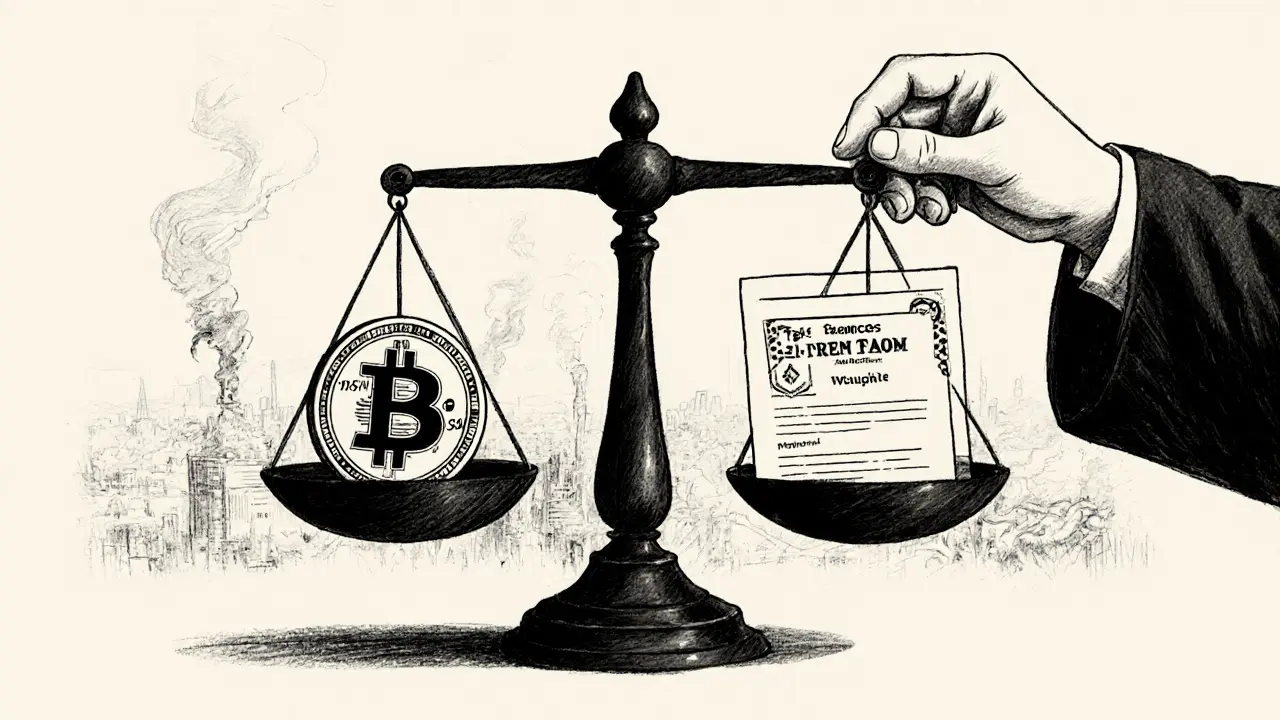
What’s Next? DeFi, ETFs, and Global Influence
Japan isn’t resting. The FSA created a DeFi Study Group in 2024, bringing together regulators, developers, and academics to figure out how to regulate decentralized finance without killing it. They’re watching Ethereum staking protocols, automated market makers, and smart contract risks closely. They’re also paving the way for spot Bitcoin ETFs - something the U.S. still struggles with. With crypto assets now under the FIEA, regulated funds can legally offer Bitcoin exposure to retail investors. The first Japanese Bitcoin ETF could launch as early as mid-2026. Other countries are watching. South Korea, Singapore, and even the EU are studying Japan’s model. Not because it’s easy - but because it works. Japan proves you can have strong consumer protection and still have a thriving crypto market.Who’s Winning? Who’s Losing?
The winners? Established players like Bitflyer, Liquid, and Coincheck. They’ve spent millions complying. They’ve built bulletproof systems. They’ve earned the FSA’s trust. Now they dominate the market. The losers? Startups with no local presence. Exchanges that think they can “launch and run” from overseas. Teams that treat compliance as a checklist instead of a culture. The FSA doesn’t negotiate. They don’t give second chances. If you’re not ready to meet their standards, you’re not welcome.Final Reality Check
If you’re thinking of launching a crypto exchange in Japan, here’s the truth: it’s not for everyone. It takes years. It takes millions. It takes patience. But if you make it through, you get something rare: legitimacy. Users trust you. Banks work with you. Investors fund you. And you’re not just surviving - you’re operating in one of the most secure, transparent, and stable crypto markets on earth. Japan didn’t build this system to be popular. They built it to be right.Is it illegal to operate a crypto exchange in Japan without FSA approval?
Yes. Operating without FSA registration is a criminal offense. Unlicensed exchanges are shut down immediately, and their operators can face fines or imprisonment. The FSA actively monitors the web and works with banks to freeze accounts linked to unregistered platforms.
Can foreign companies run crypto exchanges in Japan?
Yes, but only if they establish a legal Japanese entity - a Kabushiki Kaisha - with a physical office, local staff, and a Japanese bank account. You cannot operate remotely or outsource compliance. The FSA requires full local presence and accountability.
What happens if a Japanese crypto exchange gets hacked?
If the hack involves hot wallets, the exchange must cover losses from its own capital, thanks to the 100% asset-backing rule. If the breach involves cold wallets (extremely rare), the FSA investigates whether security protocols were followed. If negligence is found, the license can be revoked. Customer funds in cold wallets have never been lost due to a hack in Japan.
Why are crypto taxes in Japan so high?
Crypto profits are taxed as miscellaneous income, which can reach up to 55% depending on your total earnings. This is because the tax system doesn’t yet distinguish between crypto and speculative trading. The FSA is pushing for reform to align crypto taxes with stock gains (20%), but the change hasn’t been finalized as of late 2025.
Are Bitcoin ETFs allowed in Japan?
Not yet, but they’re coming. With the FSA’s move to classify investment-grade tokens under the FIEA, regulated financial firms can now legally offer spot Bitcoin ETFs. The first applications are expected in early 2026, making Japan one of the first countries to offer retail Bitcoin ETFs with full regulatory backing.
How many crypto exchanges are licensed in Japan as of 2025?
As of November 2025, there are 32 licensed crypto exchanges in Japan. The FSA has revoked licenses from over 100 unqualified applicants since 2017. Only exchanges that meet the strictest technical, financial, and governance standards are approved.
Does the FSA regulate DeFi platforms?
Not directly yet, but they’re actively studying them. The FSA’s DeFi Study Group meets quarterly to analyze risks like smart contract failures, liquidity pool exploits, and anonymous trading. While DeFi platforms aren’t required to register now, the FSA has warned that they may be brought under regulation if they start offering services to Japanese retail users.
I just can't believe how much effort Japan puts into this stuff. Like, they don't just say 'oh here's a form, fill it out'-they send people to your office, check your server logs, make sure your cold wallets are actually offline? That's next-level. I work in fintech and we're lucky if our compliance team remembers to update the firewall rules once a quarter. Japan's system feels like it was built by people who've actually seen what happens when you cut corners. I'm not even crypto-maximalist, but I respect this.
It’s funny how people scream about regulation stifling innovation, but then act shocked when exchanges get hacked. Japan didn’t kill crypto-they killed the grifters. The fact that no customer funds have been lost in a hack since 2017? That’s not luck. That’s discipline. And honestly? It’s the only reason I feel safe holding anything on a Japanese exchange. The tax thing still sucks, though.
Let me tell you something. I used to think the U.S. was tough on crypto. Then I read about Japan’s licensing process. A physical office? Japanese-speaking compliance officers on payroll? Minimum capital that’s more than most startups make in a year? I’ve seen founders try to ‘bootstrap’ their way into Japan. They last about three weeks before realizing they’re not building a business-they’re building a fortress. And the cold wallet rule? Genius. If your hot wallet gets breached, you’re personally on the hook for a million bucks? That’s not regulation. That’s incentive engineering. You don’t need cops when the cost of failure is that high.
Japan's model works because they made it expensive to fail. Not because they’re anti-innovation. They just won’t let you gamble with other people’s money. The 95% cold wallet rule? That’s the kind of rule you only make after watching a whole country lose trust. And now? People trust them. That’s worth more than any marketing budget.
There’s something deeply philosophical here. Japan didn’t just regulate crypto-they redefined what trust looks like in a digital age. They didn’t ask for promises. They demanded proof. And they made the cost of betrayal so high that no one dares to try. It’s not about control. It’s about responsibility. We’ve spent the last decade treating crypto like a rave-no ID, no rules, no consequences. Japan turned it into a library. Quiet. Orderly. Safe. And somehow? More alive than ever.
Okay but the tax thing is wild. 55%? On crypto gains? That’s more than my salary tax. I get the safety thing, but if you’re gonna make it this hard to play, at least let people keep more of their winnings. Otherwise you’re just pushing everyone to Binance or Bybit. Japan’s got the best system… and the worst tax policy. Classic.
Oh please. 'Japan's system works'? More like 'Japan's system is a bureaucratic nightmare that only benefits big banks and their pet exchanges'. Bitflyer and Coincheck? They’re basically government-approved monopolies now. And don’t get me started on the 'cold wallet' myth-what’s stopping them from just pretending their wallets are cold? The FSA doesn’t even do random audits. This whole thing is theater. People just want to believe in a fairy tale where crypto is safe. It’s not. It’s just… slower.
According to the Financial Services Agency’s official 2025 Compliance Report, Section 7.3, Subsection B, all licensed entities are required to maintain cryptographic audit trails for cold wallet access, signed by at least two certified personnel, with time-stamped hardware security module logs stored on immutable blockchain-backed servers. No exchange has ever been found non-compliant with this protocol. Therefore, the assertion that 'no customer funds have been lost due to a hack' is not merely anecdotal-it is empirically verifiable. Any claim to the contrary is either ignorance or malice.
Japan’s crypto rules = 🏆💯👑. Cold wallets? ✅. No hacks? ✅. Tax system? 🤡💸. But still… they’re the only ones doing it right. Other countries are just playing dress-up with regulations. Japan? They built a castle. And everyone else is still trying to figure out how to build a sandbox. 🤓🇯🇵
Oh wow, another article fawning over Japan’s 'brilliant' regulation. Let me guess-you also think their bullet trains are 'magical' and their vending machines are 'divine'? Newsflash: Japan’s system works because it’s insular, expensive, and designed to exclude foreigners. They have 32 exchanges? That’s not a feature-it’s a bug. It’s not about safety. It’s about control. And the fact that you’re praising this as 'the gold standard' proves you’ve never actually tried to launch anything outside the U.S. bubble. This isn’t innovation. It’s isolation with a compliance checklist.
You people act like Japan’s system is some kind of miracle. Let me break it down: they forced out every small player, made it impossible for new entrants to compete, and now the big three own the entire market. That’s not regulation-that’s cartel creation. And don’t even get me started on the 'cold wallet' thing-every exchange in Japan uses the same three vendors for their hardware wallets. So if one gets breached? All 32 go down. You call that security? I call it single point of failure with a fancy label.
Look-I’m not a fan of heavy regulation, but Japan’s approach is a masterclass in 'do it right or don’t do it at all.' They didn’t just slap on rules-they rewrote the psychology of risk. You want to run a crypto exchange? Then you better care about your users like they’re your family. That’s the real win here. The tax thing? Yeah, it’s dumb. But the trust? Priceless. If the U.S. adopted even half of this, we wouldn’t have half the scams we do. Stop complaining about the cost. Start appreciating the outcome.
Japan’s rules are insane but somehow they work? Wild. I mean like 95% cold storage? And you have to have a physical office? Who even has time for that? But I guess if you’re not trying to get hacked then sure. Still feels like overkill. But hey if it keeps my coins safe I guess I’ll shut up.
It’s worth noting that Japan’s reclassification of investment-grade tokens under the FIEA represents a paradigmatic shift in regulatory ontology: they’ve moved from a commodity-based framework (PSA) to a securities-based one (FIEA), thereby aligning crypto with established capital market infrastructures. This creates a legal precedent for fiduciary duty, disclosure obligations, and market integrity standards previously absent in crypto ecosystems. The implications for global regulatory harmonization are profound-particularly for the EU’s MiCA framework, which still lacks equivalent granularity in defining 'investment tokens.' Japan isn’t just regulating-it’s architecting the next generation of financial law.