
Bitcoin Tax Savings Calculator
El Salvador is the only country in the world where you can buy, sell, or trade Bitcoin and pay zero capital gains tax. Not 1%. Not 15%. Not even 1%. Just zero. And that hasn’t changed-even after the country made major adjustments to its Bitcoin policy in early 2025.
Why El Salvador’s Bitcoin Tax Rule Is Unique
Most countries treat Bitcoin like property. Sell it for more than you paid? You owe taxes. The U.S., Canada, Australia, and the UK all tax Bitcoin profits. Even Germany, often seen as crypto-friendly, only waives taxes if you hold Bitcoin for over a year. Portugal lets you avoid taxes if you’re a resident under its Non-Habitual Resident program. But none of them made Bitcoin legal tender. None of them erased capital gains tax across the board-for everyone, including foreigners. El Salvador did. In September 2021, under President Nayib Bukele, the country passed a law making Bitcoin legal tender alongside the U.S. dollar. And tucked into that law was a simple, powerful line: no capital gains tax on Bitcoin transactions. That means if you bought Bitcoin at $30,000 and sold it at $70,000, you keep every dollar of profit. No government cut. No forms to file. No audits over your wallet history. This isn’t a loophole. It’s the law. The Digital Assets Law explicitly removes capital gains tax as a liability for anyone trading Bitcoin within El Salvador’s borders. That includes locals, tourists, and foreign investors. Even if you’re not a citizen, even if you never set foot in the country-you can hold Bitcoin in a wallet linked to a Salvadoran exchange and pay zero tax on gains.Who Benefits the Most?
The biggest winners? Foreign investors who put at least three Bitcoin (₿3) into the country. That’s not a small amount-it’s worth over $200,000 as of early 2025. But if you meet that threshold, you get a full exemption on all future Bitcoin profits. No income tax on earnings from Bitcoin sales. No withholding. No reporting to your home country’s tax authority (though you may still need to declare it there). Businesses benefit too. Companies that operate as Bitcoin Service Providers (BSPs)-like exchanges, wallets, or payment processors-don’t pay corporate income tax, service transfer tax, or municipal taxes under the LEAD program. Import duties are waived. If you’re building a crypto startup in El Salvador and only deal in Bitcoin, you’re operating in one of the most tax-efficient environments on Earth. Even the government’s own Bitcoin City project-planned as a futuristic city powered by Bitcoin-promises zero taxes on income, property, purchases, and even emissions. It’s not just a tax break. It’s a full economic reset.What Changed in 2025?
You might have heard El Salvador backtracked on Bitcoin. That’s partly true. In December 2024, the country took a $1.4 billion loan from the International Monetary Fund (IMF). The IMF demanded reforms. And in February 2025, the government passed amendments to the original Bitcoin law. Here’s what changed:- The government stopped buying Bitcoin as a national reserve asset.
- Mercants no longer have to accept Bitcoin as payment.
- People can’t pay taxes in Bitcoin anymore.
- The state-run Chivo wallet is being phased out.

How It Compares to Other Crypto Tax Havens
El Salvador isn’t alone in offering zero crypto taxes, but it’s the only one that made Bitcoin legal tender. Here’s how it stacks up:| Country | Capital Gains Tax on Bitcoin | Legal Tender? | Key Conditions |
|---|---|---|---|
| El Salvador | 0% | Yes | Applies to all Bitcoin transactions, no holding period |
| Cayman Islands | 0% | No | No income, corporate, or capital gains tax for any digital asset |
| UAE | 0% | No | Zero tax across all emirates; strong regulatory clarity |
| Germany | 0% after 12 months | No | Only if held longer than one year |
| Portugal | 0% for individuals | No | Requires residency under NHR program |
Reality Check: Adoption Is Falling
Don’t get fooled by the headlines. Just because the law says Bitcoin is legal tender doesn’t mean Salvadorans use it. A 2024 survey by the Universidad Centroamericana José Simeón Cañas found that only 8.1% of Salvadorans regularly use Bitcoin for payments. That’s down from 25.7% in 2021. Most people still pay with dollars. Many don’t trust the Chivo wallet. Others find it too slow or confusing. The government spent millions promoting Bitcoin-billboards, free Bitcoin giveaways, mandatory training. But adoption didn’t stick. That doesn’t hurt the tax exemption. Foreigners aren’t relying on locals to use Bitcoin. They’re using it as a store of value, a borderless asset, a tax-free investment. The government’s own Bitcoin holdings-bought when prices were low-were worth $3.7 million more than their cost by late 2023. By March 2024, those holdings had a 50% profit. So even if citizens aren’t using it, the state still profited.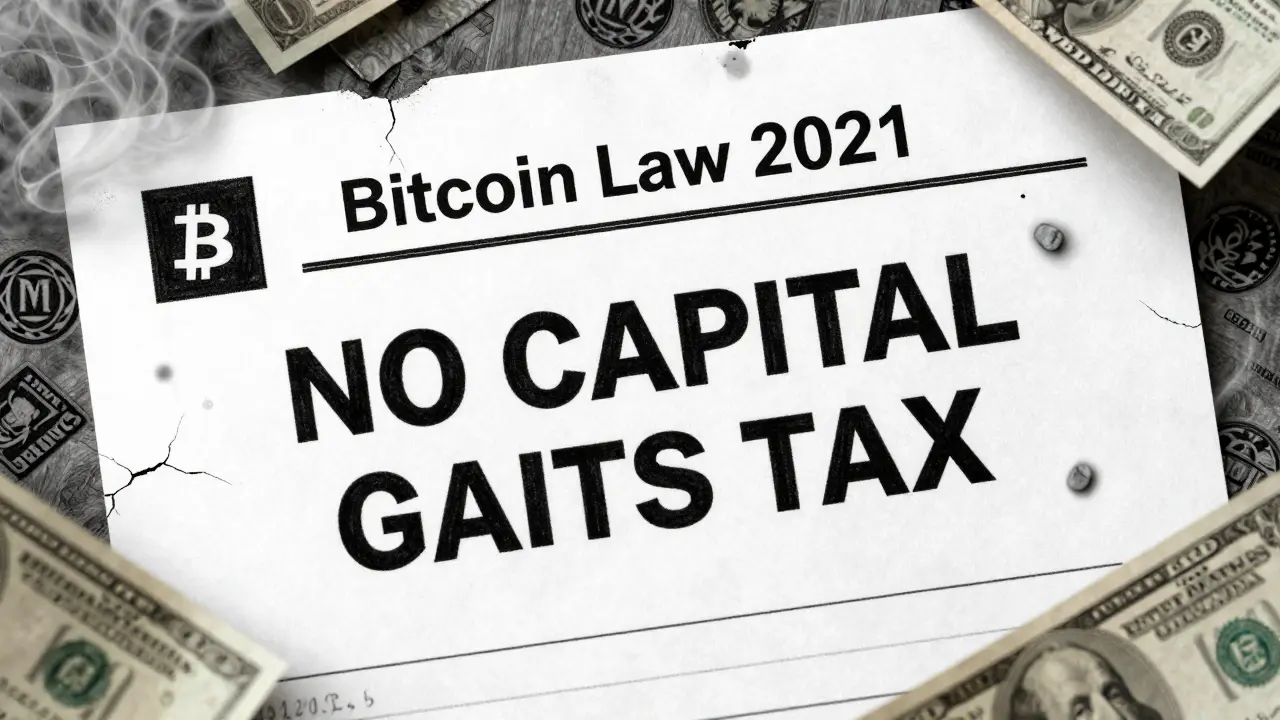
What You Need to Do If You Want to Benefit
You don’t need to move to El Salvador. You don’t need a visa. You don’t even need to open a local bank account. But you do need to make sure your Bitcoin activity is properly structured:- Use a Bitcoin Service Provider (BSP) licensed by El Salvador’s National Commission of Digital Assets (CNAD).
- Keep records of your purchases and sales-even if you don’t file taxes, the law requires transparency.
- Make sure your transactions are processed through a Salvadoran exchange or wallet linked to the country’s system.
- If you’re a business, register as a BSP and comply with AML/KYC rules.
Is This Sustainable?
El Salvador’s economy is small. Its debt is high. The IMF loan forced it to scale back. But the tax exemption? That’s the one part they refused to touch. Why? Because it’s their biggest selling point. It’s their brand. It’s what puts them on the map. If they lose that, they lose everything. No other country offers this. No other small nation has dared to bet its entire economic future on Bitcoin. And so far, despite falling adoption and political pressure, they’re holding the line. The future isn’t about how many Salvadorans use Bitcoin. It’s about how many foreigners choose to store value there. And right now, with no capital gains tax, El Salvador is still the only place on Earth where you can own Bitcoin and never pay a cent in taxes on your gains.Frequently Asked Questions
Is Bitcoin really tax-free in El Salvador for foreigners?
Yes. The Digital Assets Law explicitly removes capital gains tax on Bitcoin transactions for anyone-citizens, tourists, or foreign investors. You don’t need residency, a visa, or even to live in the country. As long as your Bitcoin transaction is processed through a licensed Salvadoran service provider, your profits are tax-free.
Do I still have to pay taxes in my home country?
Possibly. El Salvador doesn’t tax your Bitcoin gains, but your home country might. The U.S., Canada, Australia, and most European countries still tax worldwide income. You may need to report your Bitcoin profits to your local tax authority, even if you paid zero tax in El Salvador. Consult a tax professional familiar with cross-border crypto rules.
Can I use any Bitcoin wallet to get the tax exemption?
No. Only transactions processed through a Bitcoin Service Provider (BSP) licensed by El Salvador’s National Commission of Digital Assets (CNAD) qualify for the tax exemption. Wallets like Chivo (the state app) or exchanges registered under Salvadoran law are safe. Using Binance, Coinbase, or a personal wallet outside the system won’t trigger the exemption.
What if I sell Bitcoin and move the money out of El Salvador?
The tax exemption applies to the transaction itself, not where the money ends up. If you sold Bitcoin through a Salvadoran BSP and made a profit, you owe zero tax in El Salvador-even if you transfer the dollars to your bank in New York, London, or Tokyo. The location of your bank account doesn’t change the tax status of the original sale.
Has the 2025 IMF agreement removed the tax exemption?
No. The 2025 amendments to the Bitcoin law removed mandatory merchant acceptance, ended government Bitcoin purchases, and phased out the Chivo wallet. But the capital gains tax exemption was left untouched. It remains the cornerstone of El Salvador’s crypto policy.


