
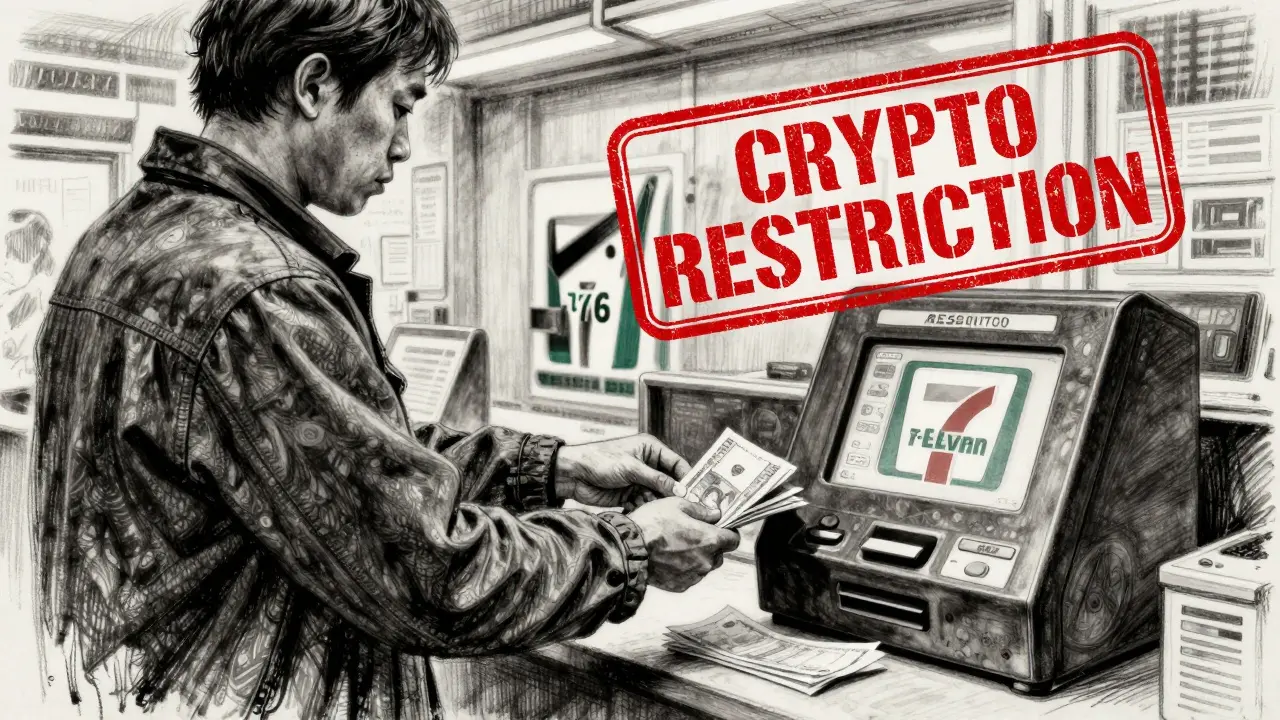
When you live in Taiwan and want to buy Bitcoin, you can’t just link your bank account like you would in the U.S. or Europe. That’s not because you’re blocked from owning crypto - you’re not. It’s because Taiwan’s banking system is legally barred from touching it. This isn’t a glitch or a temporary freeze. It’s a deliberate, carefully engineered wall between traditional finance and digital assets - and it’s been in place for over a decade, with major updates rolling out in 2024 and 2025.
Why Banks Can’t Touch Crypto in Taiwan
The story starts in 2013, when Taiwan’s Financial Supervisory Commission (FSC) declared Bitcoin a “highly speculative virtual commodity,” not money. That label stuck. By 2014, banks were officially forbidden from offering any Bitcoin services - no exchanges, no deposits, no withdrawals. That rule didn’t just apply to Bitcoin. It extended to all cryptocurrencies. The goal? Prevent money laundering, stop financial instability, and keep the banking system clean from the wild swings of crypto markets. In 2022, the FSC made it even clearer: credit card companies couldn’t let people use their cards to buy crypto. Why? Because they treated crypto purchases the same as gambling or stock trading - high-risk activities banks shouldn’t facilitate. So if you try to buy Ethereum with your Taipei Bank Visa card, it gets declined. Not because the card is maxed out. Because the system blocks it outright.How People Still Buy Crypto in Taiwan
If banks won’t help, how do over 2.3 million Taiwanese people own crypto? They find other ways. Most use registered Virtual Asset Service Providers (VASPs). These are crypto exchanges that applied for and got government approval to operate legally. As of late 2024, only 23 companies made it through. The biggest is MaiCoin. It handles around $70 million in trades every day. But even MaiCoin can’t take direct bank transfers. Instead, users deposit New Taiwan Dollars (TWD) through third-party payment processors like LINE Pay or by using cash deposit services at convenience stores. Peer-to-peer (P2P) trading is huge. Platforms like LocalBitcoins and Paxful are popular because they let users trade directly with each other. Someone in Kaohsiung might meet a buyer in Taichung at a coffee shop, hand over cash, and receive Bitcoin in their wallet. It’s slow, it’s manual, but it works. Reddit threads from r/Taiwan show users sharing tips like “use 7-Eleven to deposit cash to VASP” or “ask for ID verification before sending TWD.” International exchanges like Binance and Kraken also serve Taiwanese users - but only if they’ve registered as VASPs with the FSC. That means they follow local rules: KYC checks, cold storage, anti-fraud systems. Unregistered platforms? Blocked. No access. No legal protection.What’s Different About Stablecoins Now
The big shift coming in June 2025 is about stablecoins - digital tokens pegged to real money. Right now, most people in Taiwan use USDT or USDC. But those are issued by U.S.-based companies, outside Taiwan’s control. The FSC is about to change that. New rules will allow regulated financial institutions - think banks or licensed fintech firms - to issue TWD-backed stablecoins. These won’t be like USDT. They’ll be government-supervised, audited, and tied directly to the New Taiwan Dollar. Think of them as digital cash issued by the Central Bank, not by a private company. This is a game-changer. It doesn’t break the banking ban. It creates a backdoor. Banks won’t be able to handle Bitcoin or Ethereum. But they might soon handle TWD-stablecoins. That means you could eventually transfer money from your bank account to a regulated stablecoin wallet - all within the system. It’s not full integration. But it’s the first crack in the wall.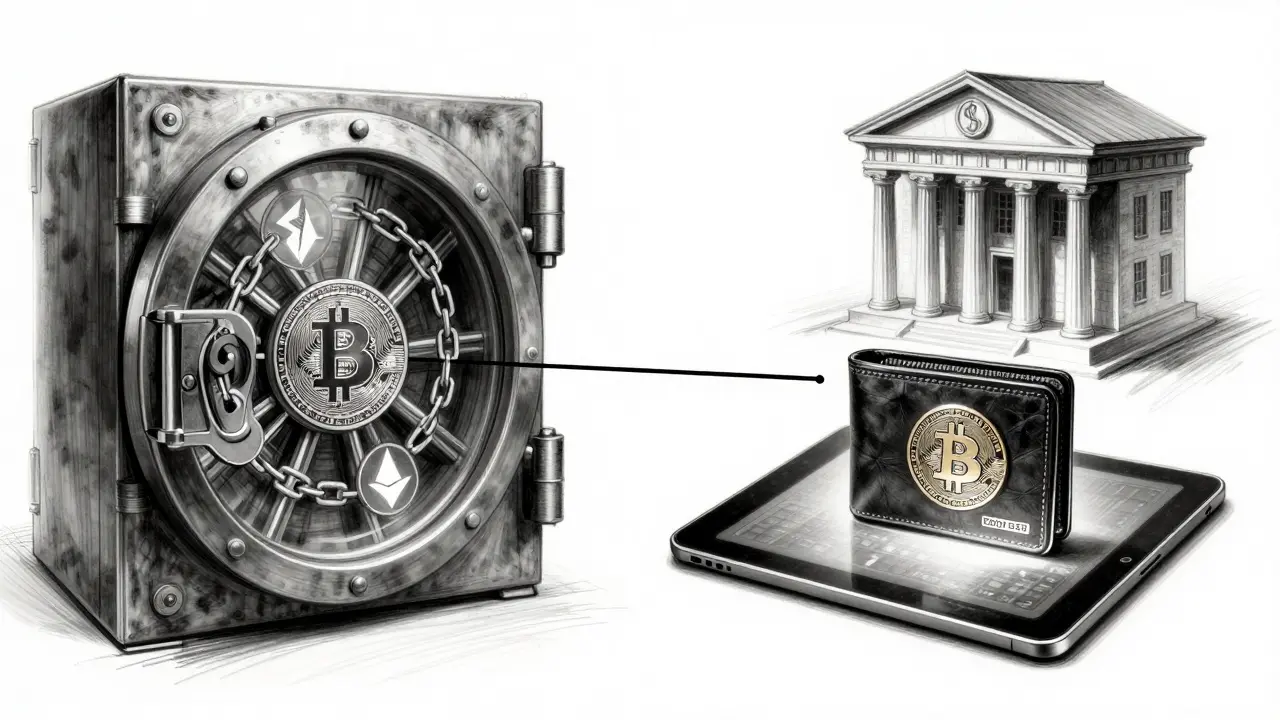
Who Benefits and Who’s Frustrated
Compliance experts love this system. PwC Taiwan says it’s one of the clearest crypto frameworks in Asia. By forcing exchanges to register, Taiwan reduces fraud. By keeping banks out, it protects the financial system. The fines for breaking the rules are steep: up to NT$5 million ($155,900) and two years in jail. That’s a real deterrent. But crypto businesses? They’re stuck. Setting up a VASP costs between NT$2 million and NT$5 million ($62,000-$155,000) just to meet compliance standards. Payroll? Hard to process because banks won’t touch crypto companies. Vendor payments? Same issue. Many VASPs rely on offshore accounts or use shell companies to move money - a workaround that’s legal but messy. Users feel the pinch too. MaiCoin has a 3.8/5 rating on local review sites. International VASPs score higher - 4.2/5 - because they offer more features, faster withdrawals, and better customer service. But they’re still limited by the banking wall. No instant bank transfers. No auto-deposits. No seamless experience.The Bigger Picture: CBDC and the Future
Taiwan isn’t trying to kill crypto. It’s trying to control it. The Central Bank has already finished testing a prototype for a Central Bank Digital Currency (CBDC) - a digital version of the New Taiwan Dollar. Trials began in late 2024 using the same infrastructure that powers digital vouchers for government subsidies. If that works, the CBDC could become the official digital currency of Taiwan. And here’s the key point: when that happens, banks will be fully involved. Because the CBDC isn’t crypto. It’s money - digital money, but still issued and backed by the state. That’s the future: two tracks. One for speculative crypto - locked out of the banking system. One for government-backed digital money - fully integrated. The FSC isn’t banning innovation. It’s separating the risky from the safe.
What This Means for You
If you’re in Taiwan and want to buy crypto:- You can own it - no problem.
- You can trade it - through registered VASPs only.
- You cannot use your bank account to fund it directly.
- You cannot use your credit card to buy it.
- You must verify your identity with the exchange.
- You’ll likely use cash deposits, P2P, or third-party payment apps.
- Register as a VASP if you want to operate legally.
- Expect high setup costs and long compliance timelines.
- Prepare for banking isolation - use offshore or fintech partners.
- Watch for the June 2025 stablecoin rules - they could open new doors.
Will This Ever Change?
Don’t expect banks to start offering Bitcoin wallets anytime soon. The FSC’s stance is too strong. But look at the stablecoin plan. That’s the real signal. Taiwan isn’t rejecting digital money. It’s rejecting unregulated digital money. In five years, you might see this: your bank app has a tab for “TWD Stablecoin.” You tap it, transfer NT$10,000, and get 10,000 TWD-stablecoins. You send them to MaiCoin. You buy Bitcoin. You trade. You hold. But the bank? It never touched the Bitcoin. It only moved the digital TWD. That’s the future Taiwan is building. Not a crypto-friendly system. A controlled one. And for now, that’s exactly what they want.Can I use my Taiwanese bank account to buy Bitcoin?
No. Taiwanese banks are legally prohibited from handling any cryptocurrency transactions, including deposits, withdrawals, or exchanges. You cannot link your bank account to a crypto exchange. Instead, you must use third-party payment processors, cash deposits at convenience stores, or peer-to-peer trades to fund your crypto purchases.
Are crypto exchanges legal in Taiwan?
Yes, but only if they’re registered as Virtual Asset Service Providers (VASPs) with the Financial Supervisory Commission. As of late 2024, only 23 exchanges have completed registration. Unregistered platforms are blocked from operating legally in Taiwan, and users who trade on them have no legal protection.
Can I use my credit card to buy crypto in Taiwan?
No. Since July 2022, Taiwanese credit card companies are banned from processing payments for cryptocurrency purchases. This rule was modeled after restrictions on gambling and speculative trading. Any attempt to use a local credit card for crypto will be declined by the payment system.
What is the difference between a stablecoin and Bitcoin in Taiwan’s system?
Bitcoin and other cryptocurrencies are treated as speculative virtual commodities and kept separate from the banking system. Stablecoins pegged to the New Taiwan Dollar (TWD) are set to become regulated financial instruments in June 2025. Only licensed institutions can issue them, and they’ll be treated more like digital cash - potentially allowing banks to interact with them, unlike Bitcoin or Ethereum.
Is a Central Bank Digital Currency (CBDC) coming to Taiwan?
Yes. The Central Bank of the Republic of China (Taiwan) completed a feasibility study in late 2023 and began prototype testing in late 2024. The CBDC will be a digital version of the New Taiwan Dollar, built on existing digital voucher infrastructure. It’s not crypto - it’s government-backed digital money, and it may eventually allow banks to offer direct digital currency services.
How many people in Taiwan own cryptocurrency?
As of late 2024, an estimated 2.3 million Taiwanese citizens - about 10% of the population - own some form of cryptocurrency. Despite banking restrictions, daily trading volume on registered exchanges reaches $200 million, with Bitcoin and Ethereum making up 65% of activity. User growth has been steady at 15% year-over-year.
Oh wow, Taiwan’s banking system is ‘protecting’ people from crypto? That’s cute. Like locking your fridge because someone might eat too much ice cream. Meanwhile, the whole world’s moving to digital assets and you’re still using fax machines with a side of moral panic. You’re not regulating innovation-you’re just delaying the inevitable. And let’s be real: if you can’t even let people use their own money how they want, you’re not a financial authority. You’re a digital feudal lord.
Y’all are still confused about why this is a GOOD thing?? This isn’t ‘restriction,’ it’s financial hygiene. Banks are supposed to be stable, not gambling dens. Crypto = unregulated chaos. Stablecoins? Fine, IF they’re backed by the central bank. But Bitcoin? No. Ethereum? Hell no. You think you’re ‘investing’? You’re just handing your life savings to anonymous devs in Singapore who could vanish tomorrow. The FSC isn’t anti-innovation-they’re pro-survival. And if you can’t handle that, maybe you shouldn’t own crypto. #FinancialResponsibility
Let’s deconstruct this for a second, because the entire premise is built on a false dichotomy between ‘speculative’ and ‘regulated’ digital assets. The FSC’s framework isn’t a policy-it’s a performative gesture toward bureaucratic inertia. They’re not ‘controlling’ crypto; they’re trying to outmaneuver it by creating a parallel monetary layer (the TWD-stablecoin) that, when scaled, will render Bitcoin irrelevant-not through force, but through obsolescence. And yet, they still won’t let people use their bank accounts? That’s not control. That’s cognitive dissonance wrapped in compliance paperwork. It’s like banning cars but building a highway for hoverboards. The architecture is inconsistent. The ideology is incoherent. And the users? They’re just the collateral damage in a state-sponsored game of regulatory whack-a-mole.
They’re scared. That’s it. The state knows crypto exposes how fragile their fiat system is. So they block banks, but quietly build a CBDC? Classic. They’re not protecting you-they’re preparing to track every cent you spend. The stablecoin isn’t freedom. It’s the final step before your bank account becomes a surveillance terminal. You think you’re choosing TWD-stablecoins? Nah. You’re just signing up for digital serfdom with better UX.
I think Taiwan’s approach is actually really smart. They’re not saying ‘no’ to digital money-they’re saying ‘not yet.’ They’re letting the market figure out what works, while keeping the banking system from collapsing under crypto’s volatility. And the stablecoin move? Genius. It’s like giving people a bridge instead of a wall. You can still buy Bitcoin, but the infrastructure around it is safer. It’s not perfect, but it’s thoughtful. I wish more countries did this instead of banning or embracing blindly.
Let me tell you something-this isn’t about finance. This is about power. The state doesn’t want you to have control over your own money. They want to decide what you can buy, when you can buy it, and how much you can spend. The banking ban? That’s just the first layer. The CBDC? That’s the cage. The stablecoin? That’s the key they’ll hand you… while keeping the lock on the door. You think you’re free because you can trade on MaiCoin? You’re just a prisoner with a fancy keychain. Wake up. This isn’t regulation. It’s psychological containment.
So cool how Taiwan’s doing this! 🌏✨ They’re not saying ‘no’ to tech-they’re saying ‘let’s do it right.’ Using 7-Eleven to deposit cash? That’s so creative! And the stablecoin plan? So smart! Banks won’t touch Bitcoin, but they’ll handle digital TWD? That’s like giving people a safe sandbox to play in. I love how they’re protecting people without crushing innovation. Taiwan’s showing the world how to do crypto with heart 💙
As someone from India, I’ve seen similar patterns with UPI and digital rupee trials. Taiwan’s model is actually quite mature. The key is separating speculative assets from core financial infrastructure. Using convenience stores for cash deposits? Brilliant workaround-low-tech but high-trust. And the 23 licensed VASPs? That’s a tight filter. Most countries have 200+ unregulated platforms. Taiwan’s keeping it clean. The only thing missing? More transparency on how VASPs are audited. But overall? Solid framework.
wait so u cant use ur credit card for crypto?? but u can use cash at 7-eleven?? that seems backwards lol. also why cant banks just do it like paypal? idk maybe im just dumb but this feels like a weird loophole
Listen, if you’re in Taiwan and you want crypto, you don’t need banks-you need grit. Use P2P. Use LINE Pay. Use cash. It’s slower? Yeah. But you’re not begging for permission. You’re taking control. And when the stablecoins drop in 2025? You’ll be ready. This isn’t a barrier-it’s a filter. The people who stick with it? They’re the ones who actually understand what crypto is. The rest? They were just chasing moon shots. Stay sharp. Stay independent. And don’t let the system tell you how to move your money.
YESSSS! Taiwan’s doing it right!! 💪🔥 Crypto should be free but not reckless. Stablecoins + CBDC = future. Banks stay clean, users stay safe. Love this model!! Let’s gooooo!!! 🚀
Oh my god. You’re telling me people in Taiwan are literally meeting in coffee shops to trade Bitcoin for cash? That’s not innovation-that’s a black market with better Wi-Fi. And you call this ‘regulated’? This is chaos dressed up in compliance. The FSC is a joke. They think they’re being smart, but they’re just creating a gray zone where criminals thrive. If you want to stop money laundering, ban it. Don’t make people meet in person like it’s 1998. This isn’t a system. It’s a farce.
It's a fascinating case study in asymmetric financial regulation. The FSC is not merely enforcing compliance; it is architecting a monetary bifurcation-where speculative risk is quarantined, and sovereign digital infrastructure is cultivated in parallel. This is not anti-crypto. It is pro-sovereignty. The TWD-backed stablecoin will function as a controlled conduit: a bridge between state-backed liquidity and decentralized asset markets. This model, if replicated, could redefine emerging-market crypto governance. The real innovation isn't in the blockchain-it's in the regulatory topology.
They’re not banning crypto. They’re banning trust. The moment you need a third-party payment processor just to buy Bitcoin, you’re not in control. You’re in a system designed to make you feel like you’re free, while every step is logged, monitored, and tracked. The CBDC? That’s the real endgame. This isn’t about protecting people. It’s about control. And the stablecoin? That’s the Trojan horse. They’ll say ‘it’s safe.’ But who’s auditing the auditors? No one. And that’s the scariest part.