
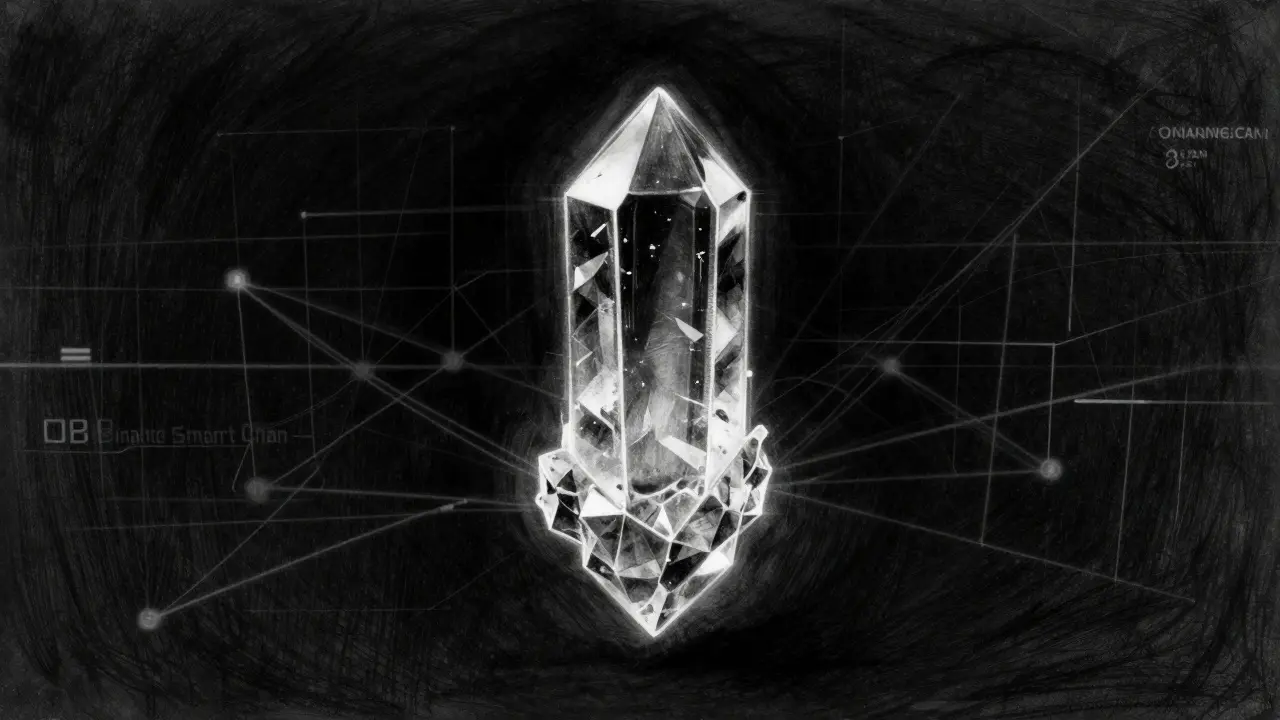
Remember that buzz around early 2022? It was the golden age of Binance Smart Chain (BSC) NFTs. Every week seemed to bring a new promise of free digital art and passive income. One name that popped up repeatedly was Lunar, specifically their Lunar Crystal NFT airdrop campaign tied to the LNR token. If you are digging through old wallet histories or checking forums today, you might be wondering where it all went. Did you miss out on a massive reward? Or was it just another flash in the pan?
The short answer is that the Lunar Crystal NFT airdrop was a real event, but it belongs firmly to the past. Launched in March 2022, this campaign promised participants at least one NFT for completing social tasks via CoinMarketCap. However, like many projects from that specific era, it has since faded into obscurity. There is no active community, no ongoing rewards, and the original platform has pivoted away from its initial DeFi promises.
What Was the Lunar Crystal NFT Airdrop?
To understand why this project disappeared, we have to look at what it actually was. Lunar positioned itself as a decentralized finance (DeFi) ecosystem built on the Binance Smart Chain (BSC). Their goal, according to their early marketing, was to "revolutionize the way we interface with crypto" by offering passive earnings to holders of their native LNR token.
The Lunar Crystal NFT served as the entry ticket. On March 1, 2022, platforms like AirdropAlert.com listed it among the top upcoming opportunities. The hook was simple: join the campaign, complete engagement activities, and receive a guaranteed NFT. Unlike some exclusive drops that reserved spots for VIPs, Lunar claimed broad accessibility. They integrated with CoinMarketCap, likely using its MISO platform or a similar partnership to handle distribution and verification.
This integration was significant because CoinMarketCap had a massive user base. By leveraging their platform, Lunar could reach thousands of users who already had accounts set up. The technical requirements were minimal. You needed a BSC-compatible wallet, such as MetaMask or Trust Wallet, and a verified social media presence. Gas fees on BSC were low at the time, making participation cheap compared to Ethereum-based alternatives.
How Did Participation Work?
If you were participating back in 2022, the process followed a standard pattern for that era. Here is how the workflow typically looked based on archived announcements:
- Create or Link Accounts: Users needed an active account on CoinMarketCap and a connected Web3 wallet.
- Social Engagement: Tasks usually included following Lunar on Twitter, joining their Telegram group, and liking their Facebook page.
- Verification: Some steps required captcha verification or linking your wallet address to prove ownership.
- Claiming: Once tasks were completed, the NFT was supposed to be minted directly to your wallet.
Unlike more complex airdrops that required holding specific tokens or interacting with multiple smart contracts, Lunar’s approach was task-based. This lowered the barrier to entry but also meant less commitment from participants. Many users joined solely for the free NFT, without any intention of holding the LNR token long-term.
| Feature | Lunar Crystal NFT | Baby Ape Beast (BAB) | Luna Dating (LSTR) |
|---|---|---|---|
| Blockchain | Binance Smart Chain (BSC) | Ethereum / BSC Hybrid | Ethereum |
| Distribution Method | CoinMarketCap Integration | VIP Holders & Public Mint | Telegram Bot Mechanics |
| Guaranteed Reward | At least 1 NFT | Free 3D NFTs for Holders | 1000 LSTR per Claim |
| Access Restrictions | Open to All | VIP Tier Priority | Referral Based |
| Current Status | Inactive / Abandoned | Inactive | Inactive |

Why Did the Project Disappear?
This is the question that matters most today. Why can’t you find any current information about Lunar or the LNR token? The silence is deafening when you compare it to successful projects from the same period.
First, consider the market context. Q1 2022 saw an explosion of NFT airdrops. According to industry data from CoinGecko, there were approximately 127 documented NFT airdrops during that quarter alone. About 34% of these were on BSC. Lunar was just one of many projects trying to capture attention in a crowded space. The "utility NFT" category, which Lunar belonged to, represented only 22% of those airdrops.
Second, look at the lack of transparency. While competitors like Baby Ape Beast published detailed roadmaps and trait distributions, Lunar provided very little technical documentation. There were no whitepapers detailing the LNR tokenomics. No GitHub repositories showed the code behind the smart contracts. Security firms like CertiK or OpenZeppelin never audited the project. In the crypto world, trust is built on verification. Without audits or clear technical specs, users remained skeptical.
Third, examine the post-launch activity. Successful projects maintain community engagement. They update their Discord servers, release new content, and respond to user concerns. For Lunar, the opposite happened. After the initial March 2022 announcement, there was virtually no user feedback documented online. No Reddit threads discussing success rates. No Twitter sentiment analysis showing excitement. This absence suggests either extremely limited participation or, more likely, a failure to deliver on promises.
By October 2023, the official website lunar.io had changed its messaging entirely. It no longer mentioned NFTs, airdrops, or the LNR token. Instead, it focused on vague concepts like "spark joy in your everyday Web3 experiences." This pivot indicates a strategic retreat from their original DeFi ambitions. The domain still exists, suggesting the corporate entity hasn't completely vanished, but the product line associated with the Lunar Crystal NFT has been discontinued.
Is the LNR Token Still Worth Anything?
If you held LNR tokens back in 2022, you might be hoping they have appreciated in value. Unfortunately, the evidence points otherwise. The LNR token does not appear on major tracking platforms like CoinGecko or CoinMarketCap in any significant capacity. It is absent from historical archives of top-performing airdrops.
Compare this to projects that survived the 2022 bear market. Tokens from ecosystems like Scroll or Linea maintained visibility and even grew in value due to strong technical foundations and consistent development. Lunar lacked these attributes. Without liquidity pools, exchange listings, or active trading volume, the LNR token effectively lost its utility and value.
It is crucial to understand that in crypto, abandonment is common. Projects launch with high energy, distribute tokens or NFTs to build a base, and then fade away when they cannot sustain operations or attract further investment. Lunar appears to be a textbook example of this lifecycle. The NFTs distributed may still exist in wallets, but they hold no monetary value and offer no functional benefits within the current ecosystem.
Lessons from the Lunar Experience
So, what can we learn from the rise and fall of Lunar? If you are looking into airdrops today, keep these points in mind:
- Check for Audits: Never participate in a project without verifying if reputable security firms have reviewed the code. Lack of audit is a major red flag.
- Verify Team Transparency: Look for doxxed teams with verifiable track records. Anonymous teams can disappear overnight, as seen with Lunar.
- Assess Community Health: Active communities ask questions and get answers. Silent communities often indicate trouble ahead.
- Understand the Utility: Ask yourself what the NFT or token actually does. If the answer is vague, be cautious.
- Monitor Post-Launch Activity: A successful launch is just the beginning. Consistent updates and development are signs of longevity.
The Lunar Crystal NFT airdrop serves as a reminder that not every opportunity leads to profit. Many projects from 2022 have vanished, taking their tokens and NFTs with them. Today, in June 2026, the focus has shifted toward more sustainable models with clearer regulatory compliance and stronger technological foundations.
What Should You Do Now?
If you have old wallets containing Lunar assets, do not expect them to become valuable. The project is inactive, and there is no roadmap for revival. Keeping private keys for abandoned projects poses unnecessary security risks. Consider moving funds from those wallets to more secure, actively managed ones.
For those interested in modern airdrops, look for projects with established partnerships, transparent governance, and active development cycles. Platforms like Layer 2 solutions on Ethereum or emerging DeFi protocols on Solana often provide better opportunities than the fleeting campaigns of the BSC boom.
Finally, stay informed. The crypto landscape changes rapidly. What worked in 2022 may not work today. Always do your own research, verify sources, and never invest more than you can afford to lose. The lessons from Lunar are clear: sustainability beats hype every time.
Is the Lunar Crystal NFT airdrop still active in 2026?
No, the Lunar Crystal NFT airdrop ended in March 2022. The project has since become inactive, and there are no ongoing campaigns or rewards associated with it.
Can I still claim my Lunar NFT if I missed it?
No, the claiming period closed years ago. Since the project is abandoned, there is no mechanism to retroactively claim NFTs or tokens.
What happened to the LNR token?
The LNR token has lost its utility and value. It is no longer listed on major exchanges, and the project team has pivoted away from its original DeFi model.
Was Lunar a scam?
While not necessarily a malicious scam, Lunar failed to deliver on its long-term promises. The lack of transparency, audits, and subsequent abandonment suggests poor project management rather than intentional fraud.
Are there any similar active airdrops today?
Yes, but you should focus on projects with verified audits, active communities, and clear utility. Look for recent launches on Ethereum Layer 2s or established DeFi protocols rather than obscure BSC projects.
its all a scam from the start. they just want your data and then vanish. i told you so.
u really think this is about art?? no way. its about control. look at the dates. march 2022. exactly when the markets crashed. they dumped on everyone who joined. u need to wake up and see the matrix behind these 'airdrops'. its not free stuff, its a trap for weak minds who dont read the fine print. i bet ur wallet is still connected to some shady site right now. check it before they drain it. typical behavior for people who cant handle basic security protocols. why do we always fall for the same tricks? its embarrassing honestly.
hey guys just wanted to say that back in the day bsc was wild. gas fees were low but projects popped up and died fast. lunar was one of them. i remember seeing it on cmc. didnt join cause i was busy with other things but yeah lots of noise little substance. hope yall stay safe out there
good post. reminds me of the early days. keep learning!
the tragedy of existence is that we seek meaning in digital voids. lunar crystal... what does it mean? nothing. just like our hopes in a bear market. we are all just waiting for the next pump that never comes. it is philosophical horror really. silence speaks louder than any whitepaper ever could. why do we cling to these dead tokens? perhaps because they represent the death of our own optimism. i sit here in my quiet room thinking about the entropy of blockchain networks. it is sad really. very sad.
i get it. losing money sucks. but honestly? these projects were trash from day one. no audits, no team, just hype. if you fell for it, tough luck. learn to spot red flags. its not rocket science. stop whining and move on. life goes on whether your nft has value or not. face reality.
you guys are missing the bigger picture completely. lunar wasn't just a failed project, it was part of a coordinated effort to wash dirty money through bsc. think about it. why would a legitimate company use such vague language? spark joy? come on. it's obvious they were laundering funds using the cover of an nft drop. the lack of github isn't accidental, it's intentional obfuscation. i've been tracking these patterns for years and every time a project disappears like this, there's a shell company somewhere collecting the fees. don't let them fool you into thinking it was just bad management. it's systemic corruption in the crypto space. we need to demand transparency or we'll never escape this cycle of exploitation.
Let us examine the facts with precision. The Lunar project failed due to fundamental structural deficiencies. There was no utility. There was no community governance. There was only marketing. We must hold ourselves accountable for participating in such ventures. It is a failure of due diligence. I urge you to study the mechanics of smart contracts before engaging again. Knowledge is power. Ignorance is costly. Let this be a lesson in rigorous analysis.
Bros listen up! 🚀 This is classic rug pull behavior. No liquidity pool = zero value. If you held LNR, you got rekt hard. Stop crying and go ape into something real like Solana or Ethereum L2s. That’s where the alpha is. Don’t be a bagholder forever. Move your assets to secure wallets and focus on projects with actual TVL and active devs. HODLing garbage won’t make you rich. Wake up and trade smarter! 💪🔥
The absence of verifiable data regarding the LNR token suggests its complete obsolescence. One should not expect recovery. The market has moved on. Rational actors will discard such assets immediately. Security is paramount. Do not retain keys for dormant wallets. It is an unnecessary risk vector. Proceed with caution in future endeavors.
I agree with the points raised. It is important to verify audits before joining any new project. Many people lost money because they did not check the basics. We should support projects that are transparent and have strong communities. Let us learn from this experience and build a better future for decentralized finance together.
This article provides a comprehensive overview of the Lunar Crystal NFT saga. It is crucial to understand the lifecycle of such projects. The lack of post-launch activity is a significant indicator of failure. Investors must remain vigilant and conduct thorough research. What specific metrics should we prioritize when evaluating new airdrops in 2026?
typical foreign scam. :/ always happens when we let unregulated tech run wild. should have banned this stuff years ago. american investors deserve better than this trash. shame on the regulators for letting it slide. :(
boring read. another dead project. why do people even care? its not like it changed the world. probably full of bots anyway. waste of time reading this. whatever.
It is interesting to reflect on the transient nature of digital assets. The Lunar project serves as a metaphor for impermanence. We attach value to symbols that eventually fade. Perhaps the true value lies in the lessons learned rather than the tokens themselves. Collaboration and shared knowledge are more enduring than any single project. Let us continue to discuss and grow together.
I feel for those who lost money. It is a painful experience. The silence from the team is deafening. We deserve answers. But instead, we get ghosted. It is frustrating and disheartening. We must stand together and demand accountability from these entities. Enough is enough.
Oh wow, ground breaking discovery. Another BSC scam dies. Did you really need an article for that? I’ve seen hundreds like it. You’re late to the party and still eating the dust. Typical. Next time, maybe check if the team is doxxed before you throw your money away. But sure, keep writing articles about failures. Very insightful.
Precisely. Amateur hour. Only sophisticated investors survive these cycles. The rest are just noise. Keep your expectations low and your standards high. Anything less is beneath you.
Hey everyone, just a reminder to check your wallet permissions regularly. Tools like Revoke.cash are super helpful. Also, don’t forget to back up your seed phrases offline. Staying organized helps reduce stress. Hope you all find better opportunities soon! You’ve got this.
Haha, yeah, lunar was a joke. But hey, at least we had fun watching it burn. Classic crypto. Nothing lasts forever except the memes. Stay chill, folks. The market will chew you up and spit you out regardless. Might as well laugh about it.
This situation highlights the dangers of unregulated international financial instruments. We must protect our local economies from such speculative bubbles. The lack of oversight allows these entities to operate without consequence. It is unacceptable. We need stricter laws to prevent such exploitation of retail investors. Our sovereignty is at stake.
One must consider the implications of data privacy in these campaigns. By linking social media accounts, users surrendered valuable personal information. This is not merely a financial loss; it is a surveillance victory for corporate entities. They harvest your identity while you chase worthless pixels. The architecture of trust has been compromised. We are all complicit in our own monitoring. Beware the digital footprint.
Let’s break down the key takeaways. First, always verify the team. Second, check for audits. Third, assess community engagement. These steps can save you from many pitfalls. I encourage everyone to share their own experiences with similar projects. Learning from each other strengthens our collective knowledge. Stay informed and stay safe.
The failure of Lunar is not surprising. It lacked technical depth and strategic vision. The founders were likely inexperienced or malicious. Analyzing the tokenomics reveals no sustainable model. The NFT had no utility beyond speculation. This is a textbook case of poor project management. Critics who dismissed it early were correct. Those who participated ignored clear warning signs. The outcome was inevitable.
Great breakdown of the risks involved. 📉 It’s crucial to understand the difference between genuine innovation and hollow marketing. Always DYOR. Check the code, check the team, check the community. If anything feels off, walk away. Your capital is precious. Protect it. 🛡️💎