

Spot trading is simple: you buy an asset and own it right away. No futures, no leverage, no expiration dates. Just buy low, sell high. But in 2025, even the simplest strategies have gotten smarter. With AI-powered tools, real-time sentiment feeds, and lightning-fast charting platforms, traders now have more precision than ever. The question isn’t whether you can trade spot - it’s which strategy fits your life, your nerves, and your goals.
Day Trading: Fast, Intense, and All About Timing
Day trading means opening and closing positions within the same 24-hour window. No overnight risk. No sleepless nights wondering if a tweet tanked your coin. But it demands focus. You need to watch charts, spot patterns, and act in seconds. In 2025, top day traders use TradingView with AI alerts that ping them when volume spikes or RSI hits extreme levels. They don’t guess. They react. A common setup? Look for a 15-minute candle that closes above the 20-period EMA with 2x average volume. That’s your signal. Target a 1% to 1.5% gain. Stop loss? 0.7%. That’s a 1:2 risk-reward ratio - the bare minimum pros use. This isn’t for people with jobs or kids. You need to be glued to the screen. If you’re distracted, you’ll lose. But if you’re sharp, you can make 3-5 trades a day and net 5-10% weekly. Bitcoin and Ethereum are the most reliable pairs for this. Altcoins? Too noisy. Too many fake breakouts.Swing Trading: The Sweet Spot for Most People
Swing trading is where most serious traders live. You hold positions for 2 to 7 days. You’re not chasing every tick. You’re riding the wave. The best swing trades in 2025 use a combination of trend lines and volume confirmation. Look for a coin that’s broken out of a 3-week consolidation. Check the volume on the breakout - it should be 30% higher than the 20-day average. Then wait for a pullback to the 50-period moving average. That’s your entry. Stop loss? Just below the consolidation low. Take profit at the next resistance level - usually 3-8% higher. Why does this work? Because retail traders are still emotional. They buy when everyone’s excited. They sell when panic hits. Swing traders use the chaos to their advantage. AI tools like ThinkOrSwim’s backtesting engine let you test this exact setup on 10 years of data. You’ll find it works on Bitcoin, Solana, and even stablecoin pairs during bull runs. It’s not glamorous. You won’t see your account double in a day. But over 6 months? You’ll compound steadily. And you only need 30 minutes a day to check your trades.Momentum Trading: Ride the Wave Before It Crashes
Momentum trading is like surfing. You don’t catch every wave. You wait for the big one - and then you paddle hard. In 2025, momentum traders use two tools: social sentiment trackers and price velocity indicators. If a coin surges 10% in 2 hours and Twitter chatter spikes 200%, that’s your signal. But here’s the catch: you exit fast. Momentum doesn’t last. It fades. The key is volume. A coin that jumps on low volume? Fake. A coin that jumps on high volume, with strong order book depth? Real. You enter on the first 15-minute close above the 200-period EMA. You set a trailing stop at 3% below the highest high. You don’t try to catch the top. You take 5-15% and get out. This strategy thrives during crypto bull runs, especially when new tokens launch. But it’s deadly in sideways markets. If Bitcoin is stuck between $60K and $68K? Don’t trade momentum. Wait.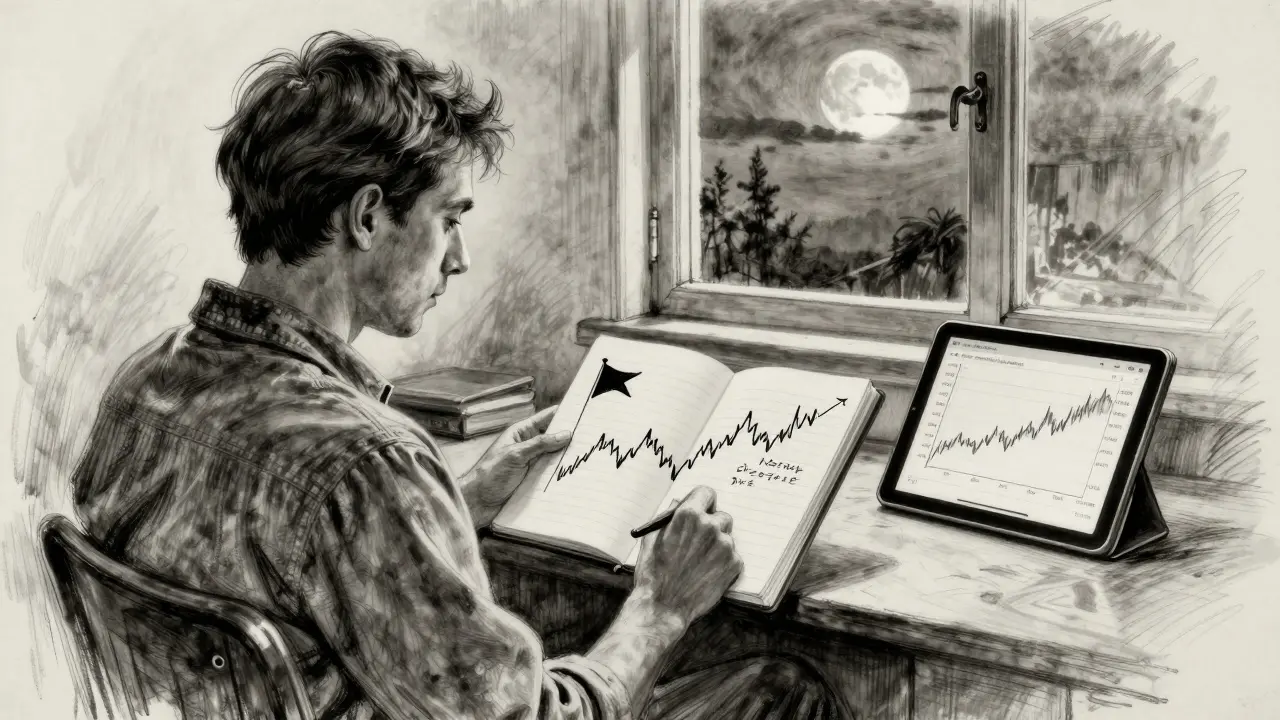
Breakout Trading: Where Patterns Become Profits
Breakout trading is the most visual strategy. You’re not predicting. You’re reacting. The most reliable patterns in 2025? Bull flags, ascending triangles, and cup-and-handle formations. These aren’t just pretty shapes. They’re psychological traps. Retail traders pile in during consolidation. Then, when the breakout hits, institutions move in. You follow. Here’s how to do it right:- Wait for the pattern to form over at least 10-14 days.
- Volume must drop during the consolidation - that means traders are exhausted.
- Breakout must happen with volume 50%+ above average.
- Enter on the first close above the pattern’s high.
- Stop loss? One tick below the pattern’s low.
- Target? Equal to the height of the pattern.
Scalping: High Risk, High Cost, Low Reward for Most
Scalping means making 10, 20, even 50 trades a day - each for 0.1% to 0.3% profit. Sounds easy? It’s not. In 2025, scalping is dominated by bots. Retail traders who try it manually lose money on fees alone. A single trade on Binance costs $0.10 in fees. Do 50 trades? That’s $5 in fees. You need to make 1% per trade just to break even. The only people who profit? Those with co-location servers, direct market access, and API-driven execution. If you’re trading from a laptop in Wellington? Don’t even try. If you insist on scalping? Stick to Bitcoin. Use 1-minute charts. Only trade when the 5-minute RSI is above 70 or below 30. Take profit at 0.2%. Stop loss at 0.1%. And never trade during low-volume hours - 2 AM to 5 AM UTC. That’s when slippage kills you.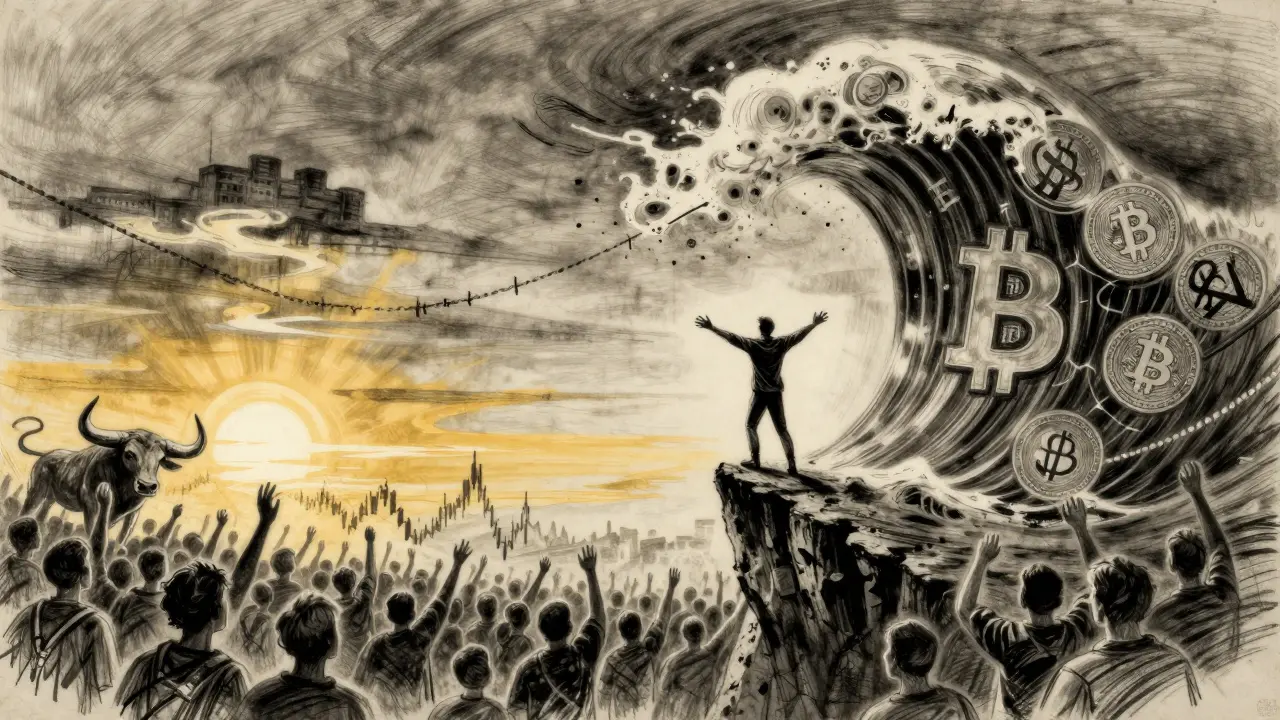
What Works? It Depends on You
There’s no “best” strategy. Only the best strategy for you. If you have 6 hours a day and love adrenaline? Day trade. If you have 30 minutes a day and want steady growth? Swing trade. If you watch news and react fast? Momentum. If you love patterns and patience? Breakouts. Scalping? Skip it unless you’re building a bot. The real edge in 2025 isn’t the strategy. It’s consistency. Every pro keeps a trading journal. Not just entries. They write:- Why they entered
- What they felt
- What went wrong
- What they’d do differently
Tools You Need Right Now
You don’t need a $10,000 setup. But you do need these:- TradingView - Free plan works for basics. Pro for alerts and multiple timeframes.
- ThinkOrSwim - Best backtesting. Free if you trade with TD Ameritrade (or use their demo).
- CoinGecko Sentiment - Free tool that shows social buzz for any coin.
- Bybit or Binance - Low fees, deep liquidity, fast execution.
Stop Doing These 3 Things
- Don’t trade on emotions. If you’re angry or excited, close the tab.
- Don’t over-leverage. Spot trading means no leverage. Stick to that.
- Don’t chase “the next 100x coin.” Spot trading is about probability, not lottery tickets.
What’s the difference between spot trading and futures trading?
Spot trading means you buy an asset and own it immediately. Futures mean you bet on its future price without owning it. Spot has no leverage, no liquidation risk, and no expiration. Futures let you amplify gains - but also amplify losses. Most beginners lose money with futures. Spot is simpler, safer, and better for learning.
Can I make a living from spot trading in 2025?
Yes - but not from one strategy or one coin. You need a consistent edge, discipline, and risk management. Most successful spot traders make 5-15% monthly, not daily. They reinvest profits and avoid big draws. It takes 6-12 months of practice to get there. Don’t quit your job until you’ve proven it for 3 straight months.
Which crypto pairs are best for spot trading?
Bitcoin (BTC) and Ethereum (ETH) are the safest. They have the deepest liquidity, lowest spreads, and most reliable patterns. Stablecoin pairs like USDT/BTC are great for swing trading. Altcoins? Only trade them if they have at least $500M daily volume. Low-volume coins are manipulation targets.
Do I need AI tools to succeed in spot trading?
No - but they help. You can trade successfully with basic charts and volume analysis. But AI tools like sentiment trackers and pattern scanners cut your research time in half. They help you spot opportunities you’d miss. Think of them as a GPS - you can drive without one, but it’s harder.
How much money do I need to start spot trading?
You can start with $100. But you won’t make meaningful profits. Aim for $500-$1,000. That lets you take 1-2% risks per trade without blowing up. Never risk more than 2% of your account on a single trade. That’s the rule pros live by.


