
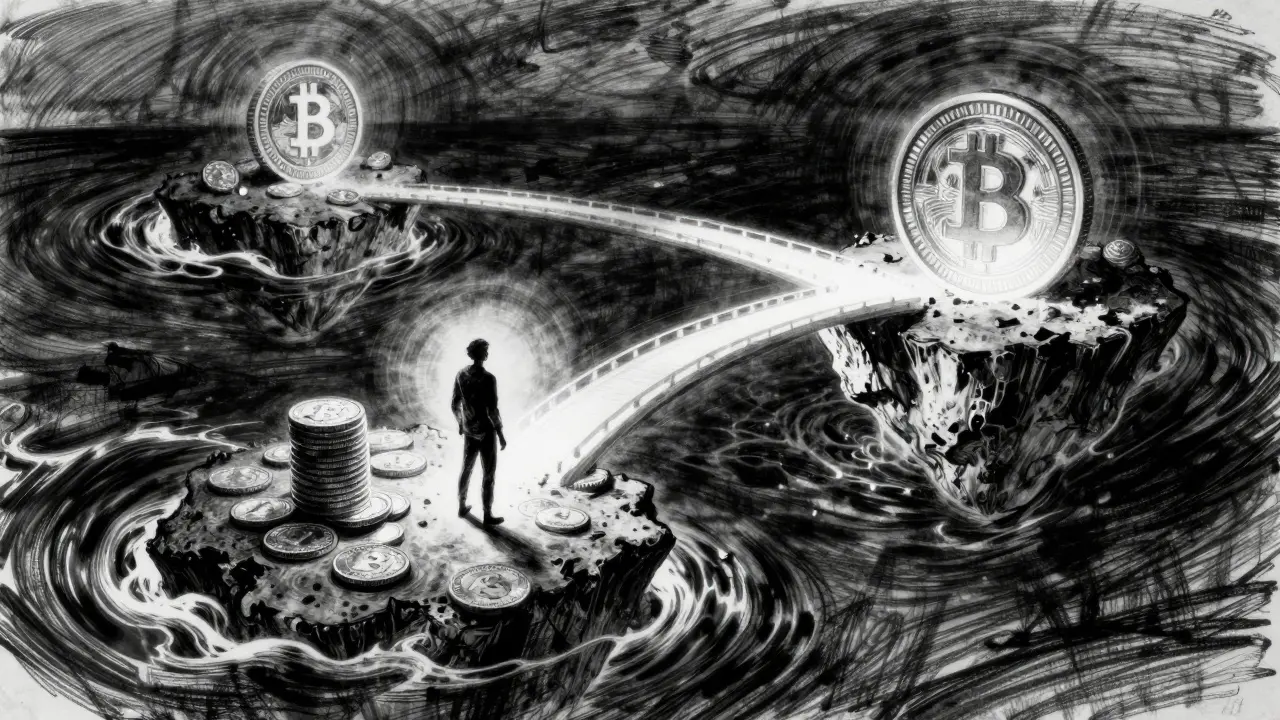
Imagine holding a stack of US dollars but trying to buy coffee at a cafe that only accepts Euros. You can’t just hand over the bills; you need an exchange. Now, imagine doing this every time you want to move value between different blockchains. That is exactly the problem wrapped assets solve in decentralized finance (DeFi).
Blockchains are like isolated islands. Bitcoin lives on its own island, Ethereum on another, and Solana on yet another. By design, they don’t talk to each other. If you hold Bitcoin, you can’t use it as collateral for a loan on an Ethereum-based lending protocol like Aave. Wrapped assets act as the bridge. They are digital tokens that mirror the value of an asset from one blockchain so it can function on another. One wrapped token always equals one original asset, keeping a strict 1:1 peg.
Why Do We Even Need Wrapped Tokens?
The core issue is interoperability. Blockchains are siloed by nature. This fragmentation limits what you can do with your crypto. If you own Bitcoin, your options are limited to storing it or spending it on Bitcoin-compatible services. You miss out on the entire Ethereum ecosystem-lending, borrowing, yield farming, and liquidity provision.
Wrapped assets fix this by translating an asset into a format the target blockchain understands. For example, Bitcoin doesn’t support smart contracts natively. But if we wrap Bitcoin into WBTC (Wrapped Bitcoin), it becomes an ERC-20 token on Ethereum. Suddenly, your BTC behaves like any other Ethereum token. It can be sent to DApps, used in smart contracts, and traded instantly.
This isn’t just about Bitcoin. WETH (Wrapped Ether) exists for a similar reason. Native ETH is the fuel for the Ethereum network, but it predates the ERC-20 standard. Many DeFi protocols require ERC-20 compliance to function smoothly. WETH allows ETH to play nicely within these systems without changing the underlying network code.
How Does the Wrapping Process Actually Work?
You might think wrapping involves complex cryptography or magic. In reality, it’s a custody and minting process. Here is the step-by-step flow:
- Deposit: You send your original asset (e.g., BTC) to a trusted custodian or a smart contract reserve.
- Minting: Once the deposit is confirmed, the system mints an equivalent amount of wrapped tokens (e.g., WBTC) on the target blockchain (e.g., Ethereum).
- Usage: You receive the wrapped tokens in your wallet. You can now use them in DeFi protocols.
- Burning: When you’re done, you send the wrapped tokens back to the system. The tokens are destroyed (burned), and the original asset is released from custody back to you.
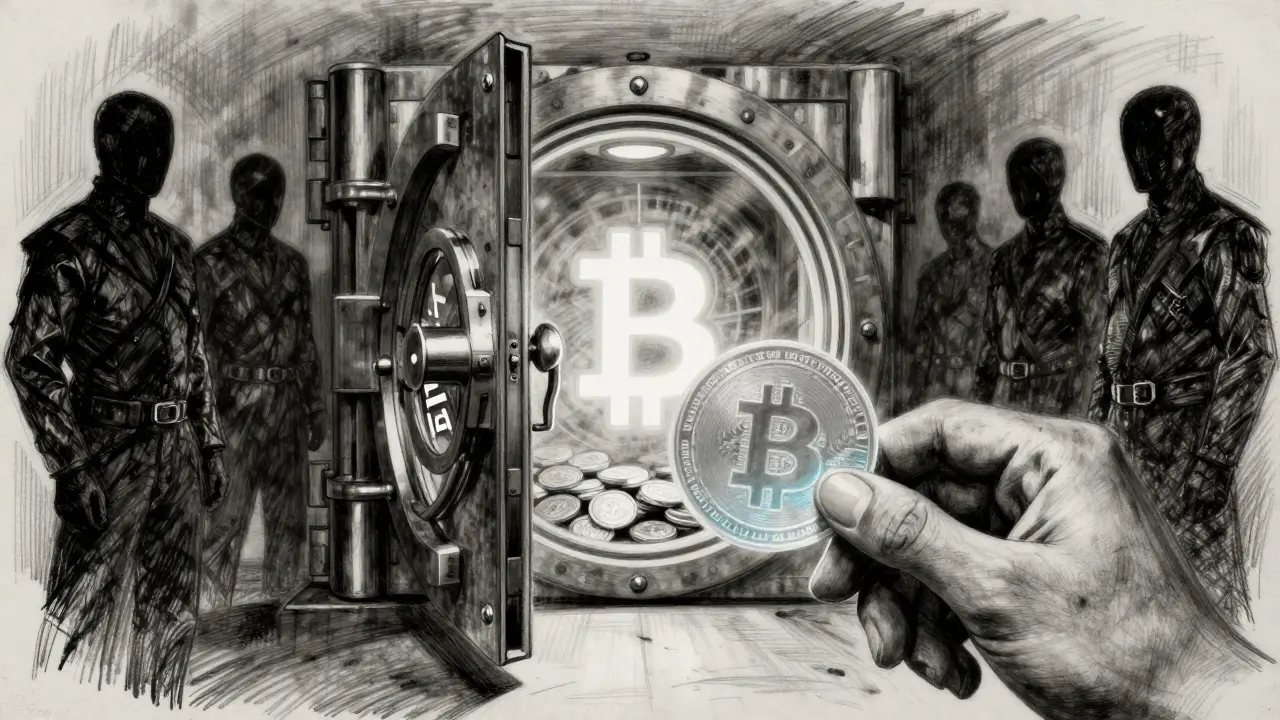
The critical part here is trust. Who holds the original Bitcoin while your WBTC circulates? In most major cases, like WBTC, a centralized entity manages the reserves. BitGo acts as the sole multi-signature custodian for WBTC. This means they hold the actual Bitcoin in a secure vault. Your WBTC is essentially a receipt proving that BitGo holds your BTC.
This model introduces a central point of failure. If BitGo gets hacked, loses keys, or acts maliciously, the peg breaks. This is why understanding the custody model is vital before using any wrapped asset.
Major Players: WBTC vs. renBTC vs. sBTC
Not all wrapped assets are created equal. The market is dominated by a few key players, each with different risk profiles and architectures.
| Feature | WBTC (Wrapped Bitcoin) | renBTC (Ren Protocol) | sBTC (Synthetix) |
|---|---|---|---|
| Custody Model | Centralized (BitGo) | Decentralized (Darknodes) | Over-collateralized Synthetics |
| Market Share | ~63% | ~19% | ~9% |
| Trust Requirement | High (Trust custodians) | Medium (Trust node operators) | Low (Trust oracle prices) |
| Primary Use Case | Lending, Liquidity Pools | Privacy, Decentralization | Synthetic Trading |
WBTC is the heavyweight champion. It launched in 2019 and quickly became the standard because major exchanges like Coinbase integrated it early. Its main advantage is liquidity. If you want to lend Bitcoin on Aave, you’ll likely use WBTC because that’s where the money is. However, it relies heavily on BitGo. As of late 2023, 97% of WBTC custody depends on BitGo’s multi-sig setup controlled by five entities. This contradicts the "decentralized" ethos of DeFi for many purists.
renBTC offers a more decentralized alternative. Instead of a single company holding the keys, renBTC uses a network of nodes called Darknodes. These nodes stake REN tokens as collateral to secure the bridge. If a node misbehaves, its collateral is slashed. This reduces single-point-of-failure risks but adds complexity. Users often find renBTC slower and slightly more expensive to wrap due to the decentralized verification process.
sBTC takes a completely different approach. It’s not backed 1:1 by held Bitcoin. Instead, it’s a synthetic asset issued by the Synthetix protocol. Users lock up other crypto assets as collateral to mint sBTC. This means sBTC’s value is tied to Bitcoin’s price via oracles, not direct ownership. It’s useful for trading exposure without holding the actual coin, but it carries liquidation risk if the underlying collateral drops in value.
The Hidden Costs and Risks
Wrapped assets aren’t free lunch. There are fees, delays, and significant security risks you need to navigate.
Fees: Wrapping and unwrapping usually cost between 0.1% and 0.5%. While small, these fees eat into profits if you’re moving funds frequently. Additionally, you still pay gas fees on the target blockchain. During Ethereum congestion, sending WBTC can cost $10-$15 in gas, plus the wrapping fee.
Custodial Risk: This is the biggest concern. With WBTC, you are trusting BitGo. With renBTC, you are trusting the Ren node network. History has shown us what happens when bridges fail. The Nomad Bridge hack in August 2022 resulted in a $600 million loss, draining multiple wrapped assets. While WBTC wasn’t directly compromised in that specific exploit, it highlighted the fragility of cross-chain infrastructure.
Peg Stability: Ideally, 1 WBTC = 1 BTC. But during extreme market volatility, arbitrageurs may struggle to maintain this peg. If panic sets in, wrapped tokens can trade at a discount. Always check the real-time price difference between native and wrapped assets before large transactions.

When Should You Use Wrapped Assets?
You don’t need wrapped assets for everything. Here is a quick decision guide:
- Use Wrapped Assets When:
- You want to earn yield on Bitcoin by lending it on Ethereum protocols (Aave, Compound).
- You need to provide liquidity for BTC/ETH pairs on Uniswap.
- You are building a DeFi application that requires Bitcoin functionality on EVM chains.
- Avoid Wrapped Assets When:
- You are holding long-term and don’t plan to interact with DeFi. Just keep BTC in a hardware wallet.
- You prioritize absolute decentralization and cannot accept any counterparty risk.
- You are moving small amounts where fees outweigh benefits.
The Future: Are Wrapped Tokens Going Away?
Many experts believe wrapped assets are a temporary solution. Vitalik Buterin has called them a "necessary evil" during the transition to a multi-chain future. The goal is native interoperability-where blockchains communicate directly without needing wrappers.
Technologies like Chainlink’s Cross-Chain Interoperability Protocol (CCIP) and LayerZero are working toward this. They aim to create trust-minimized bridges that reduce the need for custodians. By 2026, we expect a shift away from centralized models like WBTC toward more decentralized, algorithmic solutions. However, until native cross-chain messaging is seamless, wrapped assets will remain the backbone of DeFi liquidity.
For now, if you want to participate in the broader DeFi economy with non-Ethereum assets, wrapped tokens are your ticket in. Just remember: you are trading some degree of self-custody for utility. Understand who holds the keys, know the fees, and never wrap more than you intend to actively use.
Is WBTC safe to use?
WBTC is considered relatively safe due to its long track record and audit history, but it carries custodial risk. BitGo holds the underlying Bitcoin, meaning you must trust their security practices. While no major hacks have compromised WBTC reserves directly, reliance on a centralized custodian contradicts pure DeFi principles. Always assess your comfort level with counterparty risk.
What is the difference between ETH and WETH?
ETH is the native currency of the Ethereum network, used for paying gas fees. WETH is an ERC-20 token version of ETH. Most DeFi protocols require ERC-20 tokens to function correctly because they offer standardized interaction methods. WETH allows ETH to be used in smart contracts, liquidity pools, and automated market makers seamlessly.
How long does it take to wrap Bitcoin?
Wrapping Bitcoin into WBTC typically takes between 1 to 24 hours. The delay comes from the need for confirmations on the Bitcoin network and the manual review process by merchants. During high congestion, it may take longer. Once minted, receiving the WBTC on Ethereum is fast, usually within minutes.
Can I lose my money if a wrapped asset de-pegs?
Yes. If a wrapped asset fails to maintain its 1:1 peg with the underlying asset, you could suffer losses when unwrapping or trading. This can happen due to custodial failures, smart contract bugs, or market panic. Always monitor the peg ratio and consider using reputable, audited protocols like WBTC or renBTC to minimize this risk.
Are there tax implications for wrapping assets?
Tax laws vary by jurisdiction. In many countries, converting BTC to WBTC is considered a taxable event because you are disposing of one asset to acquire another. Consult a local tax professional to understand how wrapping, unwrapping, and using wrapped assets in DeFi affects your tax liability.