
The cryptocurrency landscape has shifted dramatically. What looked like a speculative experiment a few years ago is now a multi-trillion-dollar asset class integrated into global finance. As of early 2026, the total market capitalization sits comfortably above $4 trillion, driven not by hype alone, but by institutional adoption, regulatory clarity, and genuine utility. If you are looking at where the money is flowing, the answer lies in the top-ranked digital assets. These aren't just tokens; they are infrastructure.
Understanding the hierarchy of market capitalization helps you see which projects have survived the volatility and built real value. It’s not just about who had the biggest pump last month. It’s about who holds the most trust, liquidity, and network effect. Let’s break down the current leaders, what drives their value, and why the gap between the top tier and the rest continues to widen.
The Undisputed King: Bitcoin (BTC)
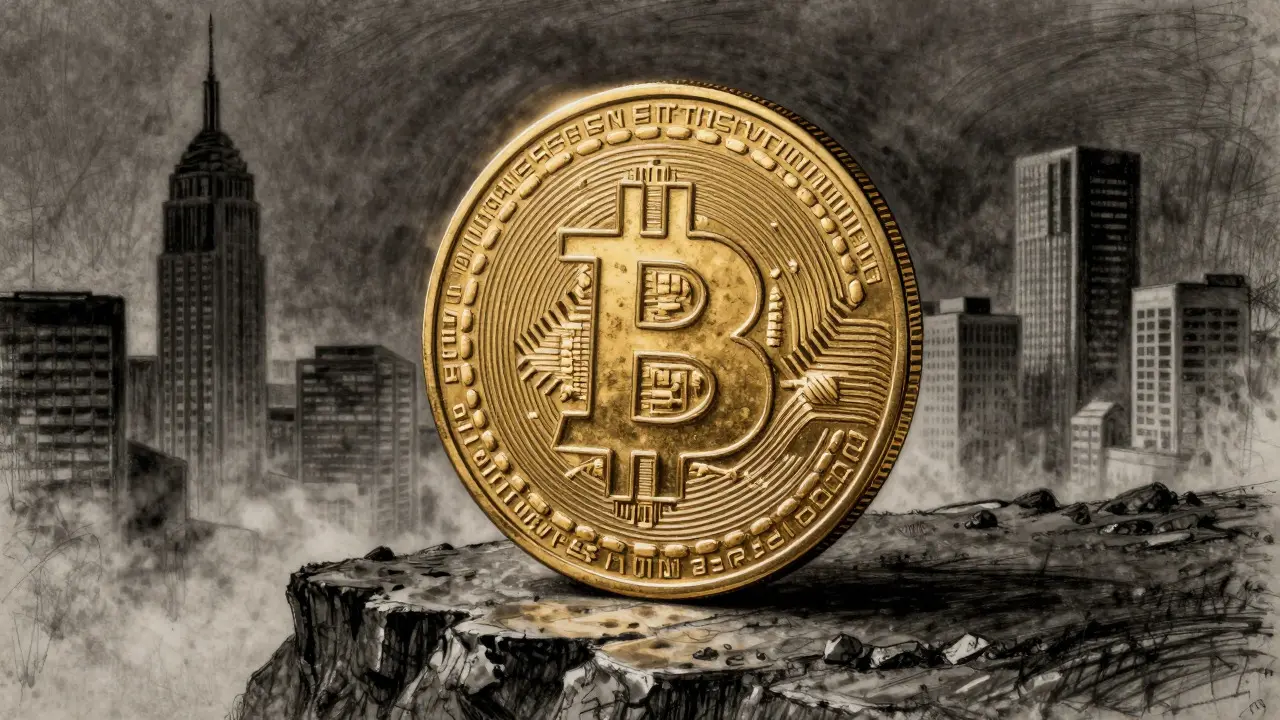
Why does Bitcoin hold this position? It’s simple: scarcity and security. There will only ever be 21 million BTC. In 2025, the price surged past $120,000, driven by massive inflows into spot Bitcoin ETFs and strategic government reserves. This wasn’t retail FOMO; this was pension funds, hedge funds, and sovereign wealth funds buying in. The narrative has shifted from "digital cash" to "institutional collateral." When you look at the chart, you see fewer violent crashes compared to previous cycles. The asset is maturing. It is becoming less volatile relative to its size, acting more like a bond than a tech stock.
For investors, Bitcoin is the baseline. It’s the low-risk (relatively speaking) entry point into crypto. You don’t buy Bitcoin expecting a 100x return next week. You buy it to preserve purchasing power against inflation and currency debasement. Its network hash rate-the computing power securing the chain-is higher than ever, making attacks economically unfeasible. That security premium is baked into its price.
The World Computer: Ethereum (ETH)
If Bitcoin is gold, Ethereum is oil. It powers things. In 2025, ETH outperformed Bitcoin with a year-to-date gain of over 30%, pushing its price toward $4,500. Why? Because developers keep building on it. Despite competition from faster chains, Ethereum’s ecosystem is too large to ignore. Most major financial protocols live here. The transition to Proof-of-Stake didn’t just reduce energy use; it created yield-bearing assets. You can stake your ETH and earn rewards, similar to earning interest on a savings account, albeit with higher risk.
The real moat for Ethereum is composability. Applications build on top of other applications. A lending protocol uses an oracle, which pulls data from a decentralized exchange, all secured by Ethereum. This "money lego" effect creates a sticky user base. While newer chains promise speed, Ethereum promises stability and liquidity. For institutions looking to tokenize real-world assets (RWA), Ethereum remains the preferred settlement layer due to its deep developer talent pool and established security model.
The Payment Contender: XRP
XRP’s journey has been turbulent, marked by long legal battles with regulators. But by 2025, clarity emerged. With a price around $3.00 and a market cap exceeding $180 billion, XRP proved that utility drives valuation. Banks and payment providers use RippleNet to settle transactions in seconds, bypassing the slow SWIFT system. This isn’t theoretical; it’s happening daily.
Critics argue that XRP isn’t a "true" decentralized blockchain because Ripple Holdings holds a significant portion of the supply. Supporters counter that efficiency matters more than ideology when moving billions of dollars across borders. XRP’s performance in 2025, with gains over 37%, reflects growing acceptance in traditional finance. It’s the choice for institutions that need speed and finality without the complexity of smart contracts.
The Stable Anchor: Tether (USDT)
You might think a token worth exactly $1.00 doesn’t deserve a spot in the "top" list, but volume tells a different story. Tether is used more than any other cryptocurrency for trading pairs. When traders want to exit a risky position, they sell into USDT. When they want to park cash without withdrawing to a bank, they use USDT. It’s the neutral ground.
The controversy surrounding Tether’s reserves has largely faded as transparency reports improved. By 2026, Tether is backed by short-term US Treasuries and commercial paper, making it a quasi-bank instrument. Its dominance highlights a key truth: crypto needs fiat bridges. Without stablecoins like USDT, the market would freeze during downturns. It’s not an investment for growth, but it’s essential for survival and strategy.
Rising Stars: BNB, Solana, and Hyperliquid
While the top three dominate, the battle for fourth through tenth places is fierce. Several projects have gained significant traction in 2025-2026.
- BNB (Binance Coin): Backed by the Binance exchange, BNB maintains a strong market presence due to its utility in paying fees and participating in launchpads. With consistent double-digit gains, it remains a favorite among active traders.
- Solana (SOL): Though not explicitly detailed in the 2025 snapshot provided, Solana has historically competed closely with Ethereum for high-throughput transactions. Its focus on speed and low costs attracts meme coins and retail users seeking cheap entry points.
- Hyperliquid (HYPE): A standout performer in 2025, HYPE delivered an 86% YTD gain. As a Layer-1 blockchain focused specifically on perpetual futures and advanced trading, it captures the appetite for high-performance DeFi. With a capped supply of 1 billion coins, it offers a deflationary pressure mechanism that appeals to investors.
These projects show that specialization wins. General-purpose chains face stiff competition from those optimized for specific tasks, like high-frequency trading or gaming. Investors should watch these mid-cap leaders closely, as they often exhibit higher beta (volatility) compared to Bitcoin and Ethereum.
Market Dynamics and Institutional Shifts
The structure of the crypto market in 2026 is fundamentally different from 2021. Then, retail speculation drove prices up and down. Now, institutional flows dictate trends. The approval of spot ETFs for Bitcoin and Ethereum changed everything. Traditional investors no longer need to manage private keys or trust shady exchanges. They can buy crypto through their brokerage accounts, just like stocks.
This shift reduces volatility over time but also concentrates power. Large asset managers like BlackRock and Fidelity control significant portions of the available supply. This means price movements are increasingly correlated with macroeconomic factors like interest rates and inflation data, rather than purely crypto-native news.
Regulatory clarity has also played a role. Governments worldwide are defining rules for custody, taxation, and securities classification. Projects that comply early, like XRP after its legal victories, gain a competitive advantage. Those that operate in gray areas face delisting risks and reduced liquidity.
| Cryptocurrency | Primary Use Case | Market Cap (Approx.) | Key Driver |
|---|---|---|---|
| Bitcoin (BTC) | Store of Value / Digital Gold | $2.4 Trillion | Institutional Adoption & Scarcity |
| Ethereum (ETH) | Smart Contracts / DeFi | $540 Billion | Developer Activity & Ecosystem |
| XRP | Cross-Border Payments | $181 Billion | Banking Partnerships & Speed |
| Tether (USDT) | Stable Medium of Exchange | $120+ Billion | Trading Liquidity & Fiat Bridge |
| Hyperliquid (HYPE) | High-Performance Trading | $14.8 Billion | DeFi Innovation & Yield |
Risks and Considerations for Investors
Despite the maturity, crypto remains risky. Regulatory changes can happen overnight. A new administration could impose stricter taxes or ban certain activities. Technological failures, while rare for top caps, are possible. Smart contract bugs have drained billions from smaller projects, and even Ethereum faces constant scrutiny.
Furthermore, correlation is rising. During broad market sell-offs, crypto often drops alongside tech stocks. Diversification within crypto-holding both Bitcoin and altcoins-helps, but holding crypto outside of traditional assets provides true diversification. Don’t invest money you can’t afford to lose, and always understand the underlying technology before buying.
Conclusion: Where Do We Go From Here?
The top cryptocurrencies by market cap represent the bedrock of the digital asset industry. Bitcoin offers safety and scarcity. Ethereum provides programmability and innovation. XRP delivers payment efficiency. Together, they form a triad that supports the broader ecosystem. As we move further into 2026, expect continued consolidation around these leaders. The "wild west" era is over. The age of institutional crypto has begun. For investors, this means lower potential multiples but higher reliability. Focus on fundamentals, track institutional flows, and stay informed about regulatory developments. The winners will be those who understand not just the price, but the purpose.
What determines the market capitalization of a cryptocurrency?
Market capitalization is calculated by multiplying the current price of a single coin by the total number of coins in circulation. For example, if Bitcoin trades at $120,000 and there are 19.7 million BTC circulating, the market cap is roughly $2.36 trillion. It reflects the total value investors place on the project.
Is Bitcoin still the dominant cryptocurrency in 2026?
Yes. Bitcoin maintains approximately 58% market dominance, meaning more than half of all crypto value is tied to BTC. Its status as digital gold and institutional reserve asset ensures its lead over competitors like Ethereum and XRP.
Why is Ethereum considered more volatile than Bitcoin?
Ethereum serves as a platform for applications, making its value dependent on developer activity, gas fees, and the success of DeFi/NFT ecosystems. Bitcoin is primarily a monetary asset. Changes in tech sentiment affect ETH more sharply, leading to higher volatility.
What role do stablecoins like Tether play in market cap rankings?
Stablecoins provide liquidity and stability. Their high market cap indicates the depth of trading activity in the crypto market. While they don’t appreciate in value like BTC or ETH, they are essential for traders to enter and exit positions quickly without converting to fiat currency.
How did institutional adoption impact crypto prices in 2025-2026?
Institutional adoption, particularly through Spot ETFs, brought trillions of dollars in traditional capital into crypto. This reduced reliance on retail speculation, stabilized prices, and pushed valuations higher based on long-term fundamentals rather than short-term hype.