
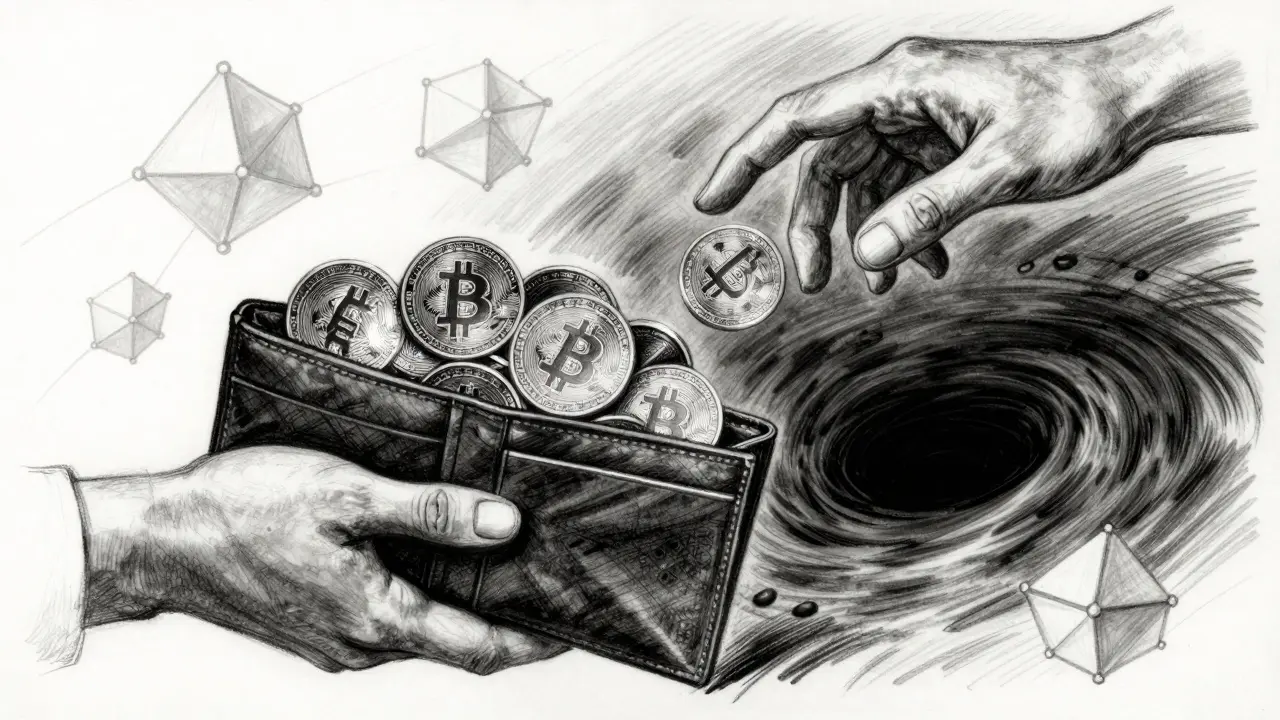
Imagine finding a wallet on the street filled with cash. You could keep it, spend it, or throw it into a river. In the physical world, throwing away money is usually seen as insanity. But in the world of cryptocurrency, which is a decentralized digital asset secured by cryptography, destroying value is often a strategic move. This process is known as a token burn, a mechanism where tokens are permanently removed from circulation. It sounds counterintuitive, but for blockchain projects, burning tokens is one of the most effective ways to manage supply, control inflation, and potentially increase the value of the remaining assets.
You might have heard headlines about Ethereum burning millions of dollars worth of ETH or Binance quarterly reducing its BNB supply. These aren't accidents; they are deliberate economic tools. Understanding how these mechanisms work-and how to implement them correctly-is crucial whether you are a developer building a new protocol or an investor trying to understand why a project's price might be rising despite broader market downturns.
The Core Logic: Scarcity and Supply Management
At its heart, a token burn is about basic economics: supply and demand. When the supply of an asset decreases while demand remains constant or increases, the price typically goes up. Token burning creates artificial scarcity. By sending tokens to an address that no one can access-often called a "burn address" or "null address"-those tokens are effectively destroyed. They still exist on the blockchain ledger, but they are locked forever, unable to be spent, transferred, or sold.
Why do projects do this? The primary goal is to combat inflation. Most blockchains issue new tokens over time to reward miners or validators. Without a counterbalance, the total supply grows indefinitely, diluting the value of each individual token. Burning acts as a deflationary pressure valve. For example, Ethereum, a global platform for programmable money, implemented EIP-1559, a protocol upgrade that burns transaction base fees in August 2021. This change meant that during busy periods, more ETH was burned than created, making the network temporarily deflationary. As of late 2023, this mechanism had burned approximately 2.5 million ETH, valued at billions of dollars.
However, burning isn't just about price manipulation. It also serves as a signal of commitment. When a team burns their own allocated tokens, they demonstrate that they are not planning to dump large amounts of supply onto the market later. This builds trust with the community. Projects like BNB, the native token of the Binance ecosystem, use scheduled burns to align their tokenomics with their long-term vision, having reduced their supply by over 40% since inception.
Types of Burn Mechanisms
Not all burns are created equal. Different projects use different strategies depending on their goals, technical architecture, and community structure. Here are the five most common approaches:
- Scheduled Burns: These happen at regular intervals, such as quarterly or annually. Binance’s BNB burn is the classic example. It offers predictability, allowing investors to model future supply reductions. However, markets often "price in" these events, meaning the immediate impact on price might be minimal because everyone expects it.
- Protocol-Driven Burns: Integrated directly into the blockchain’s code. EIP-1559 on Ethereum is the leading example here. Every time a transaction occurs, a portion of the fee is automatically burned. This method is transparent, automatic, and scales with network usage-the busier the network, the more tokens are burned.
- Buyback and Burn: The project uses revenue (from fees, services, or treasury funds) to buy tokens from the open market and then burn them. This directly reduces circulating supply and supports the price by creating consistent buying pressure. MEXC used this approach to help stabilize LUNA after its collapse, allocating $10 million for repurchases.
- Community-Driven Burns: Holders voluntarily send their tokens to a burn address. Shiba Inu popularized this with its burn portal, where users could burn SHIB to receive NFT rewards. While engaging, this relies heavily on participation rates and can be inconsistent.
- One-Time Large-Scale Burns: A single event where a massive amount of tokens is destroyed. Vitalik Buterin famously burned 410 trillion SHIB tokens in 2021. These create immediate shockwaves and media attention but don’t provide ongoing economic benefits.
| Strategy | Primary Benefit | Main Drawback | Best For |
|---|---|---|---|
| Scheduled | Predictability & Trust | Limited short-term price impact | Established exchanges (e.g., BNB) |
| Protocol-Driven | Automatic & Transparent | Complex to implement | Layer 1 blockchains (e.g., Ethereum) |
| Buyback & Burn | Direct supply reduction | Costly for the project | Revenue-generating platforms |
| Community-Driven | High engagement | Inconsistent participation | Meme coins & DAOs |
Technical Implementation: How to Burn Tokens
If you are a developer looking to implement a burn function, the technical side is surprisingly straightforward, but it requires extreme caution. One wrong line of code can lead to irreversible loss of funds-not just for the project, but potentially for users if the logic is flawed.
The standard method involves transferring tokens to a specific address that has no private key. On Ethereum-compatible chains, this is usually the null address (0x0000000000000000000000000000000000000000) or the dead address (0x000000000000000000000000000000000000dEaD). Because no one possesses the private key for these addresses, the tokens sent there are mathematically inaccessible.
Here is a simplified breakdown of the implementation steps for an ERC-20 token:
- Define the Burn Function: Create a public function in your smart contract that accepts an amount parameter. This function should call the underlying transfer function, directing the tokens to the burn address.
- Set Access Controls: Decide who can trigger the burn. Is it anyone holding the token? Only the contract owner? Or is it automated based on certain conditions (like every 100 transactions)? Use modifiers like
onlyOwneror role-based permissions to restrict access if necessary. - Update Total Supply: After the transfer, subtract the burned amount from the
_totalSupplyvariable. This ensures that the blockchain accurately reflects the reduced supply. - Emit Events: Log the burn event. This allows explorers like Etherscan to track and display the burn history, providing transparency to users.
- Test Rigorously: Before deploying to the mainnet, test the burn function extensively on a testnet. Verify that the balance of the sender decreases, the balance of the burn address increases (though it’s unreachable), and the total supply updates correctly.
A critical warning: Never hardcode the burn address in a way that prevents future upgrades or audits. Instead, consider using a standardized library like OpenZeppelin’s ERC20Burnable, which provides a secure, audited implementation of burn functions. According to a 2023 ConsenSys survey, simple burns can be implemented in 2-3 days by developers with basic Solidity knowledge, but complex protocol-level integrations require 6-8 weeks of specialized engineering.
Risks and Pitfalls: What Can Go Wrong?
While the concept is simple, execution carries significant risks. Security experts warn that improperly configured burn functions can lead to accidental token destruction or create vulnerabilities exploitable by malicious actors. In 2022, a documented case saw $2.3 million in user funds accidentally burned due to interface errors-a stark reminder that precision matters.
Another major risk is regulatory scrutiny. The U.S. Securities and Exchange Commission (SEC) has indicated that token burns could constitute unregistered securities transactions if they are perceived as attempts to manipulate prices. Projects must ensure their burn mechanisms are tied to genuine utility or economic stability rather than pure speculation. Similarly, the European Securities and Markets Authority (ESMA) has flagged burn mechanisms as potential market manipulation vectors, suggesting future regulations may require greater transparency around burn motivations.
From a community perspective, burns can backfire if they are not communicated clearly. If a project burns tokens without explaining why, holders may view it as a desperate attempt to prop up the price. Conversely, if a burn is too aggressive, it can reduce liquidity, making it harder for users to trade the token. Finding the right balance is key.
The Future of Burn Mechanisms
As the cryptocurrency ecosystem matures, burn mechanisms are evolving beyond simple supply reduction. We are seeing the rise of "burn-to-access" models, where burning tokens grants users entry to premium features or exclusive communities. Projects like STEPN have experimented with this, tying utility directly to the act of burning. Messari predicts that such utility-driven models will grow by 200% annually through 2025.
Additionally, dynamic burn models are gaining traction. Instead of fixed schedules, some protocols are exploring algorithms that adjust burn rates based on network usage, revenue, or even external market conditions. Chainlink’s proposed "burn-and-mint equilibrium" model aims to dynamically adjust burns to maintain stability, representing a shift toward more sophisticated, responsive tokenomics.
For developers and investors alike, understanding these nuances is essential. A burn is not a magic bullet for increasing value; it is a tool. Like any tool, its effectiveness depends on how well it is integrated into the broader economic design of the project. When combined with strong utility, transparent governance, and robust security, token burning can be a powerful engine for sustainable growth.
What is a burn address in blockchain?
A burn address is a special wallet address that has no known private key. Because no one can access the private key, tokens sent to this address cannot be retrieved, spent, or transferred. Effectively, they are destroyed. Common examples include Ethereum's null address (0x000...000) or the dead address (0x000...dEaD).
Does burning tokens always increase the price?
No. While burning reduces supply, which theoretically supports higher prices, it does not guarantee price appreciation. Market sentiment, overall demand, utility, and broader macroeconomic factors play larger roles. Studies show that only about 32% of burn events result in statistically significant price increases within a week, indicating that burns alone are insufficient for sustained value growth.
How does Ethereum's EIP-1559 burn work?
EIP-1559 changed how transaction fees are handled on Ethereum. It introduced a "base fee" that is automatically burned whenever a transaction is processed. The higher the network congestion, the higher the base fee, and thus the more ETH is burned. This makes the burn rate proportional to network usage, creating a deflationary pressure during busy periods.
Can I burn my own tokens?
Yes, if the token contract supports a burn function. Many ERC-20 tokens allow holders to burn their own tokens by sending them to a designated burn address or calling a specific burn function in the contract. Some projects, like Shiba Inu, even provide portals to facilitate this process, sometimes offering rewards like NFTs for participating.
Is token burning legal?
Generally, yes, but it operates in a regulatory gray area. Regulators like the SEC have warned that burns designed to manipulate prices could be considered illegal securities activities. Projects must ensure their burn mechanisms are transparent, tied to legitimate economic functions, and not used to artificially inflate values for deceptive purposes.