Most people searching for Taroverse are trying to figure out if this crypto coin is a solid investment or just another hype-driven metaverse project. The short answer? It’s an ambitious multi-game platform on the BNB Chain that promises a shared social world where you can play different games using one account and one token. But like many micro-cap tokens, it comes with significant risks, including low liquidity and confusing data across different tracking sites.
If you’re considering buying TARO or just want to understand what it does, this guide breaks down the project, its tokenomics, and where it stands in the market as of mid-2026.
What is Taroverse?
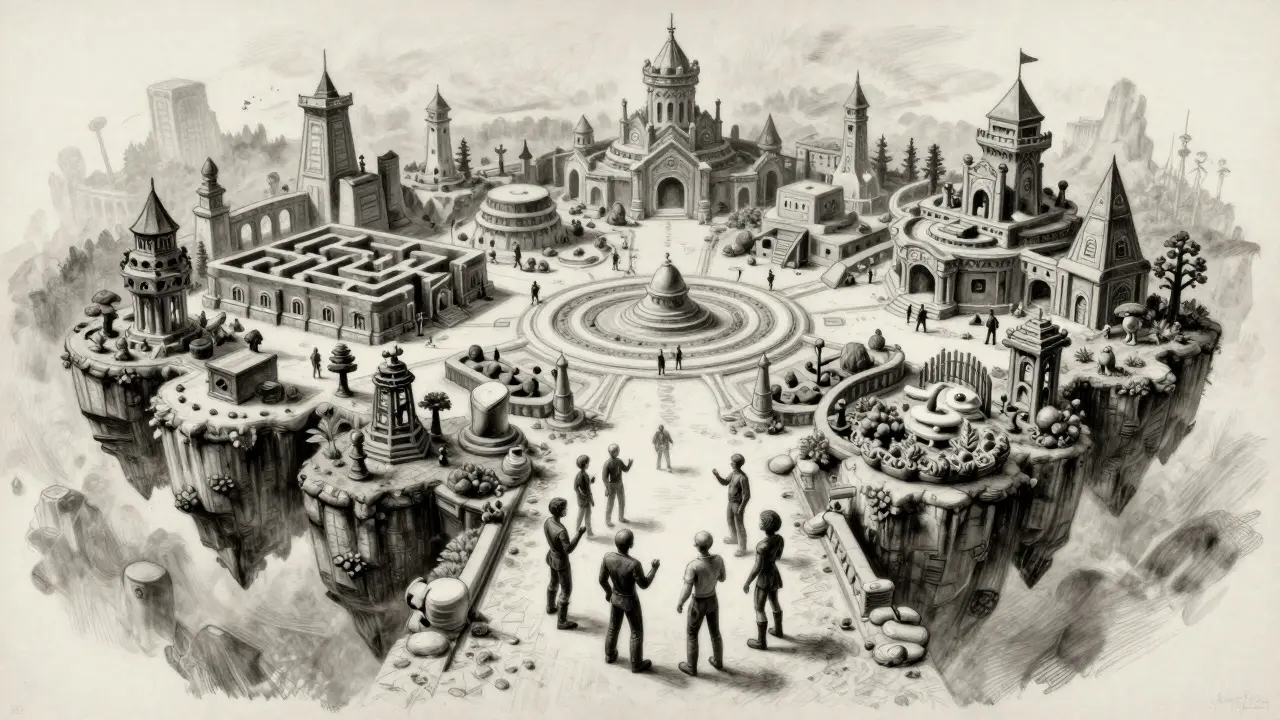
Taroverse is a blockchain-based, open-world metaverse designed to connect multiple play-to-earn games through a shared virtual island. Unlike single-game projects that trap your assets in one title, Taroverse aims to let players move their avatars, NFTs, and currency between different games seamlessly. Think of it less like a single video game and more like a digital town square where several distinct experiences coexist.
The core idea is social interaction. Players use real-time 3D avatars to chat via voice or text, attend concerts, dance at discos, and participate in mini-games. The ecosystem was built to be cross-platform, meaning you can access the experience on Android, iOS, Windows, and macOS devices. This flexibility is a key differentiator for gamers who don’t want to be locked into a specific hardware setup.
At launch, the project highlighted four main titles:
- Taro Gem Quest: A puzzle-style adventure.
- Monster Bash: An action-oriented combat game.
- Tactics Royale: A strategy-focused battle royale.
- Tarogotchi: A virtual pet companion experience.
These games are connected by the "open world island," which serves as the hub for social events and asset management. If you own an NFT in one game, it should theoretically hold value and utility in others, creating a circular economy within the Taroverse universe.
The TARO Token: Utility and Governance
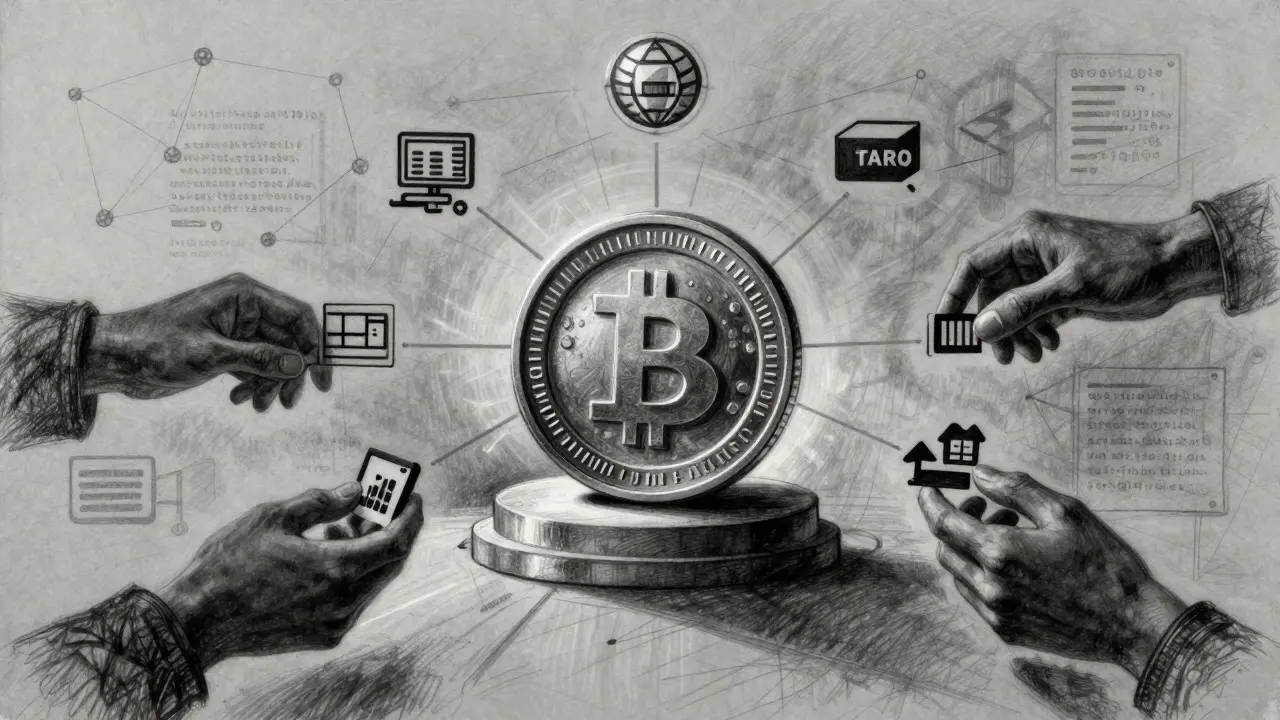
The native currency of this ecosystem is the TARO token, which operates on the BNB Smart Chain. It isn't just a speculative asset; it has defined roles in the gameplay loop.
Here’s how you actually use TARO in the metaverse:
- In-Game Currency: Buy items, tickets for events, and rewards for completing quests.
- NFT Marketplace Payments: Purchase or sell digital collectibles. The marketplace charges a fixed 6% fee per transaction, which is split among development and reward pools.
- Staking and Yield Farming: Holders can lock up TARO to earn additional rewards, supporting the network's economic stability.
- Governance: Token holders can vote on future developments, such as new game launches or fee adjustments.
One unique mechanic is the "No Loss Lottery System" for acquiring certain NFTs, ensuring that even if you don't win the primary prize, you get some form of return. Additionally, players can merge or dismantle NFTs to gain gameplay advantages, all paid for in TARO.
Tokenomics and Supply Details
Understanding the supply structure is crucial for evaluating potential price movements. Here are the key figures documented since the token generation event (TGE) on April 26, 2022:
| Attribute | Value |
|---|---|
| Total Supply | 2,000,000,000 TARO |
| Initial Circulating Supply (2022) | ~42,111,111 TARO |
| Fundraising Hardcap | $4,800,000 USD |
| Primary Network | BNB Smart Chain (BEP-20) |
| Cross-Chain Support | Polygon, OKX Chain |
It’s worth noting that about 70% of the initial fundraising ($3.36 million out of $4.8 million) went to private sales, involving venture backers like ExNetwork Capital and Oddiyana Ventures. This is typical for early-stage crypto projects seeking strategic support before retail investors enter the picture.
However, there is a significant issue with data consistency. Different trackers report wildly different circulating supplies. Some show zero circulation, while others list over 270 million tokens. This discrepancy often stems from how platforms interpret vesting schedules and on-chain data. Always verify the contract address on BscScan before making decisions, as other tokens share the "TARO" ticker (such as RobotEra), leading to frequent confusion.
Market Performance and Risks
Let’s be honest: Taroverse is a micro-cap token. As of mid-2026, its market capitalization fluctuates between roughly $12,000 and $35,000, depending on the source. To put that in perspective, Bitcoin’s market cap is in the trillions. TARO trades at fractions of a cent, often hovering around $0.00004 to $0.0003 per token.
The price history shows a classic pattern for many 2022-era metaverse coins: a spike near the all-time high shortly after launch, followed by a steep decline. By late 2025, TARO was trading nearly 99.8% below its peak. While it has seen minor recoveries, the overall trend remains downward.
The biggest risk here is liquidity. On major exchanges, daily trading volume is often negligible-sometimes under $1,000. This means if you try to buy or sell a large position, you might face significant slippage (getting a worse price than expected). For casual traders, this is manageable, but for anyone looking to invest substantial sums, the exit strategy is risky.
Additionally, community engagement appears limited compared to larger gaming projects. With only about 4,000 holder addresses reported on-chain in early 2026, the user base is small. Without a vibrant community driving adoption, the long-term viability of the metaverse concept depends heavily on the development team delivering promised features consistently.

How to Buy TARO
Since TARO isn't listed on major centralized exchanges like Coinbase or Binance for direct trading, you’ll need to go through decentralized exchanges (DEXs) on the BNB Chain. Here’s the basic process:
- Get a Wallet: Download a BSC-compatible wallet like MetaMask or Trust Wallet.
- Buy BNB: Acquire BNB on a major exchange and transfer it to your wallet to pay for gas fees.
- Swap for TARO: Use a DEX like PancakeSwap V2 or Biswap. Find the official TARO contract address (verify it on CoinMarketCap or BscScan to avoid scams).
- Connect and Swap: Connect your wallet, select the BNB/TARO pair, and execute the swap.
Be cautious of fake tokens. Because several projects use the "TARO" ticker, always double-check the contract address before swapping. One wrong click could leave you holding a worthless duplicate token.
Is Taroverse Worth It in 2026?
Whether TARO is a good buy depends entirely on your risk tolerance. If you believe in the long-term potential of cross-game metaverses and are willing to hold a highly volatile, low-liquidity asset for years, it might fit your portfolio. The technical architecture is sound, and the multi-game design is genuinely innovative compared to standalone titles.
However, if you’re looking for quick gains or stable returns, look elsewhere. The lack of mainstream exchange listings, inconsistent data reporting, and minimal trading volume make it a speculative bet rather than a fundamental investment. Keep an eye on whether the team releases new games or updates the social hub, as these milestones are the only things likely to drive renewed interest and liquidity.
What chain is Taroverse built on?
Taroverse primarily operates on the BNB Smart Chain (BSC) using the BEP-20 standard. However, it also supports Polygon and OKX Chain for cross-chain interoperability, allowing users to move assets between networks.
How many TARO tokens are in circulation?
Data varies significantly by tracker. Initially, about 42 million tokens were released in 2022. Recent reports in 2026 suggest circulating supplies ranging from 100 million to over 270 million, but always verify on-chain data via BscScan for the most accurate current figure.
Can I play Taroverse games on mobile?
Yes, Taroverse is designed to be cross-platform. You can access the metaverse and its associated games on Android, iOS, Windows, and macOS devices, giving players flexibility in how they engage with the ecosystem.
What is the difference between Taroverse TARO and RobotEra TARO?
They are completely different projects that unfortunately share the same ticker symbol. Taroverse is a multi-game metaverse, while RobotEra is a separate robot-themed game. Always check the contract address to ensure you are buying the correct token.
Where can I buy TARO safely?
The safest way to buy TARO is through reputable decentralized exchanges on the BNB Chain, such as PancakeSwap V2. Avoid unknown third-party websites and always verify the token contract address against official sources like CoinMarketCap or the project's whitepaper.
It is truly fascinating how the modern investor prefers the illusion of decentralization over the tangible reality of liquidity. One must ask oneself if the 'social hub' is not merely a euphemism for a place where assets go to die in silence. The moral hazard of such speculation is evident to anyone with eyes.
They are definitely hiding something. Why else would the circulating supply data be so inconsistent? It’s a classic move by deep state crypto influencers to confuse retail so we don’t notice the exit liquidity is already gone. Trust no one but your own wallet! 😱🕵️♀️
The concept is flawed. A metaverse without strong utility is just a chat room. I have seen many such projects rise and fall. The key is retention, which this project lacks. Do not be fooled by the graphics.
Just wanted to add a quick note for anyone looking at the contract address. Always double-check on BscScan because the RobotEra ticker confusion is real and can cost you everything. Stay safe out there! :)
You all need to stop ignoring the community aspect. If people aren't talking about it, it's dead. This is why you should be buying more now while it's cheap. Don't let FOMO get you later. :P
the soul of the token is empty... only the body remains on the chain. we are all just shadows dancing in the light of the blockchain sun. do you feel the pain of the slippage?
Look, the tech is fine. BNB chain is fast and cheap. The problem is the marketing. They didn't push hard enough. If you look at the volume charts, its basically flatline. But if they drop a new game soon, watch out. That's when the magic happens. Or not. We'll see.
One must consider the macroeconomic implications of such low-cap assets. The correlation with broader market sentiment is weak, suggesting an isolated failure of narrative. It is highly probable that the developers have already offloaded their positions to private investors who know better than us.
Ugh, another microcap disaster. The writing is on the wall. Who has time for this? The UI looks dated and the community is silent. Just wait for the next big thing. This is trash. 💅📉
Buy the dip. Hold for years. Ignore the noise. The fundamentals are there if you look closely. Don't let the haters scare you. Action over words.
honestly i think the multi-game idea is cool. like imagine playing a strategy game then walking into a concert in the same world. its kinda wild. the tech might actually work if they keep updating. im optimistic about the social side of things. lets hope they dont quit. 🎮✨
From a cultural perspective, the integration of voice chat and shared spaces is interesting. It mirrors our physical social structures. However, the adoption rate will determine success. We must remain open to new possibilities in digital interaction.
everyone says its a scam but i bet its going to moon. the bears always win in the short term right? well not this time. the elites hate this project because it disrupts the old guard. wake up sheeple
Let’s be precise here. The liquidity is critically low. The risk-adjusted return is negative. If you are not prepared for total loss, stay away. Do not conflate 'ambition' with 'value'. It is a distinct difference, and most of you seem to miss it entirely!!
feels like a lot of hype for very little substance. i checked the discord and its mostly bots. sad really. i had high hopes but now im just waiting for it to disappear completely. ugh
Let’s dissect the alpha here. The 6% marketplace fee is a significant drag on velocity. Combined with the low TVL, the yield farming incentives are likely insufficient to attract serious capital. The tokenomics suggest a deflationary pressure that is purely theoretical. Unless the DAU spikes, the burn rate won’t offset the inflation from staking rewards. It’s a classic value trap. Watch the order book depth; it’s thin as paper. One whale dump could crash the price by 50%. The social graph is weak, meaning network effects are negligible. In summary, the fundamental floor is non-existent. You’re trading on pure sentiment, which is fragile. Keep your position sizes small or better yet, stay away. The risk/reward ratio is skewed heavily towards risk. Don’t fall for the 'metaverse' bandwagon. It’s a relic of 2021 thinking. The future is DePIN, not virtual islands. Wake up.
Great point about the fee structure. I also noticed that the staking APY drops significantly once you account for gas fees on BSC. It makes the yield farming less attractive than it appears on the surface. :(
Yeah exactly. And dont forget the cross-chain bridges. Polygon support is nice but adds another layer of risk. Bridge hacks are common. So you have to trust two chains instead of one. Makes me nervous.