
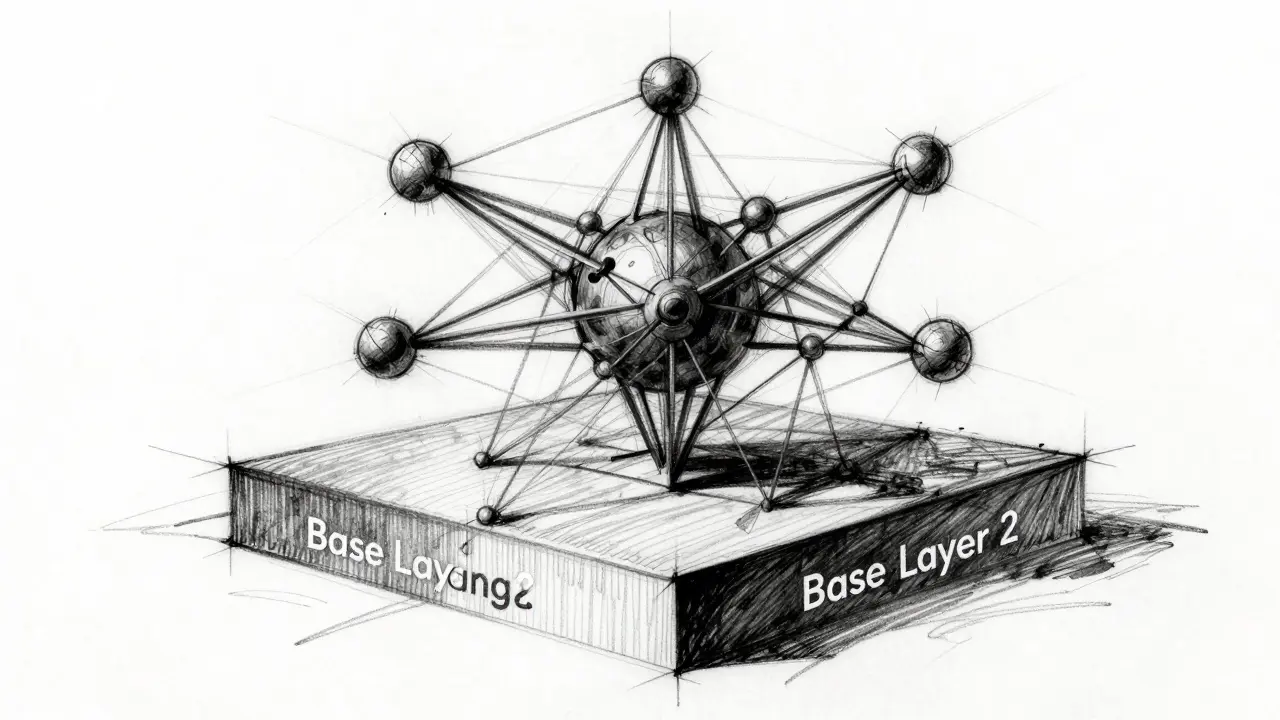
Trading perpetual futures used to mean choosing between the convenience of centralized exchanges or the headache of high gas fees and complex interfaces. SynFutures is a next-generation decentralized derivatives exchange that combines AI-driven optimization with perpetual futures trading on Base Layer 2. Also known as SynFutures DEX, it launched as a pioneering force in the DeFi space, aiming to make derivative trading accessible without sacrificing security or cost-efficiency. With the release of SynFutures v2, the platform has doubled down on its promise: faster execution, lower slippage, and a broader range of synthetic assets. But does the upgrade live up to the hype, or is it just another buzzword-heavy update?
I’ve spent weeks testing the interface, analyzing the tokenomics of the F token, and comparing the fee structures against competitors like dYdX. Here is what you need to know before you connect your wallet.
Why SynFutures Stands Out in the DeFi Derivatives Market
The decentralized finance landscape is crowded. You have established players offering spot trading, lending, and basic swaps. Derivatives, however, remain a niche due to the technical complexity involved in managing risk and liquidity. SynFutures addresses this by integrating artificial intelligence into its core infrastructure. This isn’t just marketing fluff; the AI models actively optimize liquidity provisioning and risk assessment in real-time.
Unlike traditional Automated Market Makers (AMMs) that rely on static formulas, SynFutures uses predictive analytics to adjust parameters dynamically. This means less slippage for large orders and better capital efficiency for liquidity providers. The platform operates as a permissionless marketplace, allowing users to list and trade synthetic assets ranging from blue-chip cryptocurrencies to NFTs and even Bitcoin hash rates. This breadth of options makes it one of the most expansive decentralized derivatives marketplaces available today.
- AI-Enhanced Execution: Machine learning algorithms minimize price manipulation risks and improve order fill rates.
- Synthetic Asset Diversity: Trade exposure to non-crypto assets like real estate indices or commodity prices via synthetic tokens.
- Permissionless Listing: Anyone can create a new market if they provide sufficient collateral, democratizing access to niche derivatives.
The Power of Base Layer 2 Integration
One of the biggest pain points in DeFi has always been network congestion. Ethereum mainnet transactions can be slow and expensive, especially during periods of high volatility. SynFutures solves this by building directly on Base Layer 2, Coinbase’s optimistic rollup solution. This integration brings several tangible benefits to traders.
First, transaction costs are drastically reduced. While Ethereum gas fees can spike to $50 or more per transaction, trades on Base typically cost fractions of a cent. This makes frequent trading strategies, such as scalping or hedging, actually viable for retail users. Second, the speed is comparable to centralized exchanges. Orders execute in seconds, not minutes. Third, you retain full custody of your funds. Unlike centralized platforms where you trust the exchange with your private keys, SynFutures keeps your assets in your own wallet until the moment of trade execution.
The interoperability with the Ethereum ecosystem is also seamless. You can easily bridge assets from Ethereum mainnet to Base using standard bridges, ensuring liquidity flows smoothly between layers. This setup provides the best of both worlds: the security guarantees of Ethereum with the performance of a Layer 2 scaling solution.
SynFutures v2: What Changed?
The transition to version 2 represents a significant overhaul of the platform’s architecture. While the core value proposition remains the same, the user experience and underlying mechanics have been refined. The most noticeable improvement is in the risk engine. The new smart contracts are more robust, handling edge cases in liquidation scenarios more gracefully than the previous version.
Liquidity pools have been optimized to reduce impermanent loss for providers. The AI models now factor in broader market sentiment data, adjusting funding rates more accurately to reflect true supply and demand. Additionally, the interface has been simplified. New users will find the dashboard more intuitive, with clearer indicators for open interest, funding rates, and position health factors. These changes signal a maturation of the product, moving from an early-stage experiment to a polished trading tool.
| Feature | SynFutures v1 | SynFutures v2 |
|---|---|---|
| Risk Engine | Basic liquidation logic | AI-enhanced dynamic risk assessment |
| Liquidity Efficiency | Standard AMM curves | Predictive analytics for optimal depth |
| User Interface | Complex, developer-focused | Streamlined, retail-friendly dashboard |
| Asset Support | Crypto pairs only | Crypto, NFTs, Hash Rates, Synthetics |
Tokenomics and Price Analysis of the F Token
Every DeFi protocol has a governance token, and SynFutures is no exception. The F token serves multiple purposes within the ecosystem. It is used for governance voting, staking to earn rewards, and potentially for fee discounts. Understanding the tokenomics is crucial for anyone considering long-term involvement with the platform.
Price predictions for F vary widely across analytical sources. Some forecasts suggest potential highs of $0.0862 in 2025, representing a significant increase from current levels. However, other models project more modest gains, with ranges between $0.017 and $0.032. This discrepancy highlights the inherent volatility of cryptocurrency markets. Factors influencing the price include adoption rates of the v2 upgrade, total value locked (TVL) growth, and broader market trends in the crypto sector.
Historical performance shows high volatility. For instance, September 2025 saw a notable 95% increase, while other months experienced declines of over 40%. Traders should approach F with caution, recognizing that short-term price movements are often driven by speculation rather than fundamental utility. Long-term holders may benefit from the platform’s growing dominance in the AI-enhanced derivatives space, but timing the market remains challenging.
How SynFutures Compares to Competitors
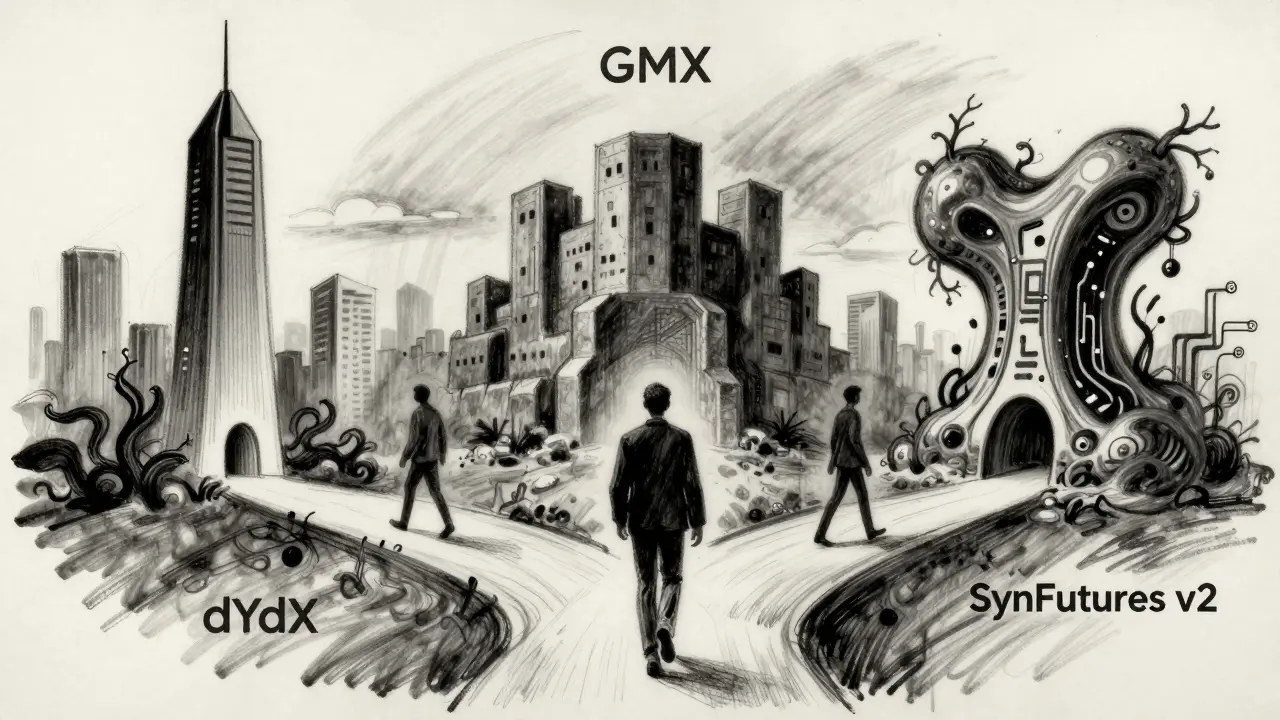
To truly evaluate SynFutures, you need to look at its direct competitors. The primary rival in the decentralized derivatives space is dYdX. Both platforms offer perpetual futures trading with low fees and self-custody. However, their approaches differ significantly.
dYdX relies on StarkWare technology to achieve scalability, focusing heavily on eliminating gas fees entirely through volume-based fee structures. SynFutures, on the other hand, leverages Base Layer 2 for low-cost transactions and differentiates itself through AI-driven optimization. While dYdX offers a more streamlined experience for pure crypto traders, SynFutures provides a broader array of synthetic assets and advanced tools for those interested in diversified portfolios.
Another competitor is GMX, which operates on Arbitrum and Avalanche. GMX is known for its simple interface and deep liquidity but lacks the AI components and synthetic asset variety found on SynFutures. If you prioritize simplicity and established track record, GMX might be preferable. If you want cutting-edge technology and diverse trading opportunities, SynFutures v2 offers a compelling alternative.
| Platform | Layer 2 Network | Key Differentiator | Fee Structure |
|---|---|---|---|
| SynFutures | Base | AI Optimization & Synthetics | Low Gas + Trading Fees |
| dYdX | StarkNet | No Gas Fees | Volume-Based Only |
| GMX | Arbitrum/Avalanche | Simplicity & Liquidity | Flat Trading Fees |
Risks and Considerations for Traders
While SynFutures offers many advantages, it is not without risks. As a decentralized platform, smart contract vulnerabilities are always a concern. Although the v2 upgrade includes enhanced security measures, no code is completely immune to exploits. Users should always start with small positions to familiarize themselves with the platform’s mechanics.
Leverage trading amplifies both gains and losses. Perpetual futures allow traders to use leverage, which can lead to rapid liquidation if the market moves against them. The AI risk engine helps mitigate some of these risks by adjusting margins dynamically, but it does not eliminate the possibility of losing capital. Proper risk management, including setting stop-losses and monitoring funding rates, is essential.
Regulatory uncertainty also looms over the DeFi sector. Governments worldwide are still figuring out how to classify and regulate decentralized exchanges. While operating on Base Layer 2 provides some legal clarity due to Coinbase’s association, the permissionless nature of synthetic asset creation could attract regulatory scrutiny. Traders should stay informed about legal developments in their jurisdiction.
Getting Started with SynFutures v2
If you decide to try SynFutures, the process is straightforward. First, ensure you have a compatible wallet, such as MetaMask or Coinbase Wallet. Next, bridge ETH or USDC from Ethereum mainnet to Base Layer 2 using a trusted bridge service. Once your funds are on Base, visit the SynFutures website and connect your wallet.
Navigate to the trading interface and select the market you wish to trade. You can choose from various perpetual contracts, including BTC, ETH, and synthetic assets. Set your position size, leverage level, and take-profit/stop-loss orders. Confirm the transaction in your wallet, and you’re ready to trade. Remember to monitor your position closely, especially in volatile markets.
For liquidity providers, the process involves depositing assets into specific pools. The AI optimizer will allocate your capital efficiently, generating yields from trading fees and incentives. Always check the pool’s historical performance and risk metrics before committing funds.
Is SynFutures safe to use?
SynFutures employs rigorous security audits and AI-driven risk engines to protect users. However, as with any DeFi platform, there are inherent smart contract risks. It is advisable to start with small amounts and never invest more than you can afford to lose.
What is the difference between SynFutures v1 and v2?
Version 2 introduces improved AI optimization for liquidity and risk, a more user-friendly interface, and expanded support for synthetic assets beyond traditional crypto pairs. The risk engine is also more sophisticated, reducing the likelihood of unfair liquidations.
How do I bridge funds to Base Layer 2?
You can use official bridges provided by Coinbase or third-party services like Hop Protocol or Orbiter. Ensure you have enough ETH on the Ethereum mainnet to cover gas fees for the bridging transaction.
Can I trade non-crypto assets on SynFutures?
Yes, SynFutures allows permissionless listing of synthetic assets. This means you can trade derivatives based on NFTs, Bitcoin hash rates, and other real-world assets, provided there is sufficient liquidity and collateral backing the market.
What happens if my position gets liquidated?
If your collateral falls below the maintenance margin requirement, your position will be automatically closed to prevent further losses. The remaining collateral is returned to your wallet, minus any liquidation penalties. Using stop-loss orders can help manage this risk.
I've been watching the Base ecosystem closely since the launch and this v2 update actually looks like a solid step forward for derivatives. The AI risk engine is interesting but I wonder if it's just marketing or if there's real math behind it 🤔
another ai wrapper on top of base layer 2 how original. i bet the 'predictive analytics' are just lagging indicators repackaged as machine learning buzzwords to scare retail into giving up their keys
One must question the sheer audacity of comparing this platform to dYdX which has established itself as the gold standard in decentralized perpetuals. The notion that an AI-driven optimization on a secondary L2 solution can rival StarkWare's proven architecture is, frankly, preposterous and demonstrates a profound lack of understanding regarding cryptographic security proofs.
i think its really cool that they are trying to make things easier for people who dont want to deal with high gas fees on mainnet because honestly those fees are so stressful and i always feel like im losing money just by moving my assets around so maybe this helps some folks out there who are struggling with the complexity of defi
it sounds promising especially for those of us who find the current options overwhelming. lower fees mean more room for error which is nice for beginners like me. lets hope the interface stays intuitive as they add more features
why should we trust a platform built on coinbase infrastructure when we know big tech is always looking for ways to backdoor our data? american users need to stick to platforms that respect privacy and not these corporate shills pushing synthetic assets that could be regulated out of existence tomorrow
the idea that ai can optimize liquidity is a classic red herring designed to distract from the fact that the smart contracts are likely unaudited and vulnerable to sandwich attacks. i suspect the 'ai' is just a script owned by the devs to front-run large orders while claiming it is helping you. do not connect your wallet unless you want to lose everything
Hey everyone! 👋 I think it's great to see innovation happening in the DeFi space. The concept of using AI to reduce slippage is fascinating and could really help democratize access to trading for everyday people. Let's keep an open mind and support projects that try to improve the user experience! 🚀✨
oh wow another review for a project that probably won't exist in six months. i'm so tired of reading about 'next-gen' solutions that are just rebranded scams. why do people fall for this every single time? it's exhausting 🙄💔
base l2 is good but indian traders still face issues with onboarding. however if the fees are low then it might work for small amounts. let's see if it survives the next bull run 🇮🇳
too many words too little substance. just tell me if i can make money or not. also the ui looks ugly from the screenshots. waste of time
the delta-neutral strategies available through synthetic assets are intriguing. if the oracle latency is managed well via the L2 rollup, the arb opportunities between spot and perp markets could be significant for sophisticated bots. curious about the MEV protection though
i tried bridging to base last week and it was such a smooth process compared to arbitrum. hoping synfutures delivers on the promise of easy trading. fingers crossed it doesnt rug pull like half the other projects do these days 😅
It is quite interesting to observe the evolution of decentralized exchanges. The integration of artificial intelligence seems to be a logical progression towards more efficient markets. However, one must remain cautious about the centralization risks inherent in AI models.
another american made platform trying to dominate global markets. typical. i doubt anyone outside the us will use this. the regulatory environment here is already hostile enough without adding more complex derivatives
Wow, the potential for growth here is massive! I can already imagine the community coming together to build amazing tools around this. Don't let the haters get you down, the future of finance is decentralized and exciting! 💪🌟
when we consider the philosophical implications of algorithmic trading we must ask ourselves if removing human intuition truly leads to better outcomes or simply amplifies systemic risks. the long tail of market events often defies predictive models regardless of their sophistication
Great breakdown! 👍 For anyone new to this, remember to start small. The AI features are cool but don't ignore basic risk management. Always check your stop losses before entering a position. Happy trading! 📈