

You might have heard about OpenLeverage (OLE) a few years ago as a promising decentralized finance (DeFi) protocol. But if you are looking at it today in May 2026, the picture looks very different. The platform that once promised seamless cross-chain margin trading is now struggling with severe liquidity issues, declining user activity, and critical exchange delistings.
This isn't just a dip in the market; it's a fundamental shift in the protocol's viability. Before you connect your wallet or consider buying OLE tokens, you need to understand what has changed. We will break down the current state of OpenLeverage, compare it to stronger competitors, and help you decide whether this protocol still has any place in your trading strategy.
What Exactly Is OpenLeverage?
First, let’s clear up a common misconception. OpenLeverage is not a traditional cryptocurrency exchange like Binance or Coinbase. It is a permissionless lending and margin trading protocol. Instead of holding your funds, it uses smart contracts to aggregate liquidity from various decentralized exchanges (DEXs).
The goal was simple: allow traders to open long or short positions on any pair by creating custom lending pools. Launched with backing from Binance Labs and Creative Destruction Lab, it aimed to solve liquidity fragmentation in DeFi. On paper, the idea was solid. In practice, however, execution has been challenging.
OpenLeverage operates primarily on three networks: Ethereum, BNB Chain, and KuCoin Community Chain (KCC). While this multi-chain approach sounds flexible, it also means users deal with varying gas fees and network congestion issues, which we’ll discuss shortly.
Current Status: Liquidity Crisis and Delistings
If there is one thing you need to know before interacting with OpenLeverage, it is the state of its liquidity. As of early 2026, the Total Value Locked (TVL) in the protocol has dropped significantly from its peak of $14.5 million. Recent data shows daily trading volumes hovering around a mere $12,000-a stark contrast to its historical cumulative volume of over $700 million.
Why does this matter? Low liquidity means high slippage. If you try to trade larger amounts, you won’t get the price you expect. Analytics show slippage exceeding 8.7% on trades above $5,000. For context, that is an enormous loss for a single transaction.
Compounding this issue is the Crypto.com Exchange delisting. Scheduled for October 22, 2025, this removal was officially announced due to "insufficient liquidity depth and declining user engagement." This move drastically reduced where you can buy or sell OLE tokens, leaving only smaller DEXs like Uniswap and PancakeSwap.

Risks You Need to Know About
Trading on OpenLeverage comes with specific risks that go beyond standard market volatility. Here are the critical factors you must consider:
- Token Dilution: Only 18.86% of OLE tokens are currently in circulation. That means 81.14% remain in reserve. As these tokens enter the market, they could cause significant downward pressure on the price.
- Smart Contract Risks: While OpenLeverage has been audited by reputable firms like PeckShield, Code4Rena, and Certik, no audit guarantees safety. DeFi protocols are frequent targets for exploits.
- Network Congestion: During Ethereum peaks, transaction confirmation times can jump from 15 seconds to nearly three minutes. This delay can be disastrous for margin trading, where timing is everything.
- Concentrated Holdings: A small group controls most of the supply. Data indicates that the top 10 wallet addresses hold 68.3% of the circulating supply. This concentration creates vulnerability to manipulation.
How OpenLeverage Compares to Competitors
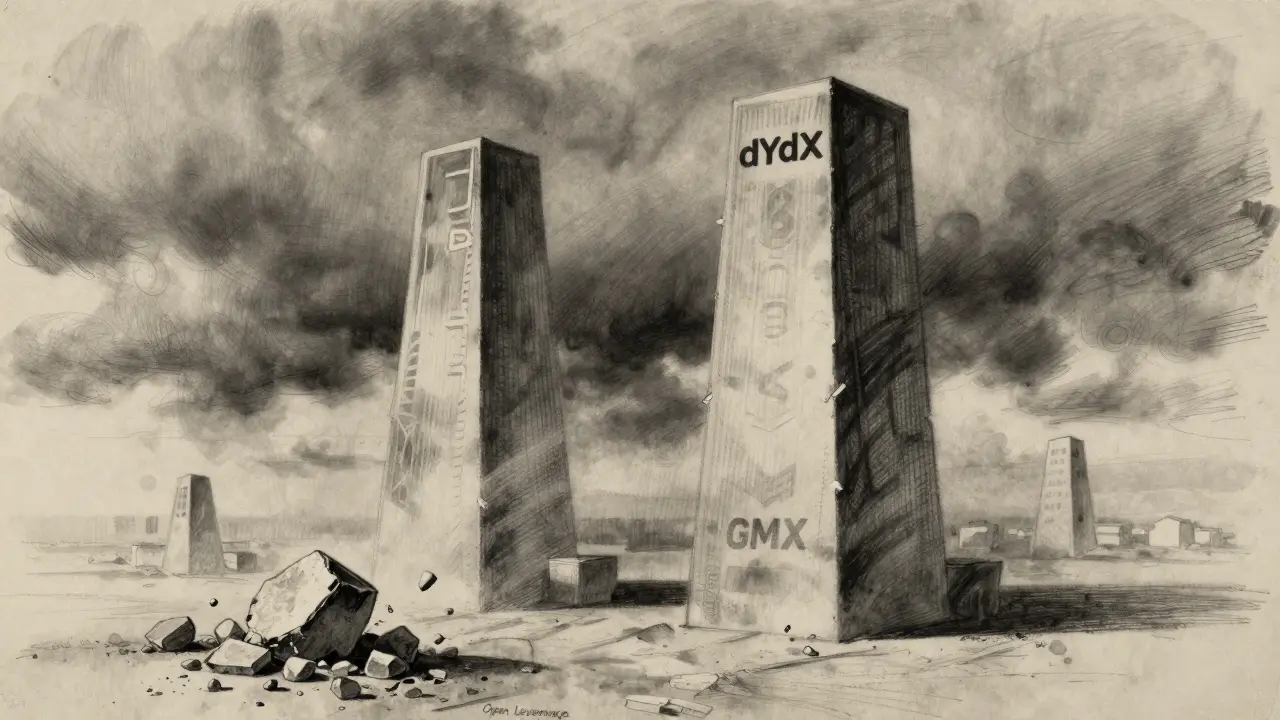
To see how OpenLeverage stacks up, let’s look at its main competitors in the DeFi margin trading space: dYdX and GMX.
| Feature | OpenLeverage (OLE) | dYdX (v3) | GMX |
|---|---|---|---|
| 24h Volume | ~$12,078 | ~$187 Million | High (varies) |
| TVL | <$1 Million | High | ~$234 Million |
| Max Leverage | Up to 5x (variable) | Up to 50x+ | Up to 50x |
| Fees | 0.15% Maker / 0.25% Taker | Tiered Structure | 0.1% Maker / 0.3% Taker |
| Liquidity Depth | Poor | Excellent | Good |
As you can see, dYdX and GMX offer vastly superior liquidity and higher leverage options. OpenLeverage’s unique selling point-custom lending pools-is now overshadowed by the sheer lack of active users and capital.
User Experience and Support
If you are new to DeFi, OpenLeverage is not the place to start. The learning curve is steep. Users report needing 8-12 hours just to understand the interface and mechanics properly. Documentation is rated poorly (3.2/5), and community support is virtually non-existent.
The official Telegram channel has shrunk from over 4,000 members to fewer than 1,850. GitHub activity is minimal, with only three commits in the last 90 days. When things go wrong-and they often do during network congestion-you won’t find much help. Trustpilot has no verified reviews, and social media mentions are sparse compared to industry leaders.
Is OpenLeverage Worth Using in 2026?
For most traders, the answer is no. The combination of low liquidity, high slippage, and technical friction makes it inefficient for regular trading. However, there is a niche use case: if you want to trade extremely obscure token pairs that aren’t listed on major DEXs, OpenLeverage’s ability to create custom pools might still work.
Even then, you should proceed with caution. The risk of impermanent loss and liquidation is high due to variable interest rates and thin order books. If you are looking for reliable margin trading, established platforms like dYdX or centralized exchanges offer a much smoother experience.
If you already hold OLE tokens, be aware of the dilution risk. With over 80% of tokens yet to circulate, price appreciation is unlikely without a massive influx of new capital-which doesn’t seem to be happening anytime soon.
Is OpenLeverage safe to use?
While OpenLeverage has undergone security audits by firms like Certik and PeckShield, all DeFi protocols carry inherent smart contract risks. Additionally, the low liquidity and recent exchange delistings suggest operational instability. Use only funds you can afford to lose.
Why was OpenLeverage delisted from Crypto.com?
Crypto.com cited insufficient liquidity depth and declining user engagement metrics as the primary reasons for delisting OLE tokens in October 2025. This reflects the broader trend of shrinking adoption for the protocol.
What is the maximum leverage on OpenLeverage?
The protocol supports up to 5x leverage, but this varies significantly by token pair based on available liquidity. In many cases, effective leverage is lower due to slippage and pool constraints.
How do OpenLeverage fees compare to other platforms?
OpenLeverage charges 0.15% for makers and 0.25% for takers. While competitive on paper, the high slippage on large trades often results in higher effective costs compared to deeper liquidity pools like dYdX or GMX.
Can I use OpenLeverage on mobile devices?
Yes, OpenLeverage works via web browsers on mobile devices. However, you will need a Web3 wallet like MetaMask or Trust Wallet installed. The interface is functional but may feel clunky compared to native apps of centralized exchanges.