
Since 2015, U.S. sanctions enforced by the Office of Foreign Assets Control (OFAC) have steadily tightened the noose around Iran’s access to global cryptocurrency exchanges. What started as a niche enforcement effort targeting ransomware payments has grown into a full-scale financial blockade, reshaping how Iranians interact with digital assets. Today, if you’re in Iran and want to trade Bitcoin or Ethereum on a major exchange, you’re likely blocked - not because the technology won’t let you in, but because the rules say you can’t.
How OFAC Turned Crypto Wallets Into Targets
Before 2018, most people thought cryptocurrency was too anonymous for sanctions to stick. Then OFAC dropped a bombshell: they published the exact Bitcoin addresses linked to two Iranian nationals helping launder ransomware payments from the SamSam attack. These weren’t vague warnings. They were precise digital fingerprints - wallet addresses that exchanges could now block in real time. That move changed everything. Suddenly, blockchain’s transparency became a weapon. Every transaction on Bitcoin, Ethereum, or Tron leaves a public trail. OFAC didn’t need to shut down banks. They just needed to list addresses. Once a wallet is on the Specially Designated Nationals (SDN) list, any exchange that touches it risks fines, lawsuits, or losing its U.S. banking access. By September 2025, OFAC had expanded this tactic to include five specific cryptocurrency addresses tied to Arash Estaki Alivand, a key figure in a $600 million shadow banking network. Two Ethereum wallets and three Tron addresses were named outright. These weren’t random. They were the actual digital vaults used to move over $100 million in oil proceeds to Iran’s military. The message was clear: if you’re moving crypto for sanctioned entities, your wallet is a target.Exchanges Got Scared - And Pulled Out
Major exchanges like Binance, Coinbase, and Kraken didn’t wait for lawsuits. They started geo-blocking Iranian IP addresses and added automated screening for sanctioned wallets. It wasn’t just about compliance - it was survival. In 2021, ShapeShift AG paid $750,000 to settle charges after letting Iranian users trade over $12.5 million in crypto. That case set a precedent: if you don’t screen, you’re liable. Today, most global exchanges require users to verify their location. If you’re in Iran, you’re automatically flagged. Even if you use a VPN, many platforms now check wallet history. If your wallet ever interacted with a sanctioned address - even once - your account gets frozen. No warning. No appeal. Just silence. This has pushed Iranian users into a corner. They can’t use the big platforms. They can’t easily convert crypto to rial. And they can’t rely on traditional banking. So they’ve adapted.The Rise of Shadow Exchanges and Successor Platforms
When Garantex, one of the largest crypto exchanges serving Iranian users, was shut down by the U.S. Secret Service in March 2025, its operators didn’t disappear. They built Grinex - a direct replacement - within days. Grinex’s own marketing materials admitted it was created because Garantex was frozen. The new platform even introduced a custom token, A7A5, backed by Russian rubles, to let users regain access to their funds. This isn’t an isolated case. It’s a pattern. When one platform gets hit, another pops up - often in jurisdictions with weak U.S. regulatory reach. Hong Kong, the UAE, and Kyrgyzstan have become hotspots for these shadow exchanges. Companies like Alpha Trading Co. in Hong Kong and Blue Sky General Trading LLC in Dubai act as financial bridges, funneling crypto proceeds through layers of shell companies and fake invoices. These networks aren’t just small-time operations. They’re sophisticated. They use dual-use tech suppliers like Shenzhen Jiasibo Technology Co. to buy military equipment under the guise of selling computer parts. They move money through crypto, then convert it to cash via local exchange agents in Dubai or Istanbul. The whole system is designed to avoid detection - but blockchain analytics are catching up.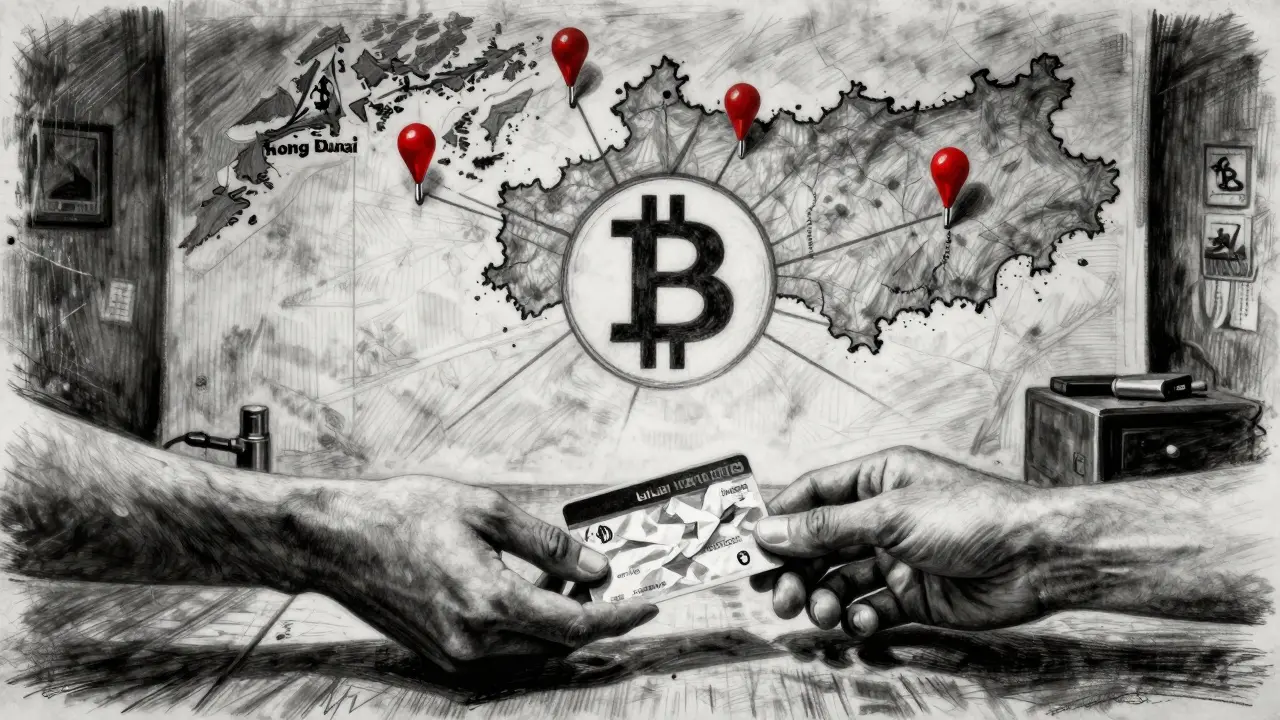
How Iranians Are Still Getting Access - And at What Cost
Despite the crackdown, Iranians aren’t out of crypto. They’ve just moved underground. Peer-to-peer (P2P) platforms like LocalBitcoins and Paxful still see heavy traffic from Iran. Users trade directly with each other, using cash deposits, gift cards, or even mobile top-ups to exchange crypto for rial. It’s slower. It’s riskier. And it’s often more expensive - premiums of 10% to 30% are common. Decentralized exchanges (DEXs) like Uniswap or PancakeSwap are another lifeline. Since they don’t require KYC, they’re harder to block. But they come with trade-offs: low liquidity, high gas fees, and complex interfaces that aren’t user-friendly for newcomers. Privacy coins like Monero and Verge are seeing a quiet surge. Unlike Bitcoin, these coins obscure transaction details. That makes them ideal for evading OFAC’s address-based tracking. But they’re also more suspect to regulators. Many exchanges that once supported them have since delisted them. The result? Iranian crypto users are stuck in a high-risk, high-cost ecosystem. They can’t access the liquidity of global markets. They can’t trade large amounts without attracting attention. And every transaction carries the risk of being frozen or traced back to them.What’s Next: AI, Privacy, and the Arms Race
OFAC isn’t slowing down. In 2025, they started using AI to detect patterns in blockchain data - like unusual transaction timing, repeated use of mixers, or small transfers clustered around known sanctioned addresses. Machine learning models now flag suspicious activity before it even reaches the scale of a $100 million laundering operation. On the other side, Iranian networks are turning to decentralized finance (DeFi) protocols and cross-chain bridges to move funds without touching centralized exchanges. They’re using wrapped tokens, liquidity pools, and non-custodial wallets to obscure origins. Some are even experimenting with blockchain-based barter systems, trading crypto for physical goods via intermediaries in Turkey or Pakistan. But here’s the catch: every workaround has a cost. Privacy tools reduce liquidity. P2P trading increases fraud risk. Shadow exchanges are often scams. And every time a wallet gets flagged, it’s harder to clean it later. The bottom line? OFAC’s sanctions haven’t stopped Iranian crypto use. They’ve forced it into the shadows - where it’s more dangerous, more expensive, and harder to control.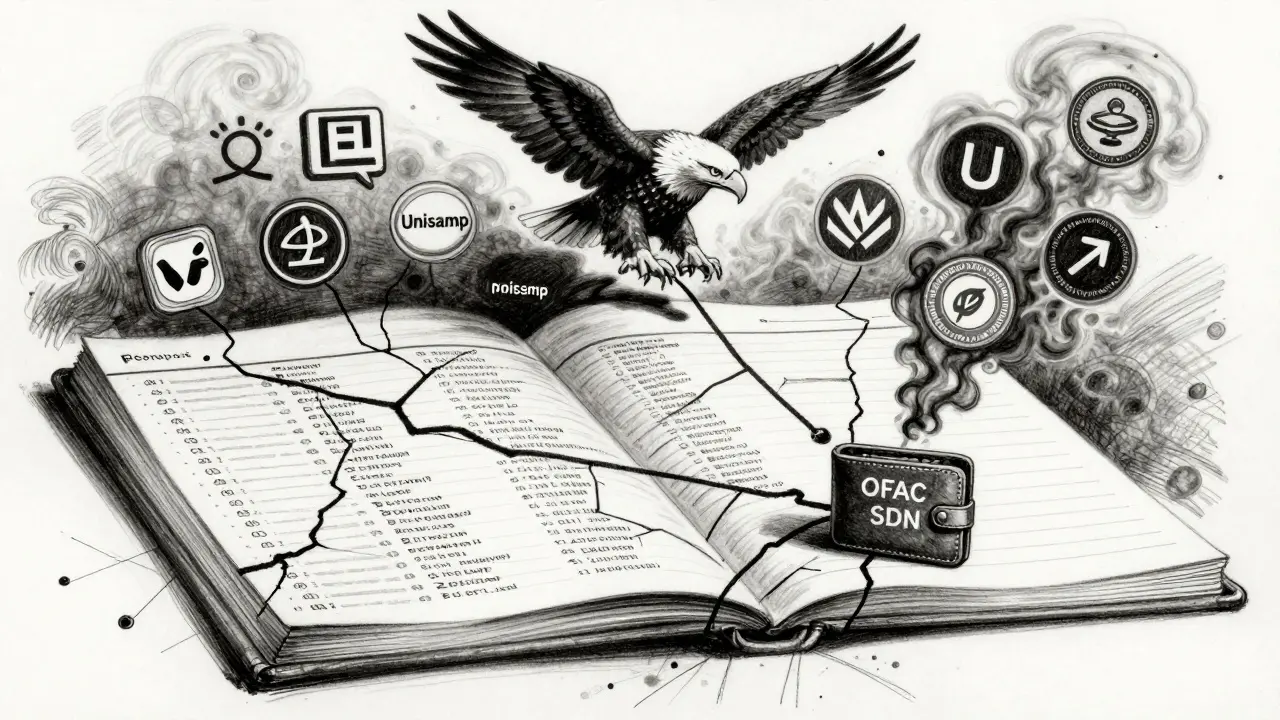
Why This Matters Beyond Iran
This isn’t just about Iran. It’s a test case for how global financial power works in the crypto age. If the U.S. can block an entire country’s access to digital assets using wallet addresses, what does that mean for Venezuela, North Korea, or even future sanctions on Russia or China? It also raises a bigger question: can decentralized technology survive under centralized control? Blockchain was supposed to be censorship-resistant. But when every major exchange, payment processor, and wallet provider is forced to comply with U.S. sanctions, decentralization becomes a myth. The irony? The very transparency that made crypto revolutionary - public ledgers, traceable transactions - is now its biggest vulnerability when facing state power.What Users in Iran Can Do - And What They Can’t
If you’re in Iran and rely on crypto:- You can’t use Binance, Coinbase, or Kraken. They block you outright.
- You can use P2P platforms, but expect high premiums and scams.
- You can use DEXs, but only if you understand gas fees and wallet security.
- Never reuse wallets. Once a wallet is flagged, it’s blacklisted forever.
- Avoid privacy coins unless you’re experienced. They’re harder to cash out and more likely to get you flagged.
- Never send crypto to a wallet on OFAC’s SDN list. Even accidental contact can freeze your funds.
Can Iranians still buy Bitcoin?
Yes, but not through major exchanges. Iranians use peer-to-peer platforms like LocalBitcoins or Paxful, or decentralized exchanges like Uniswap. These methods are slower, more expensive, and riskier. Premiums of 10-30% are common due to low liquidity and high fraud risk.
Why do OFAC sanctions target crypto wallets instead of banks?
Because Iran’s banking system is already under heavy international sanctions. Crypto offers a way to bypass those restrictions. Wallet addresses are public on the blockchain, so OFAC can track and block them directly - without needing cooperation from foreign banks or governments.
Are privacy coins like Monero safe from OFAC?
They’re harder to trace, but not safe. While Monero hides transaction details, exchanges that support it are increasingly being pressured to delist it. Plus, cashing out Monero into fiat often requires centralized services - which are monitored. Using privacy coins raises red flags and can lead to account freezes.
What happened to Garantex and Grinex?
Garantex was shut down by U.S. authorities in March 2025 for serving Iranian users. Within days, its operators launched Grinex - a direct replacement - using a custom token (A7A5) to restore access to customer funds. Grinex has since processed billions in transactions, showing how quickly sanctions evaders adapt.
Can OFAC block crypto entirely?
No. The blockchain is decentralized and global. But OFAC can block access to the most widely used platforms, exchanges, and services - which makes crypto use harder, costlier, and riskier for Iranians. The goal isn’t total blockage - it’s deterrence and disruption.
How do Iranian users convert crypto to rial?
Most use P2P traders who accept cash deposits, mobile top-ups, or gift cards. Some use local exchange agents in neighboring countries like Turkey or the UAE. These methods are slow, carry high fees, and are vulnerable to scams or arrest if caught.
Is using a VPN enough to access global exchanges?
No. Most major exchanges now check wallet history, not just IP addresses. If your wallet has ever interacted with a sanctioned address, your account will be flagged - even if you’re using a VPN. Reusing wallets is the biggest mistake users make.


