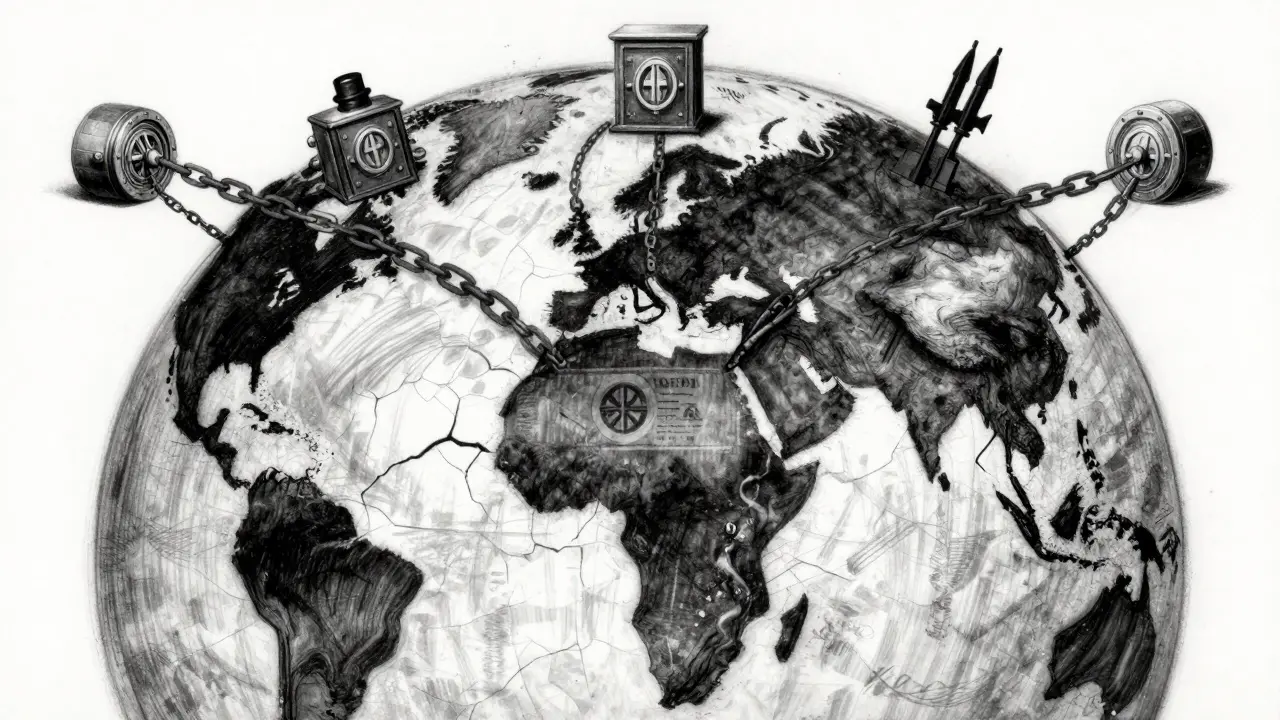
The world’s most dangerous crypto hotspots aren’t tech hubs or underground forums-they’re countries officially blacklisted by global financial watchdogs. As of 2025, only three nations sit on the Financial Action Task Force (FATF) blacklist for severe failures in anti-money laundering and counter-terrorism financing: Iran, North Korea, and Myanmar. These aren’t just political outcasts-they’re the epicenters of a global cryptocurrency crime wave that’s rewriting how sanctions work.
Why These Three Countries? The FATF’s Hard Line
The FATF doesn’t put countries on its blacklist lightly. It’s a public call to action: banks, exchanges, and payment processors worldwide are expected to treat transactions involving these nations as high-risk-or outright block them. Iran and North Korea face full countermeasures, meaning financial institutions must apply the strictest possible controls or cut ties entirely. Myanmar, while not under full countermeasures, is under intense scrutiny and must be monitored with enhanced due diligence. This isn’t theoretical. In 2024, sanctioned jurisdictions received $15.8 billion in cryptocurrency, making up nearly 40% of all illicit crypto flows globally. By year’s end, that number had ballooned to nearly 60% of all sanctions-related financial activity. The shift is clear: entire countries, not just individuals or companies, are now the primary targets of financial enforcement.North Korea: The State-Sponsored Crypto Heist Machine
North Korea doesn’t just use crypto-it runs a billion-dollar cyberwarfare program built around it. The regime’s Lazarus Group has become the most feared actor in digital finance, targeting exchanges, DeFi protocols, and blockchain infrastructure with surgical precision. In February 2025, they stole $1.5 billion from ByBit, one of the largest single thefts in crypto history. That wasn’t an anomaly-it was business as usual. Chainalysis data shows North Korea has consistently ranked as the top source of crypto-related crime for five years running. Their methods? Hacking private keys, exploiting smart contract bugs, and laundering funds through mixers and privacy coins like Monero. What makes them so dangerous is their direct ties to state organs. This isn’t criminal gangs-it’s a government-funded cyber army with a mandate to bypass sanctions and fund weapons programs. The U.S. Treasury’s OFAC responded in 2024 by designating 13 crypto addresses linked to North Korean actors-the second-highest number in seven years. These aren’t just warnings. They’re asset freezes, travel bans, and legal traps for anyone who even accidentally interacts with them.Iran: Crypto as a Survival Tool-and a Sanctions Evasion Scheme
Iran’s relationship with cryptocurrency is more complex. For ordinary Iranians, crypto isn’t a gamble-it’s a lifeline. With the U.S. and EU freezing banking access, hyperinflation eating away at the rial, and capital controls locking people out of foreign currency, Bitcoin and stablecoins have become essential tools for survival. Iranian exchanges saw a 300% surge in transaction volume in 2024. People are using crypto to buy medicine, send money to family abroad, and protect savings from government devaluation. But this same infrastructure is being exploited by sanctioned entities, including the Islamic Revolutionary Guard Corps (IRGC). The line between civilian use and state-backed evasion is blurry, and regulators are struggling to tell them apart. Bitcoin’s design-censorship-resistant, peer-to-peer, self-custodied-makes it perfect for this environment. All you need is a seed phrase. No bank. No ID. No permission. That’s why Iran’s crypto adoption is growing faster than anywhere else on earth. But it also makes it the perfect cover for laundering money, buying weapons, and funding proxy conflicts.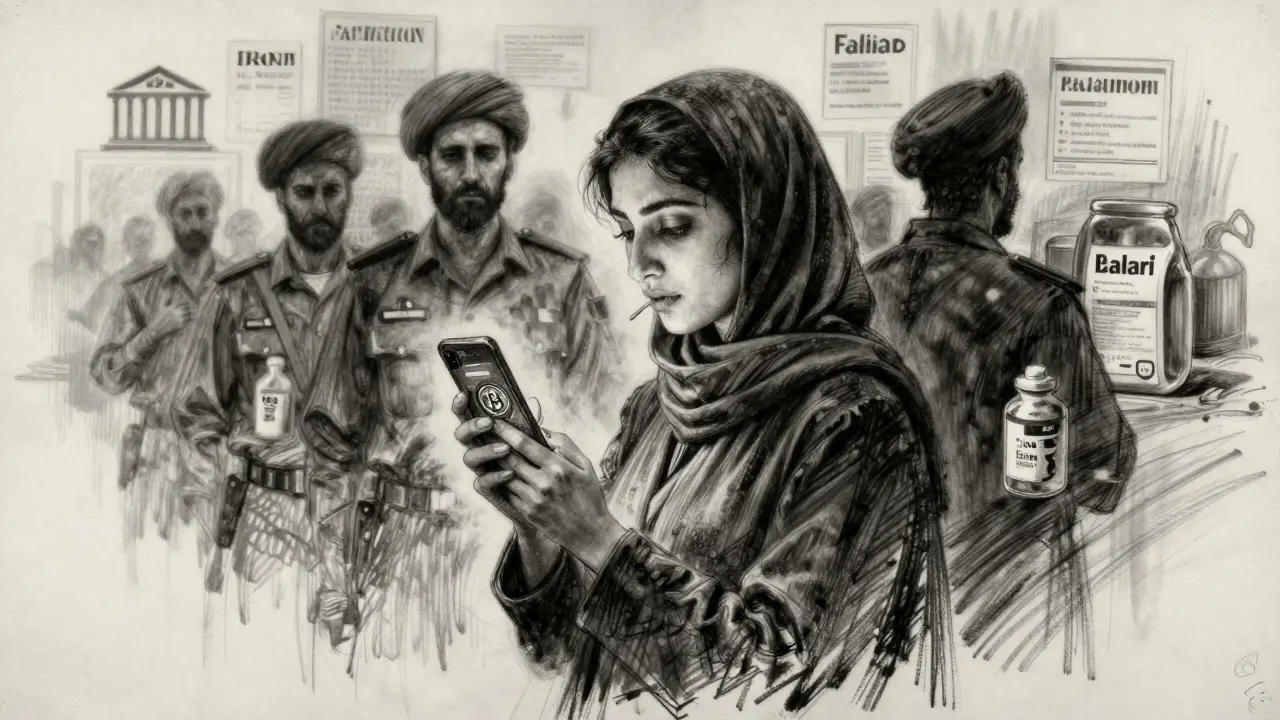
Myanmar: From Coup to Crypto Laundering Hub
Myanmar’s path to the FATF blacklist began after the 2021 military coup. As the junta cracked down on dissent and froze international aid, crypto became the only way to move money in and out of the country. Criminal networks, including human trafficking rings and arms dealers, quickly adopted crypto to launder profits. Unlike Iran and North Korea, Myanmar doesn’t have a centralized state-backed crypto operation. Instead, its black market is decentralized-run by local gangs, corrupt officials, and offshore shell companies. The lack of regulatory oversight, combined with weak banking infrastructure, turned Myanmar into a laundering paradise. Crypto mixers and peer-to-peer platforms became the new banking system. FATF’s call for enhanced due diligence means any transaction linked to Myanmar must be flagged. Exchanges that ignore this risk being cut off from global financial networks. The result? Many platforms have blocked all Myanmar-based accounts outright-even those belonging to ordinary citizens trying to send money home.The Global System Is Failing
Here’s the uncomfortable truth: three-quarters of countries in the FATF network are either noncompliant or only partially compliant with global crypto regulations. That means most banks and exchanges aren’t even checking for red flags. Mixers, privacy coins, and decentralized wallets are still largely unmonitored. Criminals don’t need to hack the system-they just wait for it to look the other way. The U.S. Financial Crimes Enforcement Network (FinCEN) has been pushing hard to close these gaps. In 2024, it proposed designating the Huione Group as a primary money laundering concern, a move aimed at dismantling one of the largest crypto mixing services tied to sanctioned actors. The Independent Community Bankers of America backed the move, warning that without stricter rules, small financial institutions will be dragged into the chaos. Meanwhile, countries like the Netherlands and Australia are tightening their own rules. De Nederlandsche Bank now adjusts capital buffers based on FATF risk levels. If a country like Iran moves higher on the list, Dutch banks must hold more reserves against any exposure-even indirect.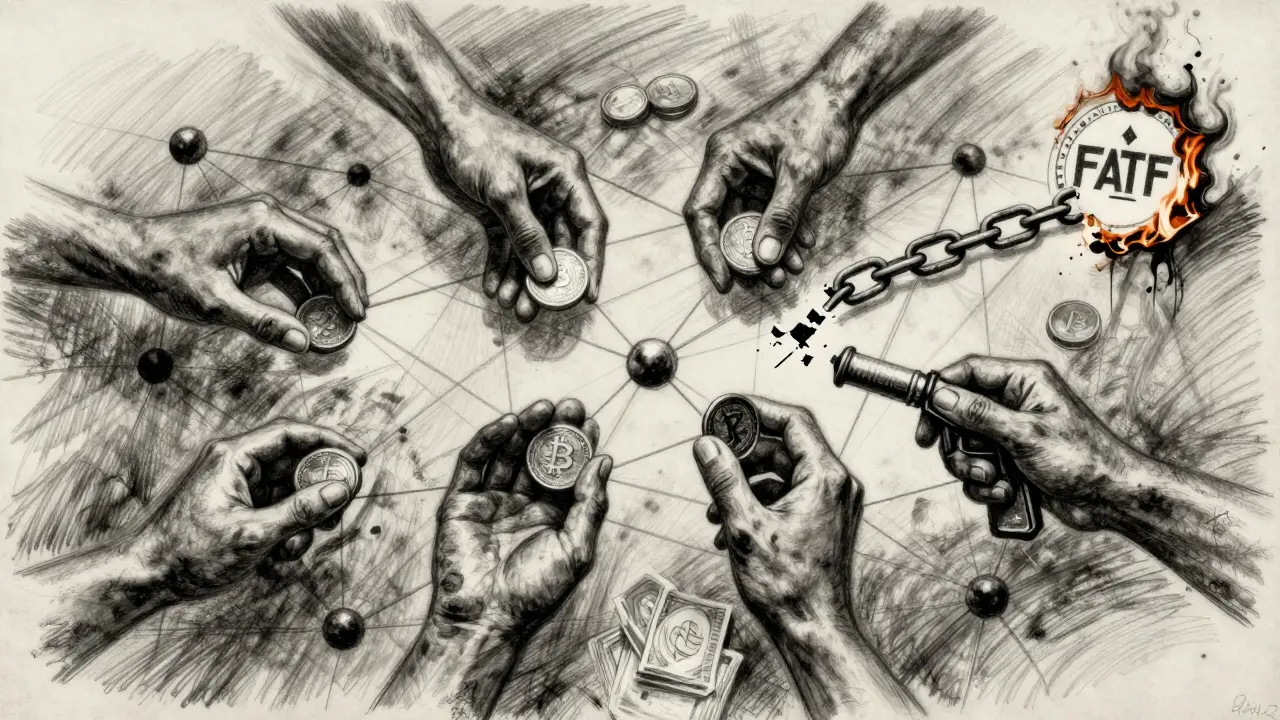
What This Means for Everyday Crypto Users
If you’re not in Iran, North Korea, or Myanmar, you might think this doesn’t affect you. It does. Exchanges now routinely freeze accounts linked to these jurisdictions-even if the user never sent money there. A single transaction from a mixer that once touched a North Korean address can trigger a 90-day lock. Your wallet might be flagged because someone else used it before you. Your KYC documents might be rejected because your IP address once connected to a VPN in Myanmar. The system is becoming less about catching criminals and more about avoiding liability. That’s why so many platforms are over-blocking. It’s safer to ban ten innocent users than risk one guilty one.The Bigger Picture: Crypto as a Weapon of Geopolitics
This isn’t just about money laundering. It’s about power. The U.S., EU, and allied nations are using crypto regulation as a tool of foreign policy. Sanctioning a country’s crypto activity is a way to pressure regimes without bombing them or cutting off all trade. But there’s a cost. Ordinary people in these countries are being punished alongside their governments. A mother in Tehran trying to buy insulin with USDT gets blocked. A student in Yangon sending money to their sick parent is flagged. The same technology that empowers the oppressed also enables the corrupt. The challenge now isn’t just enforcement-it’s precision. How do you stop a regime from stealing billions without cutting off a population’s last financial lifeline?What’s Next?
The FATF updated its list in June 2025, adding the British Virgin Islands and Bolivia to its "increased monitoring" list while removing Croatia, Mali, and Tanzania. But Iran, North Korea, and Myanmar? They’re still there. And the pressure is only growing. Expect more targeted sanctions on crypto infrastructure-mixers, bridges, and decentralized exchanges. More arrests of developers building tools for sanctioned users. More pressure on wallet providers to implement geolocation filters. And as long as Bitcoin remains censorship-resistant, it will keep being used by both the desperate and the dangerous. The world hasn’t figured out how to separate the two. Until then, the blacklist will stay the same: three countries, one rule, and a global system struggling to keep up.Why are Iran, North Korea, and Myanmar still on the FATF blacklist?
They remain on the list because they’ve failed to meet international standards for stopping money laundering and terrorist financing. North Korea actively uses crypto to fund weapons programs, Iran’s system is so weak that it’s been exploited by both citizens and state actors, and Myanmar’s post-coup chaos created a perfect environment for criminal networks to use crypto as a banking system. FATF requires these countries to fix their laws, enforce them, and prove compliance-but none have done so.
Can I still send crypto to someone in Iran or North Korea?
Technically, yes-but it’s extremely risky. Most major exchanges block transactions to these jurisdictions. If you do send crypto there, your own account could be frozen, reported to authorities, or flagged for investigation. Even if you’re sending money to family, regulators treat it as a potential sanctions violation. The safest route is to avoid any direct interaction.
Is Bitcoin really helping people in Iran, or is it just helping criminals?
It’s both. For many Iranians, Bitcoin and stablecoins are the only way to protect savings from inflation, buy medicine, or send money abroad when banks are blocked. But the same tools are used by the IRGC to move funds for weapons purchases. Regulators can’t distinguish between the two, so they block everything. That’s the tragic reality: the same technology that saves lives is also used to fund violence.
What happens if I accidentally transact with a blacklisted address?
If your wallet or exchange detects a transaction linked to a blacklisted entity, your account may be frozen. You’ll likely need to prove the transaction was unintentional-maybe you received funds from a friend, or your wallet interacted with a mixer that once touched a bad address. This can take weeks or months to resolve. Some platforms permanently ban users after one incident.
Are privacy coins like Monero banned because of these countries?
Not officially banned-but they’re heavily restricted. Many exchanges have stopped supporting Monero and Zcash because they make tracking transactions nearly impossible. Since North Korea and other bad actors use privacy coins to hide stolen funds, regulators are pressuring platforms to drop them. If you hold privacy coins, you may find them harder to trade or convert to fiat.
How do exchanges know if a transaction is linked to a blacklisted country?
Exchanges use blockchain analytics firms like Chainalysis and Elliptic to trace transaction history. If a wallet ever received funds from a known blacklisted address-even years ago-it gets flagged. They also monitor IP addresses, device fingerprints, and KYC data. It’s not perfect, but it’s enough to block millions of transactions automatically.


