
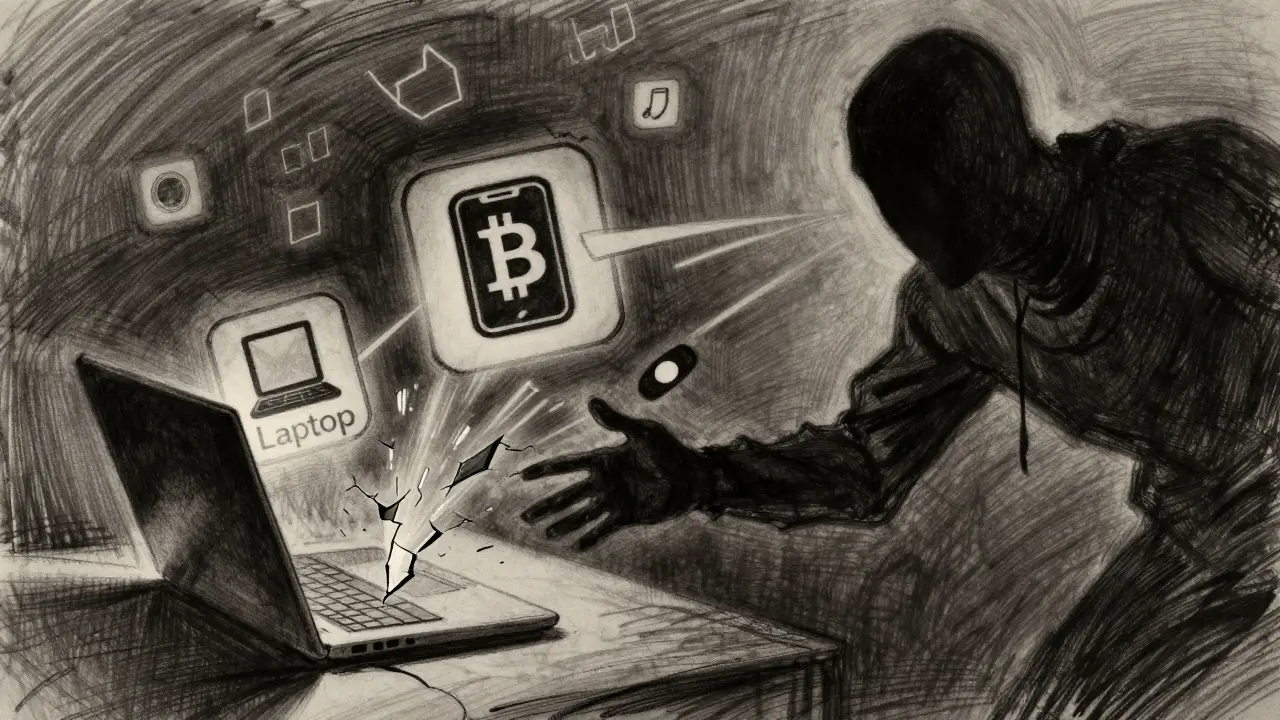
Imagine sending $100 in Bitcoin to buy a laptop, and just minutes later, the same $100 gets sent again to buy a new phone-without anyone noticing. That’s a double-spending attack. It’s not science fiction. It’s a real threat to any digital currency that doesn’t have the right safeguards. Bitcoin solved this problem in 2009, but that doesn’t mean it’s gone. Attackers still try. And they’re getting smarter.
Why Double-Spending Is a Big Deal
Digital money isn’t like cash. You can’t hold it. You can’t tear it. And you can copy it. That’s the core problem. With physical cash, if you hand someone a $20 bill, you no longer have it. With digital money, the data representing that $20 can be duplicated-unless the system stops it. That’s what double-spending is: spending the same digital coin twice. If it works, it breaks the entire idea of scarcity. No one trusts money that can magically multiply. Bitcoin’s blockchain fixed this by making every transaction public, permanent, and verified by a network of computers. But no system is perfect. Attackers look for cracks. And they’ve found several ways to slip through.The Race Attack: Speed Over Security
The simplest double-spending trick is the race attack. Here’s how it works: an attacker sends the same Bitcoin to two different places at the same time. One transaction goes to a merchant. The other goes to another address they control. They hope the merchant’s node sees the first transaction before the network confirms the other one. This only works because blockchain networks aren’t instant. It takes seconds-sometimes longer-for transactions to spread across all nodes. The attacker exploits that delay. If the merchant accepts the transaction before it’s confirmed, they’re at risk. This is why small purchases (under $100) on some exchanges only require one confirmation. But for anything bigger? Waiting is non-negotiable. You can’t stop this attack with technology alone. You stop it with patience. Wait for at least one confirmation. Preferably more. Merchants who don’t wait? They’re gambling.The Finney Attack: Pre-Mining the Trap
The Finney attack is sneakier. It requires the attacker to be a miner-or to control mining power. Here’s the setup: the attacker mines a block in secret. Inside that block is a transaction that sends Bitcoin to themselves. They don’t broadcast it yet. Then, they spend the same Bitcoin in a public transaction-say, buying something from a merchant. The merchant sees the transaction, waits for one confirmation, and ships the product. Meanwhile, the attacker releases their secret block. If it gets accepted by the network, the original transaction (the one to the merchant) gets overwritten. The merchant gets nothing. The attacker keeps both the product and the coins. This attack is rare. Why? Because it needs mining power. And it’s risky. The attacker has to mine a block, wait for the merchant to act, and then release their block at the perfect moment. If the network rejects it, they lose the block reward and the coins they spent. It’s expensive. But it’s been done-on smaller chains with weak mining power.
The 51% Attack: Taking Over the Network
This is the nuclear option. A 51% attack happens when a single entity controls more than half of a blockchain’s total mining power. With that kind of control, they can rewrite history. They can reverse confirmed transactions. They can double-spend. And they can stop new transactions from being confirmed. Think of it like a bank where one person owns 51% of the vault keys. They can change the ledger. They can take back money they already spent. Bitcoin is safe from this because its hash rate is over 400 exahashes per second. To pull off a 51% attack on Bitcoin, you’d need billions of dollars in hardware and electricity. It’s not worth it. But smaller blockchains? That’s where it happens. Ethereum Classic was hit in 2020. Bitcoin Gold got hit in 2018. Vertcoin, too. These networks have lower hash rates. Attackers rent mining power for a few hours-sometimes for less than $100,000-and clean out exchanges. The damage? Price drops. Trust shattered. Users flee.How Centralized Systems Handle It (And Why They’re Not Better)
You might think: why not just use PayPal or a bank? They prevent double-spending easily-they’re centralized. One database. One authority. If you spend $100, the system checks your balance and says no if you try again. But here’s the catch: you have to trust them. What if their database gets hacked? What if they make a mistake? What if they freeze your account? Bitcoin’s strength isn’t speed. It’s trustlessness. No middleman. No single point of failure. Centralized systems prevent double-spending by being vulnerable. Blockchain prevents it by being distributed.
How to Protect Yourself
If you’re a user, here’s what you do:- Wait for confirmations. Six is the gold standard for Bitcoin. For smaller amounts, one or two might be fine. But never skip this step.
- Use trusted wallets. Some wallets show real-time network status. If a transaction is stuck or conflicting, it’ll warn you.
- Avoid instant payments on small chains. If you’re buying something on a lesser-known crypto, ask how many confirmations they require. If they say zero? Walk away.
- Use payment processors. Services like BitPay or Coinbase Commerce handle confirmation checks automatically. They also flag suspicious transactions.
- Monitor for double-spend attempts. Some tools scan the mempool (the pool of unconfirmed transactions) for conflicting sends. If two transactions use the same input, you’ll know.
- Don’t ship before confirmation. This sounds obvious, but it’s still the #1 mistake.
What’s Next? Quantum, Proof-of-Stake, and Layer 2
The future of double-spending defense isn’t just about more mining power. It’s about smarter systems. Proof-of-stake blockchains like Ethereum don’t rely on miners. They rely on validators who lock up their own coins as collateral. If a validator tries to cheat, they lose their stake. It’s an economic deterrent instead of a computational one. Less energy. Different risks. Layer-2 solutions like the Lightning Network let users make instant, off-chain payments. But they rely on smart contracts and time-locked channels to prevent double-spending. If you don’t understand how they work, you’re still vulnerable. And then there’s quantum computing. Someday, quantum computers could break the cryptographic signatures that secure Bitcoin. Researchers are already building quantum-resistant algorithms. It’s not a problem today. But it’s coming.Final Reality Check
Double-spending isn’t a bug. It’s a feature of digital money. Bitcoin didn’t eliminate it. It made it so expensive and difficult that it’s not worth doing on a large scale. The system is designed so that honesty is cheaper than cheating. But on weak networks? The math changes. Attackers win. That’s why Bitcoin remains the most secure. Not because it’s perfect. But because it’s the most expensive to attack. If you’re using crypto, don’t assume safety. Assume risk. And always wait for confirmation.Can you double-spend Bitcoin successfully today?
Technically, yes-but only if you control over half of Bitcoin’s mining power, which would cost billions of dollars. In practice, no. Bitcoin’s network is too large and too expensive to attack. Smaller cryptocurrencies have been hit, but Bitcoin remains secure due to its massive hash rate and economic incentives that make attacks unprofitable.
How many confirmations are safe for a Bitcoin transaction?
For most transactions, 3 confirmations are considered safe. For high-value purchases (over $1,000), wait for 6 confirmations. Each confirmation adds another block on top, making it exponentially harder to reverse. After 6 blocks (about one hour), the chance of reversal is less than 0.000001%.
What’s the difference between a race attack and a Finney attack?
A race attack is when an attacker sends two conflicting transactions to different parts of the network at the same time, hoping one gets confirmed before the other. A Finney attack is more advanced: the attacker mines a block containing a fake transaction in secret, then spends the same coins publicly. Later, they release their secret block to overwrite the public one. The Finney attack requires mining power; the race attack doesn’t.
Can proof-of-stake blockchains be double-spent?
Yes, but it’s harder. In proof-of-stake systems like Ethereum, validators must lock up their own coins to participate. If they try to double-spend or validate fraudulent blocks, they lose their stake. This economic penalty makes attacks costly and risky. However, new attack vectors like long-range attacks or nothing-at-stake problems still exist and are actively being researched.
Why do smaller cryptocurrencies get attacked more often?
Smaller blockchains have lower hash rates or fewer validators, meaning it takes less money and computing power to control 51% of the network. Attackers can rent mining power for a few hours on services like NiceHash for under $100,000. Once they reverse transactions, they cash out before the market reacts. Bitcoin’s size makes this impossible-small chains don’t have that protection.
Are payment processors like BitPay safe from double-spending?
Yes, because they’re designed to prevent it. They monitor the blockchain in real time, wait for multiple confirmations before releasing funds, and flag conflicting transactions. They also use additional fraud detection tools to spot suspicious behavior. For merchants, using a trusted processor is one of the best ways to avoid losses from double-spending attacks.


