
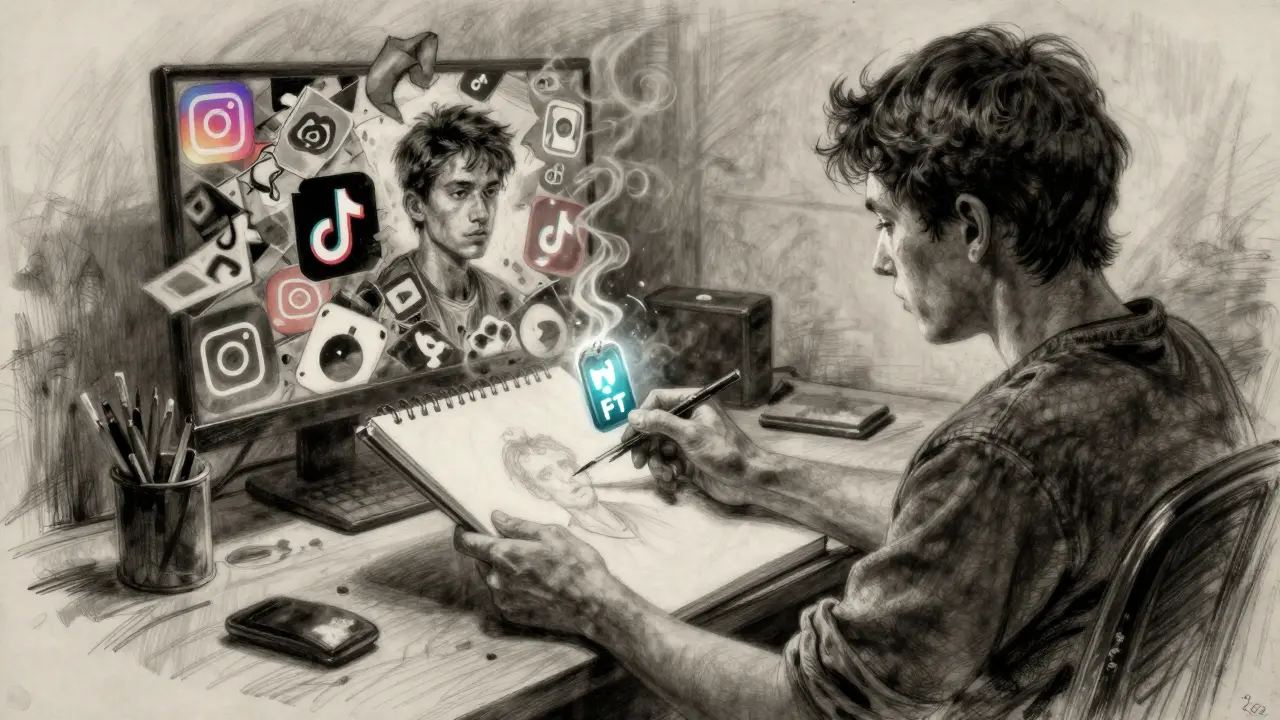
For most people, the internet today feels like a rented apartment. You live there, decorate it, invite friends over-but the landlord can change the locks anytime. Your photos, your posts, your followers, even your digital art-they all belong to Meta, Google, or TikTok. What if you could actually own your online life? That’s the core promise of Web3.
Web3 isn’t just another tech buzzword. It’s a shift from a system where corporations control your data to one where you do. Built on blockchain technology, Web3 gives users real control over their digital identity, assets, and interactions. No middlemen. No hidden rules. Just you, your private key, and the open internet.
You Own What You Create
In Web2, if you make a viral video on TikTok or post art on Instagram, the platform owns the rights to it. They can delete your account, mute your reach, or sell your data without asking. In Web3, your creations become your property-literally.
Take NFTs. When you mint a piece of digital art as an NFT on Ethereum or Polygon, you’re not just uploading a file. You’re creating a unique, verifiable asset stored on a public ledger. That NFT can’t be copied, taken down, or deleted by a company. It’s yours, forever. People have sold NFTs for tens of thousands of dollars, not because the image is special, but because they own the original. No platform can take that away.
Musician Snoop Dogg released his album as NFTs on the platform Sound.xyz. Fans who bought them didn’t just get a download-they got ownership. And when someone resold the NFT later, Snoop got 90% of the profit automatically, recorded on-chain. Compare that to Spotify, where artists make about 12% per stream. Web3 doesn’t just give creators ownership-it gives them fair pay, every time.
No More Account Lockouts
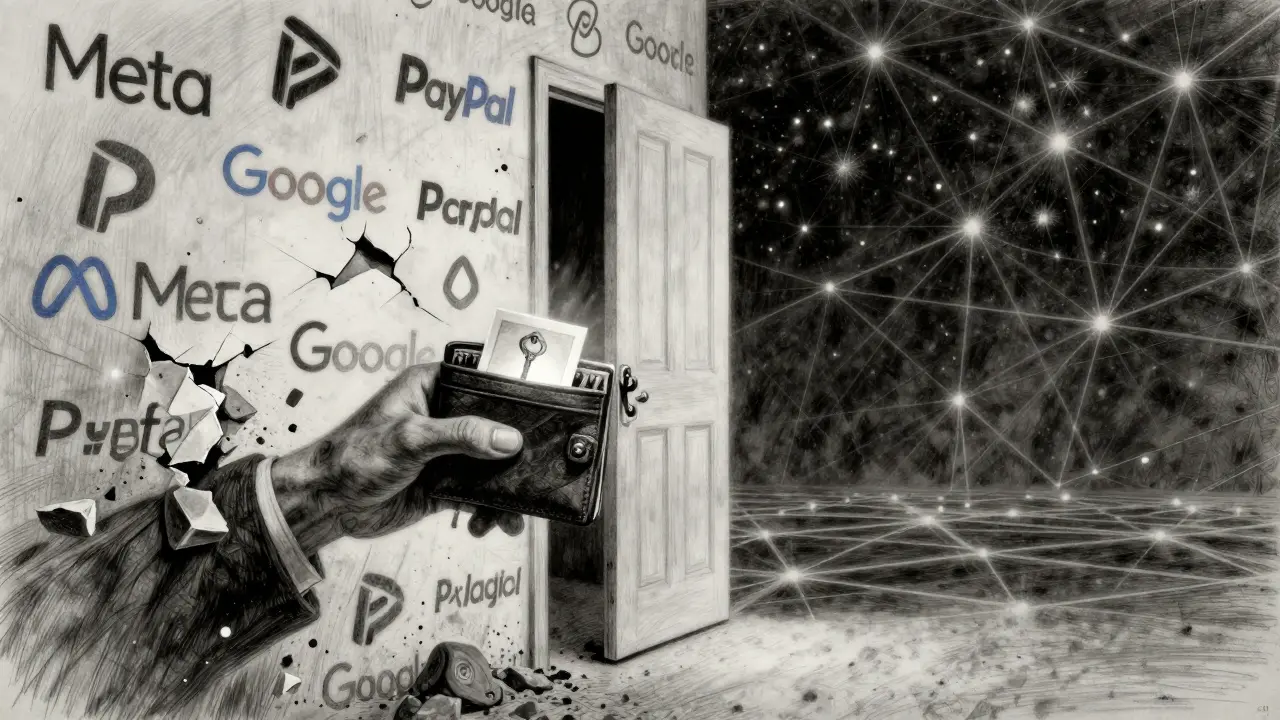
Remember when Facebook shut down Horizon Worlds and erased all the virtual spaces users built? Or when PayPal froze accounts without warning? In Web2, your digital presence is always at the mercy of a company’s policy change.
Web3 changes that. Your digital assets-whether it’s a virtual plot of land in Decentraland or a rare CryptoPunk-are stored in your wallet, not on a company’s server. Even if the platform disappears, your NFTs stay safe. You can still access them, sell them, or move them to another platform. That’s true digital ownership.
One Reddit user shared how he sold a Bored Ape NFT for $85,000. He didn’t need approval from anyone. No bank account. No ID check. Just his wallet, his private key, and a blockchain transaction. He had full control. That kind of freedom doesn’t exist on any traditional platform.
Transparency You Can Verify
How do you know if a product is really made in the USA? Or if your food is organic? Web2 gives you marketing claims. Web3 gives you proof.
Companies like Maersk use blockchain to track shipping containers from port to port. Every step is recorded publicly. If you’re buying something, you can check its journey on a blockchain explorer like Etherscan. No hidden logs. No corporate secrets.
The same applies to social media. On Twitter, anyone can copy your profile picture. But if your profile picture is an NFT, you can prove you’re the original owner. Every transaction-every transfer-is visible and permanent. That’s why CryptoPunks, launched in 2017, still have a full, unbroken history of ownership across 11,000+ transactions. No other platform can offer that kind of trust.
Get Paid Just for Being Online
Think about how much time you spend online. Scrolling, watching, sharing, commenting. In Web2, you’re the product. Companies profit from your attention. In Web3, you can get paid for it.
The Theta Network rewards users for sharing unused bandwidth. In Q1 2023, they paid $15 million to 50,000 users-average $300 each. No corporate approval. No minimum payout. Just open participation.
Other platforms pay users for watching ads, taking surveys, or testing apps-all in cryptocurrency. You earn tokens directly to your wallet. No PayPal hold. No bank delays. It’s instant, borderless, and transparent.
Imagine getting paid for watching a YouTube video-not by ads, but by the creator themselves. That’s already happening on Web3 platforms. It flips the whole model: instead of platforms taking 45% of your earnings, you keep most of it.
Privacy Without Sacrificing Functionality
Web2 forces you to trade privacy for convenience. You give your email, phone number, location, and browsing history just to sign up. Web3 lets you stay anonymous while still using apps.
You don’t need an email to use a Web3 wallet. You don’t need to verify your identity unless you want to. You can interact with DeFi apps, buy NFTs, or join communities-all with just a crypto wallet. Your personal data stays private. Yet, you still get full access to services.
And because everything runs on open-source code, no one can secretly change how the app works. You can look at the code yourself. Or trust a community audit. There’s no black box.
The Catch? It’s Still Early
Web3 isn’t perfect. It’s not yet as easy as opening Instagram. You need to understand seed phrases. You need to watch out for gas fees. You need to know how to back up your wallet. Coinbase’s 2023 study found 78% of new users struggled with their first NFT purchase.
Transactions take seconds, not milliseconds. Wallets can be hacked if you’re careless. Scams are everywhere. But these aren’t flaws in the idea-they’re growing pains.
Things are improving fast. Polygon now handles transactions for under $0.0001. WalletConnect lets you use one wallet across dozens of apps. Social logins (using Gmail or Apple ID) are now available on many platforms. You don’t need to memorize a 12-word phrase anymore if you don’t want to.
And the learning curve? Most people get comfortable in 2-3 hours. After that, the benefits become obvious. One user said, ‘I lost $200 because I messed up my seed phrase. I won’t make that mistake again.’ That’s the kind of lesson that sticks.
Who’s Using Web3 Today?
Over 85 million unique blockchain wallets are active worldwide. Most are in Southeast Asia and North America. Gamers are early adopters-over 2.2 million play blockchain games daily. Creators are jumping in fast. And 68% of Fortune 500 companies are testing Web3 projects-Walmart sells NFT collectibles, Nike owns virtual sneakers, and BMW tracks car parts on blockchain.
Regulations are catching up too. The EU’s MiCA law, effective in 2024, gives users legal protection for crypto assets. That’s a big step toward mainstream trust.
Is Web3 Right for You?
If you care about owning your digital life-if you’re tired of being a product, tired of losing access, tired of companies deciding what’s yours-then Web3 matters.
You don’t need to be a tech expert. You don’t need to mine Bitcoin. You just need to start small. Try buying a $5 NFT. Connect your wallet to a music platform. Use a wallet with social login. See how it feels to control something online that no one else can take away.
Web3 isn’t about replacing the internet. It’s about fixing its biggest flaw: who really owns it. And for the first time, the answer is: you do.
Okay, so I get it-you own your stuff now. But what if you lose your seed phrase? I saw a guy cry on YouTube because he forgot his 12 words. It’s not magic, it’s responsibility. And honestly? Most people aren’t ready for that kind of weight. You don’t just click ‘buy’ and boom-you’re free. You gotta learn. And that’s hard.
It’s funny how we call this ‘ownership’ when really we’re just swapping one kind of control for another. Before, it was corporate. Now it’s cryptographic. The illusion of freedom is still an illusion-because you’re still playing by rules you didn’t write. The blockchain doesn’t care about your feelings. It just executes. And that’s colder than any corporate TOS.
so like… i bought an nft of a monkey with sunglasses. i thought it was art. turns out it’s just a jpeg with a fancy url. and now i’m the guy who paid 10k for a screenshot. 😅 but hey, at least i’m not paying for ads anymore. kinda? maybe? 🤷♀️
Web3 is a Soros funded operation to destroy national sovereignty. Blockchain is a tool of globalist elites to bypass central banks and enforce digital serfdom. The fact that you think this is freedom proves you are naive. The government will regulate this into oblivion. Mark my words. No one owns anything. Everything is tracked. Even your wallet.
i used to think digital art was just pixels. then i saw a friend mint her grandma’s watercolor as an nft. her grandma cried when she saw it was selling. not because of the money-but because it was out there, forever. like a whisper in the universe. that’s not tech. that’s legacy. and i’m not even mad about the gas fees anymore.
web3 is literally just people paying for memes with real money and pretending it’s a revolution. i watched a guy spend 500 bucks on a cartoon ape so he could flex on discord. he looked like a toddler with a gold-plated sippy cup. i’m not jealous. i’m just… sad for humanity.
you don’t need to understand blockchain to use it. you just need to understand backup. write down your seed phrase. on paper. not in a notes app. not on a cloud. on paper. fold it. hide it. forget it. then when you need it-you’ll know it’s safe. that’s it. that’s the whole game.
USA invented the internet. Now foreigners are using it to steal our culture. NFTs? Crypto? All foreign scams. We should ban blockchain. Protect American values. This isn’t progress. It’s cultural erosion.
Bro, I used to think crypto was for rich guys in Silicon Valley. Then I saw my cousin in Mumbai sell a digital doodle for ₹50,000. He bought his mom a fridge. Paid his sister’s school fees. No bank. No middleman. Just a phone and a wallet. That’s not hype. That’s survival. Web3 isn’t for techies. It’s for the hungry.
web3? yeah i use it to trade my music. no labels. no cuts. fans pay me in usdt. i buy rice with it. i pay my cousin’s internet with it. it’s not perfect. but it’s mine. and that’s enough. the rest? just noise.
i just want to say… thank you. for writing this. i’ve been lost in the noise of ‘crypto this’ and ‘nft that’ but you made me feel like maybe… just maybe… there’s hope for something real. 🌱💛
It’s not about the tech. It’s about the shift in mindset. You stop asking permission. You stop waiting for approval. You just… build. And if someone else wants it? Cool. Pay me. That’s it. The system’s broken not because it’s complex-but because we stopped believing we could own anything. Web3 just reminds us we can.
78% of users struggle? That’s not a feature. That’s a bug. If your revolution requires a PhD in cryptography, it’s not a revolution. It’s a cult. And the fact that you call this ‘freedom’ while people lose thousands because they typed ‘seed pharse’ instead of ‘seed phrase’ is hilarious. You’re not empowering people. You’re preying on them.
i cried when i lost my nft. not because of the money. because i thought it was mine. and then it was gone. like a dream. and no one cared. not even the platform. so now i just scroll. and pretend i’m not broken. 💔
It is imperative to note that the foundational premise of Web3 is predicated upon a flawed ontological assumption: that digital scarcity can be meaningfully instantiated via cryptographic consensus mechanisms. This is a category error. Digital objects are inherently reproducible. The notion of ‘ownership’ in this context is semantically incoherent. Furthermore, the energy consumption of proof-of-work protocols is ethically indefensible. Ergo, the entire paradigm is a techno-utopian fallacy.