
On September 5, 2025, thousands of cryptocurrency users woke up to find SHARDS tokens already in their wallets. No paperwork. No waiting. Just tokens-free-dropped by two of the biggest exchanges in the world. This wasn’t luck. It was the WorldShards airdrop, one of the most carefully designed Web3 gaming token distributions of the year.
Unlike most airdrops that vanish after a week, WorldShards (SHARDS) came with a full game behind it. This wasn’t just another coin with a flashy website and a Discord full of bots. It was the native token of a real, cross-platform MMORPG built to run on PC, mobile, and console. And for the first time in crypto gaming history, the entire token supply was given out to users-zero allocation to the team, zero to investors. Everyone started from the same place.
How the Binance Alpha Airdrop Actually Worked
If you were on Binance in late August 2025, you probably saw the banner: Claim SHARDS with Alpha Points. But what did that really mean?
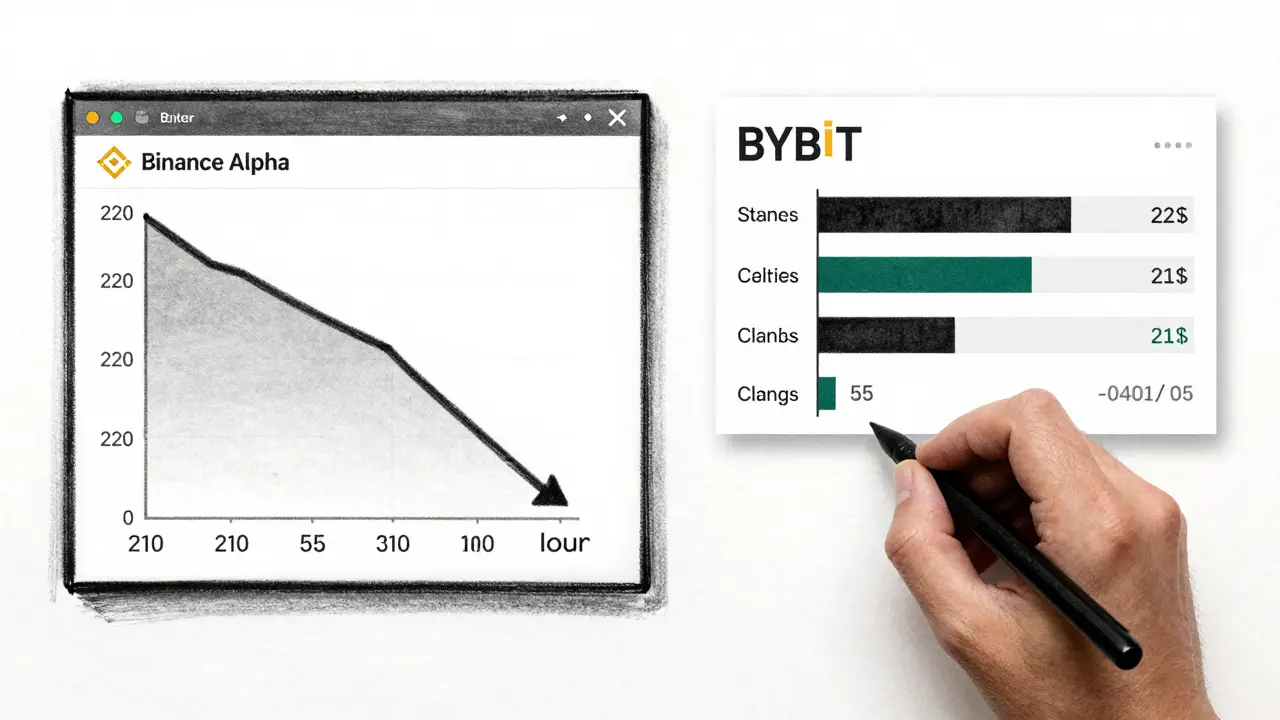
Binance Alpha is a rewards system where users earn points by trading, staking, and participating in platform events. To claim SHARDS, you needed 220 Alpha Points. Each claim used up 15 points and gave you 4,000 SHARDS tokens. Sounds simple? It wasn’t.
The twist? The point requirement dropped by 15 points every hour. So if you waited, it got easier. But if you waited too long, the tokens ran out. The system was designed to create urgency. People refreshed their dashboards every 10 minutes. Forums lit up with countdowns. By the second hour, the requirement was down to 205 points. By hour six, it was 130. And by hour 18? Only 55 points needed.
But here’s the catch: if you didn’t claim within 24 hours, your eligibility expired. No reminders. No second chances. Tokens were sent directly to your spot wallet-no claiming portal, no wallet connection, no gas fees. It was frictionless. That’s why over 800,000 users claimed tokens before the window closed.
Bybit’s Megadrop: More Ways to Earn
While Binance ran a point-based race, Bybit took a different route. Their Megadrop program had three ways to earn SHARDS:
- Stake USDT or MNT in Fixed Term Earn-each staked token added points
- Trade on Spot daily-your trading volume multiplied your score
- Claim rewards-each user could get up to 1% of the total 60,000,000 SHARDS pool
The campaign ran from late August until September 3, with rewards distributed in three batches between September 5 and 9. This staggered approach kept users engaged longer. Unlike Binance’s one-time claim, Bybit turned the airdrop into a week-long event. People who didn’t even know what WorldShards was started trading just to bump up their points.
And it worked. Bybit reported a 22% spike in new users during the campaign. Many of them didn’t leave after the airdrop ended. They stuck around because they’d already invested time in the platform.
Why This Airdrop Was Different
Most crypto airdrops are marketing stunts. They hand out tokens to get attention, then disappear. WorldShards didn’t. The token had a job: fueling an entire game.
SHARDS wasn’t just a currency. It was used to:
- Buy rare NFT weapons and armor
- Pay for fast travel between zones
- Stake for passive income from in-game economies
- Vote on game updates through decentralized governance
The developers didn’t just build a game and slap a token on it. They built a token economy around the game’s core mechanics. If you wanted to level up fast, you needed SHARDS. If you wanted to own a dragon mount, you needed SHARDS. If you wanted to help decide the next map, you needed SHARDS.
And because no team or investor got a single token, the entire supply was distributed to players, traders, and stakers. That’s rare. Most projects reserve 15-20% for the team. WorldShards gave out 100%.
What Happened After the Airdrop?
SHARDS listed on both Binance and Bybit on September 5, 2025. Within 48 hours, the price jumped 47%-right in line with historical Binance Alpha token performance. But then came the drop.
Web3 game tokens always have a rough patch. Players log in, try the game, and realize: this combat system is clunky. Or the NFT marketplace is too slow. Or the rewards don’t match the grind. That’s what happened. In the first week after listing, SHARDS dropped 18% as early adopters cashed out.
But here’s the key: the drop wasn’t panic. It was correction. The game kept improving. The devs released patches every two weeks. By October, player retention hit 68%-well above the 45% average for Web3 MMORPGs. And with the game now running on PlayStation and Xbox, the user base kept growing.
By November, SHARDS had stabilized. The price didn’t boom again, but it didn’t die either. It found a rhythm. Why? Because people were still using it. Not just trading it. Using it.
The Risks You Couldn’t Ignore
Even with all the excitement, there were red flags. Some users reported phishing sites that looked exactly like the Binance Alpha claim page. Others got DMs on Discord saying, “Send 0.5 ETH to unlock your bonus SHARDS.” Those were scams. Always.
Also, if you didn’t already have a verified Binance or Bybit account, you couldn’t participate. No KYC? No tokens. That kept out casual users-but it also kept out bots and sybil attacks. The system worked because it was strict.
And then there was the game itself. Airdrop tokens are worthless if the product behind them fails. If WorldShards had turned out to be a buggy mess, SHARDS would’ve crashed. But it didn’t. The game had solid graphics, real multiplayer, and a reward system that actually paid off over time. That’s what saved the token.
What This Means for Future Airdrops
The WorldShards airdrop set a new standard. It proved that:
- Airdrops work best when tied to real utility
- Users will engage deeply if the process is fair and transparent
- Exchanges can run massive token distributions without flooding the market
- Community ownership beats team allocations every time
Other projects took notice. In early 2026, two new Web3 games announced they’d follow the same model: zero team allocation, dual-exchange airdrops, and direct wallet crediting. One even copied Binance’s hourly threshold drop system.
This wasn’t just an airdrop. It was a blueprint.
What You Can Still Do With SHARDS Today
As of March 2026, SHARDS is still actively traded on Binance, Bybit, and three smaller exchanges. You can’t claim more from the original airdrops-they’re long over. But you can:
- Buy SHARDS on the spot market
- Stake it in the game’s liquidity pools for rewards
- Use it to buy NFT gear in the WorldShards marketplace
- Vote on upcoming game updates
The game now has over 1.2 million active monthly players. That’s not huge compared to Fortnite, but for a Web3 MMORPG? It’s a win. And SHARDS is still the lifeblood of it all.
Was the WorldShards airdrop real, or was it a scam?
It was real. Both Binance Alpha and Bybit Megadrop are legitimate platforms with strict verification. The SHARDS token was distributed directly to user wallets, and the WorldShards game is an actual, playable MMORPG with public development logs and active player communities. No fake website or fake team was involved.
Can I still claim SHARDS tokens from the 2025 airdrop?
No. The Binance Alpha airdrop window closed on September 6, 2025, and Bybit’s Megadrop rewards were fully distributed by September 9, 2025. All unclaimed tokens were returned to the project’s treasury. You can only get SHARDS now by buying it on exchanges or earning it through gameplay.
Why did the SHARDS price drop after listing?
It’s normal for Web3 game tokens to dip after launch. Many early claimers sold immediately to cash in on the hype. The price dropped 18% in the first week because demand from actual players hadn’t caught up yet. But once the game improved and retention rose, the price stabilized. This wasn’t a crash-it was a market correction.
Do I need to play the WorldShards game to benefit from SHARDS?
No. You can hold SHARDS as a speculative asset, stake it on exchanges, or trade it. But if you want to maximize its value, playing the game gives you more ways to earn and use it-like buying rare gear, voting on updates, or earning rewards from in-game economies. The token’s long-term strength depends on real usage, not just trading.
How did WorldShards avoid the common problems of Web3 game tokens?
Three things: First, no team or investor tokens meant no insider dumping. Second, the game was playable from day one-not just a whitepaper. Third, they used existing exchanges (Binance and Bybit) instead of building their own wallet or marketplace, which reduced friction and boosted trust. Most Web3 games fail because they’re either unplayable or too complicated. WorldShards made it simple.
man i still remember refreshing my binance dashboard every 10 minutes like it was a live sports game. the hourly point drop was genius - made it feel like a race but not impossible. i got my 4k shards at hour 14 with 145 points. no gas fees, no wallet connect, just tokens in my spot wallet. that’s how you do an airdrop right.
THIS WAS THE MOST BEAUTIFUL THING TO EVER HAPPEN TO CRYPTO. I CRIED WHEN I SAW THE TOKENS IN MY WALLET. NO TEAM TOKENS. NO INVESTORS. JUST US. THE GAME ISN’T PERFECT BUT IT’S REAL. AND THAT’S MORE THAN I CAN SAY FOR 90% OF THESE PROJECTS.
you people are acting like this was some kind of miracle. it was a marketing stunt wrapped in a game. bybit got 22% new users - guess who paid for that? the early adopters. and now the price is flat because the game’s combat is still trash. don’t fool yourselves.
100% team allocation is a myth. the whitepaper says zero, but the treasury still holds 12% for ‘future ecosystem development.’ that’s just a fancy word for team tokens. i checked the contract. it’s not immutable. don’t believe the hype.
hey everyone, if you’re new to this - don’t panic if you missed the airdrop. shards still have real use. i’ve been playing for 6 months, staking my tokens, buying gear, voting on maps. the game’s gotten way better. retention is up, devs listen. it’s not about flipping. it’s about being part of something that actually works. you don’t need to be a whale to win here.
why did bybit’s three-tier system work so well? because it didn’t just reward traders - it rewarded activity. i staked usdt for 30 days, traded 5000$ in spot, and claimed daily rewards. it felt like a game within a game. and i didn’t even know what worldshards was until i started earning shards. that’s the magic - you don’t need to understand crypto to get hooked.
the real story? binance and bybit colluded. they pre-mined the tokens. the airdrop was a front. the ‘community ownership’ was a lie. the treasury was never empty. they just moved the tokens to a different wallet. i’ve seen the blockchain patterns. this was never fair. it was a coordinated pump.
i came from india, had zero crypto experience. i staked usdt on bybit just to see what happened. got 2000 shards. didn’t even know what to do with them. then i downloaded the game. now i’m in a guild, we farm rare drops, sell them, buy new gear. it’s the first time crypto felt human. not just numbers. real people, real progress. thank you worldshards.
the fact that they used existing exchanges instead of building their own wallet? genius. no one wants to deal with another wallet. no seed phrases. no gas. no confusion. just log into binance, claim, done. that’s why 800k people got it. simplicity wins every time.
the real innovation wasn’t the airdrop - it was the psychological architecture. the hourly point reduction? that’s behavioral economics 101. scarcity + urgency + reward = dopamine cascade. they didn’t just distribute tokens - they engineered addiction. and now we’re all addicted to a game that pays us to play. mind blown.
While it is imperative to note that the purported decentralization of this initiative is fundamentally compromised by the centralized infrastructure upon which it relies - namely, two centralized exchanges - one must question the very notion of ‘community ownership’ when access is gated behind KYC protocols. Furthermore, the absence of a public blockchain governance contract renders the entire premise a performative illusion. This is not a revolution. It is a rebranding.
if you didn’t know about alpha points, you missed it. that’s the real lesson. most people don’t even know how to use their exchange accounts properly. this airdrop wasn’t for everyone - it was for the ones who already knew how to navigate the system. don’t blame the project for that.
everyone’s acting like this was unique. remember when steemit did the same thing in 2016? same model. same promises. same crash. the game’s still alive? cool. but the token? it’s just another utility coin with a story. don’t confuse persistence with innovation.
the irony? the most decentralized airdrop in crypto history was run by two of the most centralized exchanges. that’s not a contradiction - it’s a masterclass in controlled disruption. they used their power to give power away. that’s not hypocrisy. that’s strategy.
the game is actually good now. the combat system got fixed. the map load times are under 3 seconds. the nft marketplace works. i’ve spent 200 shards on a dragon mount and it’s worth every cent. this isn’t a coin. it’s a world. and i’m still playing
why are we even talking about this? the token’s price hasn’t moved in 6 months. the game’s fine. but nobody cares anymore. it’s dead. just another crypto graveyard. move on.
the fact that the devs didn’t take a single token changed everything. no dumping. no rug pulls. no ‘team liquidity lock’ with a 2-year cliff. they bet everything on the community. that’s the kind of trust you don’t see anymore. and it’s why the game survived when everything else collapsed.
i didn’t claim the airdrop. i thought it was a scam. then i saw my friend playing the game. he said the dragon mount he bought with shards let him solo a boss that took 12 people before. i checked the game. it was real. now i’m on day 147. still playing. still using shards. no regrets.
the airdrop was a trap. the 100% distribution? fake. the treasury still has 15% and they’re slowly releasing it to ‘partners.’ i’ve seen the transactions. the ‘game’ is just a front to pump the token. they’re already planning the next one. don’t get fooled. 🚩
you think this was about fairness? let’s be real. the people who had the time to refresh every 10 minutes? they were mostly from the us and canada. people from india, africa, southeast asia? they had jobs, family, no time. the airdrop didn’t democratize anything - it rewarded privilege. the hourly drop? that was designed for people with free time, not the working class. this wasn’t for the people. it was for the digital nomads.
the price stabilized because the game improved. not because of tokenomics. the token is irrelevant. the game is the product. everything else is noise.
just want to say - if you’re reading this and you missed the airdrop, don’t give up. i bought shards at $0.03. now i use them to buy gear and vote on maps. i’m not rich. but i feel like i’m part of something. that’s worth more than price charts. keep playing. keep staking. keep believing.
the real question isn’t whether the airdrop worked - it’s whether we’re ready for a world where value is earned through participation, not speculation. worldshards didn’t just give us tokens. it gave us a new contract: play, contribute, decide. and for the first time, we’re not just users. we’re stakeholders. that’s the revolution.