
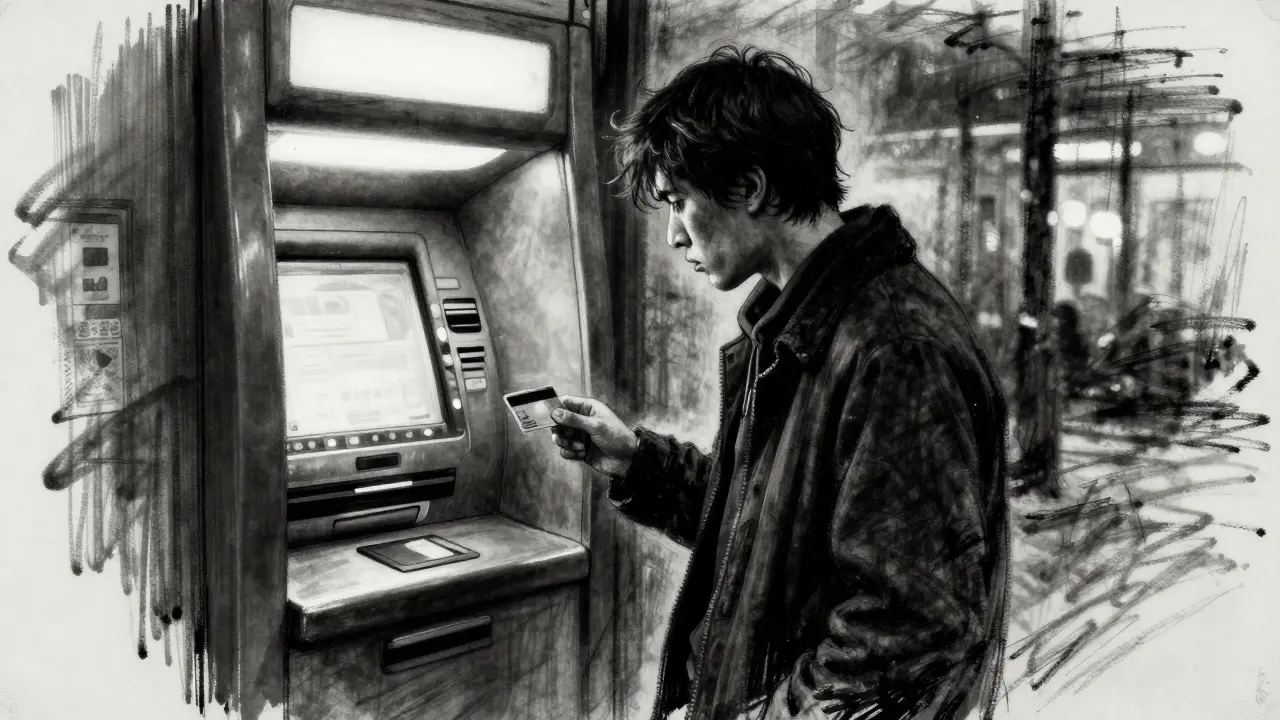
If you've tried to pull a significant amount of cash from an ATM in Russia lately, you might have hit a wall. Since September 2025, the financial landscape for crypto traders has shifted from "wild west" to a highly monitored zone. The Central Bank of Russia is the national monetary authority responsible for regulating the Russian banking system and managing the ruble. While they aren't banning the ownership of digital assets, they've made the process of turning those assets into spendable cash incredibly frustrating for the average person.
The core of the problem is a new set of cash withdrawal restrictions designed to fight fraud. On the surface, it's about security, but for anyone trading Bitcoin, it's a massive roadblock. Banks can now slap a 50,000 ruble (roughly $600) daily limit on your ATM withdrawals for 48 hours if your account looks "suspicious." In a world where a single Bitcoin trade can easily exceed that amount, this is a game-changer.
The Logic Behind the Crackdown
Why now? The numbers are staggering. In the second quarter of 2025, the Central Bank of Russia reported over 273,000 fraud cases, with losses hitting 6.3 billion rubles. To stop this, banks implemented a monitoring system that flags specific behaviors. If you've suddenly changed your mobile banking authorization number, registered a new loan, or transferred more than 200,000 rubles between accounts, you're likely on a watchlist.
For the P2P Trading community-where peer-to-peer trading involves exchanging cryptocurrency directly between two parties without a central intermediary-this is a nightmare. Most P2P deals in Russia rely on bank transfers followed by cash withdrawals to finalize the deal. When the bank freezes your ability to pull cash, the trust in the trade evaporates instantly.
How the Banking Ban Affects Different Traders
Not everyone is feeling the squeeze in the same way. The impact depends entirely on how you move your money. If you're a retail trader using a simple mobile app and an ATM, you're in the crosshairs. If you're a "qualified investor," you're playing a different game entirely.
| User Type | Main Constraint | Operational Impact | Risk Level |
|---|---|---|---|
| Retail P2P Trader | 50k Ruble ATM Limit | High - cannot liquidate large positions quickly | Very High |
| Crypto Miner | Regional Bans & Cash Limits | Moderate - struggling to cash out rewards | High |
| Qualified Investor | High Entry Barrier | Low - operates under experimental legal regimes | Low |
| Institutional User | Strict KYC/AML | Low - uses specialized B2B channels | Low |
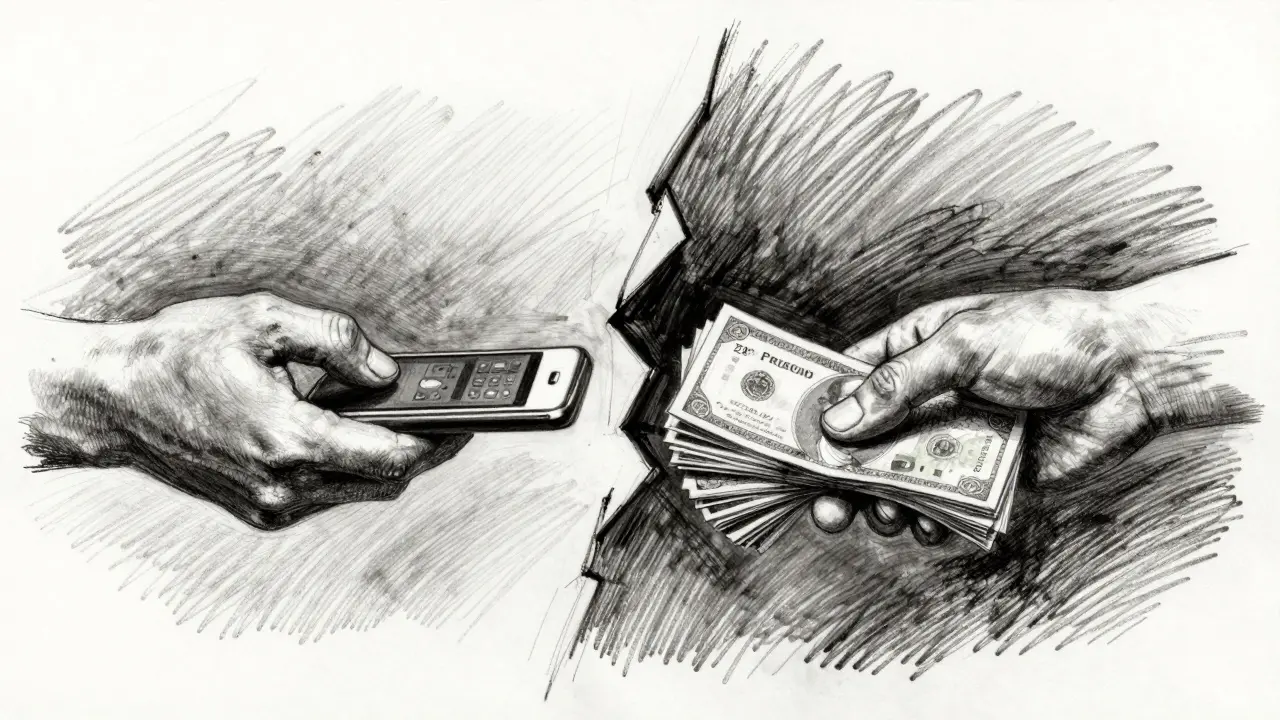
Workarounds for Bitcoin Trading in 2026
Traders aren't just giving up; they're adapting. The goal now is to avoid triggering the "fraud" flags that lead to the 50,000 ruble limit. Here is how people are currently navigating the system:
- Slowing Down the Velocity: Instead of one massive withdrawal, traders are spreading transactions across multiple days and different bank accounts. It's tedious, but it keeps them under the radar of the monitoring algorithms.
- Shifting to Digital-First Payments: Moving away from cash entirely. By using digital wallets and direct transfers for goods and services, traders avoid the ATM bottleneck. However, this increases the digital trail, which brings its own set of risks.
- Foreign Exchange Platforms: Since there is no explicit law banning the purchase of crypto, many are moving their holdings to platforms based outside Russia. This allows them to hold assets in stablecoins like USDT (Tether), which can be traded more flexibly on global markets.
- Establishing "Normal" Patterns: Some traders are working with their banks to establish a consistent transaction history. By making regular, predictable transfers, they try to convince the bank's AI that their activity is standard behavior rather than a sudden fraud spike.
The Mining Dilemma
Mining is where the friction is most visible. As of January 2025, mining restrictions were implemented in 10 out of 46 regions. Combine that with the banking ban, and miners are stuck with digital coins they can't easily turn into rubles for electricity and hardware costs. This has created a huge demand for what some call "crypto-enabled banks."
The idea, championed by figures like Evgeny Masharov, is to follow the Belarus model. By creating a legal bridge where miners can legitimately cash out, the state could actually make money through taxes instead of pushing the whole industry into the shadow economy. Until that happens, miners are largely relying on a shrinking network of small, private exchange offices that are also struggling to survive the bank monitoring.

The "Two-Tiered" Regulatory Reality
It's important to understand that Russia isn't trying to kill crypto-they're trying to control it. There is a massive divide between the retail experience and the institutional one. The government has established an experimental legal regime for qualified investors. To get in, you need an investment portfolio of over 100 million rubles or an annual income over 50 million rubles.
For these elites, crypto is a tool for international trade and bypassing sanctions. For the average person, it's a risky venture that could get your bank account flagged. This creates a tiered system: the state uses Blockchain technology for strategic geopolitical moves while keeping the domestic population on a very short leash.
Practical Tips to Avoid Account Freezes
If you are still trading in this environment, you need to treat your bank account like a delicate instrument. Any sudden change in behavior is a red flag for the Central Bank of Russia's monitoring systems.
- Avoid "New Phone" Syndrome: Do not change your mobile banking number or device right before a large transaction. The system flags new device IDs and phone numbers as signs of a hijacked account.
- Watch the 200k Threshold: Inter-account transfers exceeding 200,000 rubles are an automatic trigger for scrutiny. If you need to move more, do it in smaller, staggered increments.
- Limit QR Code Usage for High Volumes: Banks are now monitoring the frequency and volume of QR-code-based payments to detect "merchant-like" behavior in personal accounts.
- Avoid Immediate Withdrawals After Loans: Withdrawing large sums within 24 hours of taking a loan or increasing a credit limit is a classic fraud pattern. Wait a few days before moving funds.
Is Bitcoin illegal in Russia?
No, owning and buying Bitcoin is not illegal. However, using it as a means of payment for goods and services within Russia is restricted, and cashing out large amounts through banks has become extremely difficult due to fraud-prevention limits.
What is the exact ATM withdrawal limit for "suspicious" accounts?
The limit is 50,000 rubles per day. This restriction typically lasts for a 48-hour window once the bank's monitoring system flags the account for atypical behavior.
Who qualifies as a "Qualified Investor" for the crypto legal regime?
To enter the experimental legal regime, you generally need an investment portfolio exceeding 100 million rubles or an annual income surpassing 50 million rubles.
Why are P2P traders most affected by these rules?
P2P trading relies on a sequence of bank transfers and cash withdrawals. Since the new rules target high-frequency, high-volume cash movements, the "cash-out" phase of a P2P trade often triggers bank flags.
Can I still use foreign exchanges?
Yes, many Russian citizens continue to use foreign platforms for acquisition and storage. The main challenge isn't buying the crypto, but converting it back into rubles within the Russian banking system.
omg please lol like anyone actually thinks these "workarounds" work. just keep trying to move your money in tiny bits and wait for the bank to lock your whole account forever. so naive to think you can outsmart an AI with a few staggered transfers.’ve seen this movie before and it always ends with a frozen account and a very long line at the bank branch while some clerk tells you your account is "under review" for three weeks straight. classic.
It might be helpful for people to look into non-custodial wallets if they haven't already. Moving assets into USDT is a great way to keep your value stable while you figure out a long-term plan for cashing out. Just be careful with the platforms you choose!
money is just a social contract anyway so who cares if the bank changes the rules a bit it just shows that freedom is always a dance between the state and the individual
This is absolutely pathetic. The Russian state is simply tightening the noose on criminals and speculators. If you are operating a legitimate business, you should have no issue with KYC and AML protocols. Those whining about ATM limits are clearly just trying to dodge taxes or move dirty money. It is high time these shadow economies were dismantled with extreme prejudice.
lol they say it is for fraud but we all know they just want to stop people from leaving their money in things they cant control. like srsly who believes the "fraud" excuse in 2025. just a way to keep everyone broke and scared.
my account got flagged last week so annoying
Man, it's a tough spot to be in for sure. I guess the best we can do is try to find common ground and a way to keep things moving without stressing the system too much. Stay chill everyone.
I wonder if therr any way to use a different bank that isnt so strict? maybe some small regional one that doesnt care as much about the 200k limit
The Belarus model is actually really cool. If Russia just adopted that, they'd save a lot of headachhes for the miners. Just make it legal, tax it, and everyone wins.
Stay bold and keep adapting! The digital frontier is always wild but the rewards are dazzling if you play it smart.
Oh my god this is just so unfair!!
I can't even believe they're doing this to regular people who just want to trade. Its literally a nightmare for anyone not in the 1% elite. Like how are we suposed to survive this??
it feels heavy for many. take a breath. we will find a way.
Typical. Of course the elites get a special pass while the rest of us are treated like criminals. It is just so heartwarming to see how the system works for the people it loves and crushes everyone else. Absolutely brilliant.
One may observe that the implementation of such stringent measures is a calculated attempt to stabilize the domestic currency. While the inconvenience to the individual is undeniable, the macroeconomic objective is likely the priority of the Central Bank.
It is important to respect the laws of the land while also acknowledging the stress this puts on people's livelihoods. Finding a balance is key.
Cut the crap! If you're breaking the rules, don't complain when you get caught. The system is there for a reason and if you can't follow it, get out of the game!
Who are you trading with?
Exactly what we need. More control. Stop the fraud and keep the money where it belongs.
Actually, the 200k threshold is based on older AML directives that have been updated. Most people forget that the monitoring is cumulative over a 30-day window, not just a single transaction. You'd be better off using a multi-sig wallet to avoid any single point of failure in your liquidity chain.
I believe it is wise to maintain a low profile during these regulatory transitions.
Just watching from the sidelines here. Pretty interesting how the tech evolves faster than the laws can keep up.
Try using a digital wallet for small daily spends. It helps the bank see a normal pattern.
I'm sure things will get better eventually! Just hang in there.