
Remember the wild days of late 2021 when blockchain gaming felt like it was exploding everywhere? If you were scrolling through Binance Smart Chain updates back then, you likely saw buzz about the BSC GameFi Expo III, a seven-day event that promised free tokens for participating in crypto games. One of the standout projects was Dragonary, which offered an airdrop of its native Coinary Token (CYT). Even though this specific event concluded in October 2021, understanding how it worked, what the token does, and whether it still holds value is crucial for anyone looking back at their portfolio or researching the history of GameFi on BSC.
What Was the CYT Dragonary Airdrop?
The Dragonary airdrop wasn't just a random giveaway. It was part of a strategic push by Binance Smart Chain to grow its gaming ecosystem. Running from October 23 to October 30, 2021, the expo featured three major projects: Dragonary, Mobox, and DSG Metaverse. Each project distributed roughly $20,000 worth of tokens, with Dragonary offering users the chance to earn up to 500,000 CYT tokens.
This event served two main purposes. First, it acted as a user acquisition tool during a period when BSC had over 100 million unique addresses. Second, it introduced casual gamers to blockchain mechanics without forcing them to understand complex wallet setups immediately. The goal was simple: get people playing, watching livestreams, and engaging with the community while distributing tokens to build a holder base.
How the Airdrop Mechanics Worked
If you were trying to claim these tokens back in 2021, the process required more than just clicking a button. Here is what participants had to do:
- Connect a Wallet: You needed a BSC-compatible wallet like MetaMask configured with the correct network settings.
- Social Engagement: Users had to follow Dragonary and Coinary on Twitter, like and retweet promotional posts, and tag friends.
- Watch Livestreams: Daily showcases were hosted on platforms like Binance Live, featuring 15-minute segments explaining the game's features.
- Complete Quizzes: After watching the streams, users answered quiz questions to prove they engaged with the content.
- Claim Tokens: Successful participants could claim their CYT tokens via the CoinMarketCap airdrop page or official Dragonary portals.
Many users reported completing the entire process in about 15 minutes. However, technical glitches were common. Around 37% of participants faced wallet connection errors, and some experienced "transaction failed" messages due to network congestion or gas fee issues, even though the expo claimed transactions were free.

Understanding Coinary Token (CYT) Tokenomics
To understand the value of the airdrop, you need to look at the underlying economics of the Coinary Token (CYT). This is a BEP-20 utility token built on the Binance Smart Chain. Unlike many meme coins or speculative assets, CYT was designed with specific utility within the Dragonary ecosystem.
| Allocation Category | Percentage | Token Amount | Purpose |
|---|---|---|---|
| In-Game Mining | 74.9% | 749,000,000 | Rewards for players via gameplay |
| Investors | 16% | 160,000,000 | Funding early development |
| Development Team | 5% | 50,000,000 | Vested over 10 years (daily unlock) |
| Airdrops & Community | 4.1% | 41,000,000 | Events like BSC GameFi Expo |
A key feature of CYT is its deflationary mechanism. Up to 80% of tokens used for in-game purchases, breeding commissions, and item fusion are permanently burned. The remaining 20% goes back to players. This structure aims to reduce supply over time, theoretically supporting price stability if demand remains consistent. The maximum supply cap is set at 1 billion tokens, distributed over a decade.
Dragonary Gameplay and Utility
Why did Coinary create Dragonary? The answer lies in bridging the gap between traditional gaming and crypto. Dragonary is a free-to-play RPG available on Google Play, iOS, Android, Windows, and Mac OS. Players build dragon armies and engage in both PVE (Player vs Environment) and PVP (Player vs Player) combat.
The genius of this model was its dual-audience approach. Non-crypto users could play the game without ever touching a blockchain wallet. Crypto-native users, however, could integrate their wallets to earn CYT tokens through achievements, battles, and events. This hybrid model helped Dragonary stand out in a crowded market where many projects forced heavy crypto interactions onto casual gamers, leading to high churn rates.
Market Performance and Current Status
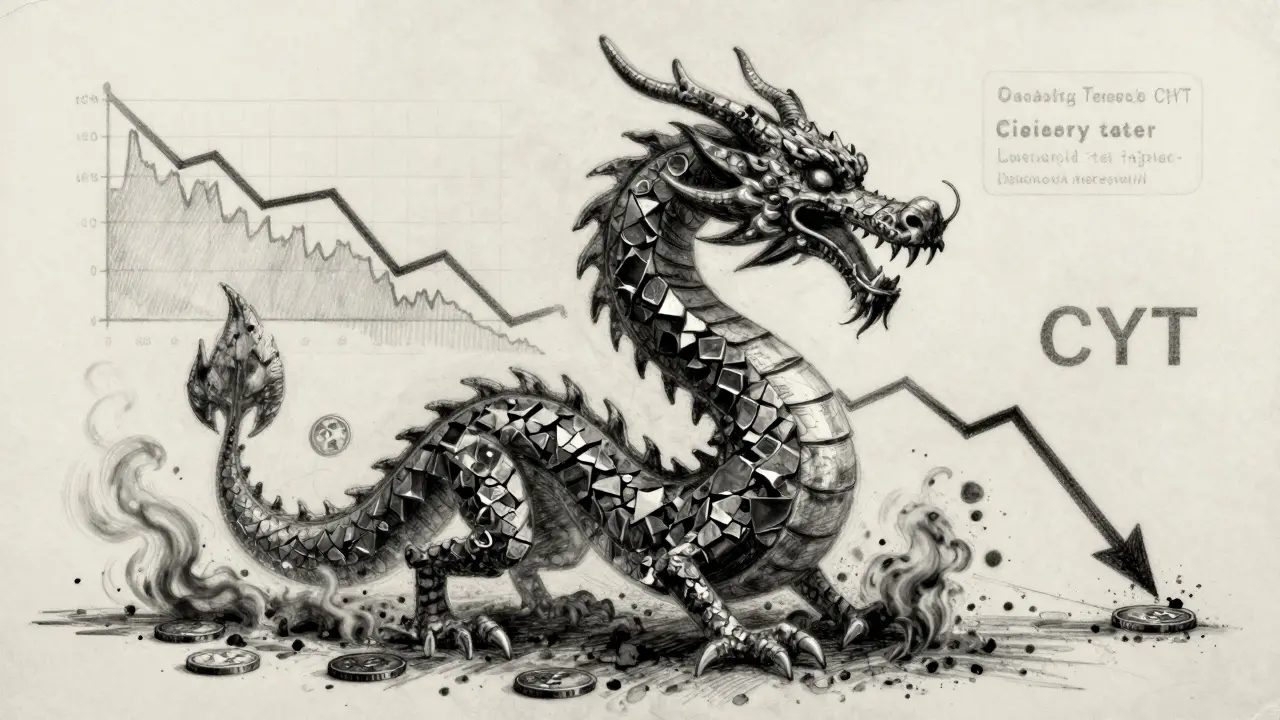
While the airdrop generated excitement, the aftermath told a different story. Following the conclusion of the BSC GameFi Expo III, CYT experienced significant volatility. Data from CoinGecko showed a 32% price drop within 48 hours after the event ended. Early recipients often sold their tokens quickly, creating downward pressure-a common issue known as "airdrop dumping."
As of recent data snapshots, CYT trades at very low prices (around $0.0009) with minimal daily trading volume (often under $500). This reflects broader challenges in the GameFi sector. Industry analysts note that many 2021-era GameFi projects struggled with unsustainable tokenomics. While Dragonary continues to operate and has released smaller anniversary airdrops (such as a 5 million CYT distribution in Q1 2023), it faces stiff competition from newer, more liquid projects.
The team’s long-term vesting schedule-unlocking developer tokens daily over ten years-is a positive signal compared to industry norms where teams might dump large portions of their allocation after short lock-ups. However, low liquidity remains a hurdle for those hoping to trade CYT in significant quantities.
Lessons for Future Airdrop Hunters
If you missed the Dragonary airdrop, don’t worry-it’s gone. But the experience offers valuable lessons for future opportunities:
- Check Vesting Schedules: Projects with long team vesting periods (like Dragonary’s 10-year plan) often indicate stronger long-term commitment.
- Beware of Liquidity Traps: Just because you receive free tokens doesn’t mean you can sell them easily. Always check trading volume before expecting quick profits.
- Engage Early: Social tasks like tweeting and tagging friends are standard. Automating these steps or ignoring them usually means missing out.
- Verify Official Sources: With scams rampant, always use links from official channels like the BSC Blog or verified CoinMarketCap pages. Never enter seed phrases into unknown sites.
The BSC GameFi Expo III remains a case study in how blockchains try to onboard mainstream users. While Dragonary’s token performance hasn’t matched the hype of giants like Axie Infinity, it demonstrated the potential of integrating gameplay with decentralized finance in a way that feels accessible rather than intimidating.
Can I still claim the Dragonary BSC GameFi Expo airdrop?
No, the BSC GameFi Expo III airdrop officially ended on October 30, 2021. The claiming window has closed, and no further tokens from that specific event are being distributed.
Is Coinary Token (CYT) still a good investment?
CYT currently has very low liquidity and trading volume. While the project continues to develop its game ecosystem, investors should exercise extreme caution due to limited market depth and historical price volatility.
What blockchain is CYT built on?
CYT is a BEP-20 token built on the Binance Smart Chain (now known as BNB Chain). This allows for fast transactions and low fees compared to Ethereum-based networks.
How does Dragonary make money for players?
Players can earn CYT tokens through in-game activities such as battling, breeding dragons, and completing quests. These tokens can be used for in-game purchases or traded on supported exchanges.
Why did CYT price drop after the airdrop?
The price drop was largely driven by immediate selling from airdrop recipients who wanted to cash out their free tokens. This created high sell-side pressure against limited buy-side liquidity, causing the price to fall sharply.